China's small-grant strategy reshapes Pacific influence, Australia's lead narrows
Synopsis
China is quietly winning the Pacific without outspending anyone. By abandoning costly infrastructure loans and flooding the region with small, frequent grants to schools, hospitals and local agencies, Beijing has reversed Australia's perceived influence lead in the Pacific — a strategic pivot that bigger aid donors are now scrambling to understand and counter.
Key Takeaways
Australia provided 38% of Pacific development finance between 2008 and 2024 — more than four times China's share.
Despite this, 39% of Australians now identify China as the most influential power in the Pacific, versus 33% for Australia — a reversal from the previous year.
China has shifted from large policy-bank loans to smaller, more frequent grants targeting schools, hospitals, and local communities.
The 2022 China-Solomon Islands security agreement raised concerns about a potential Chinese military footprint in the region.
Solomon Islands and Kiribati switched recognition from Taiwan to Beijing in 2019 ; Nauru followed in 2024 .
Analysts argue the real contest is not about aid volumes but about converting resources into lasting institutional and political relationships.
China has repositioned itself as an integral development partner across Pacific island nations, deploying a deliberate shift from large infrastructure loans to frequent, smaller grants — a tactical evolution that has expanded Beijing's diplomatic, economic, and security footprint in the region even as its overall development finance volumes remain below those of Australia.
The Numbers Behind the Shift
Between 2008 and 2024, Australia accounted for 38 per cent of total development finance to Pacific island countries — more than four times China's share over the same period. Yet a recent survey found that 39 per cent of Australians identified China as the country wielding the greatest influence in the Pacific, compared with 33 per cent for Australia. This marks a notable reversal from the previous year, when Australia led China by 39 to 34 per cent on the same measure, according to a report in PML Daily.
From Mega-Projects to Micro-Grants
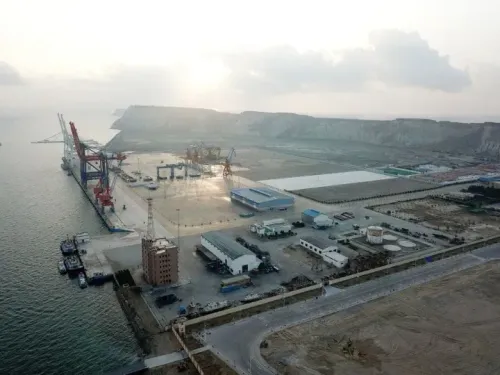
China's early Pacific engagement was defined by large infrastructure projects financed through Chinese policy-bank loans, which drew sustained attention in Tonga, Samoa, Vanuatu, and Papua New Guinea. That model has since been scaled back substantially from its 2010s peak. Beijing has increasingly pivoted towards smaller grants and higher-frequency projects, with grant commitments becoming a more prominent component of its overall engagement.
The strategic logic is straightforward. Large infrastructure projects generate visibility but are expensive, slow to implement, and can attract political controversy over debt obligations. Smaller grants, by contrast, can be distributed across schools, hospitals, government agencies, and local communities — generating a larger volume of recurring interactions between Chinese representatives and Pacific institutions. That sustained local presence, analysts argue, translates into political influence that headline loan figures do not capture.
Security Agreements and Diplomatic Wins
The expansion of Chinese engagement into domestic security institutions has emerged as the most consequential development. The 2022 China-Solomon Islands security agreement drew considerable international scrutiny over concerns about a possible Chinese military presence in the region.
On the diplomatic front, Solomon Islands and Kiribati switched formal recognition from Taiwan to Beijing in 2019, with Nauru following in 2024. These decisions have reduced Taiwan's diplomatic presence in the Pacific and widened the number of Pacific governments formally committed to Beijing's 'one-China' principle.
The Challenge for Australia and Western Partners
Australia's development contribution to the Pacific remains substantially larger in volume terms. The core challenge, according to the PML Daily analysis, is consequently not one of resources but of converting those resources into sustained institutional and political relationships — an area where China's smaller, more frequent engagements have proved more effective.
The report recommends that development assistance programmes place greater emphasis on speed, accessibility, and smaller-scale projects, arguing that China's own strategic pivot towards frequent, localised grants demonstrates the political utility of engagement that reaches community-level institutions rather than remaining concentrated in major national infrastructure.
What This Means for the Indo-Pacific
This comes amid growing strategic competition in the Indo-Pacific, where the Quad — comprising India, Australia, the United States, and Japan — has sought to offer Pacific nations an alternative development and security partnership. Beijing's ability to generate local institutional ties through a high-frequency, low-denomination grant model represents a playbook that larger development partners are now being forced to study and adapt. How quickly Australia and its partners recalibrate their Pacific engagement strategies will likely determine the region's geopolitical alignment in the years ahead.
Point of View
Over time, political obligation. Australia outspends China fourfold in the Pacific yet trails it on perceived influence; that gap will not close by simply writing larger cheques. For India, which frames itself as a credible Indo-Pacific partner, this is a live case study in how strategic presence is built at the community level — and a prompt to examine whether its own development engagement with smaller island nations is structured for frequency and visibility or merely for headline value.
NationPress
11 Oct 2026
Frequently Asked Questions
How is China increasing its influence in Pacific island nations?
China is expanding its Pacific influence primarily through a shift from large infrastructure loans to smaller, more frequent grants directed at schools, hospitals, government agencies, and local communities. This high-frequency engagement model creates recurring institutional ties that translate into political influence, even though China's total development finance remains well below Australia's.
How does China's Pacific aid compare to Australia's?
Between 2008 and 2024, Australia accounted for 38 per cent of total development finance to Pacific island countries — more than four times China's share. However, perceived influence surveys now show China ahead of Australia, with 39 per cent of Australians identifying China as the most influential Pacific power versus 33 per cent for Australia.
What is the China-Solomon Islands security agreement?
The 2022 China-Solomon Islands security agreement is a bilateral pact that attracted significant international scrutiny due to concerns about a potential Chinese military presence in the South Pacific. It is widely viewed as the most consequential marker of China's expanded security engagement in the region.
Which Pacific nations switched diplomatic recognition from Taiwan to China?
Solomon Islands and Kiribati switched formal diplomatic recognition from Taiwan to Beijing in 2019, and Nauru followed suit in 2024. These shifts have reduced Taiwan's diplomatic presence in the Pacific and increased the number of governments aligned with Beijing's 'one-China' principle.
What should Australia and other donors do differently in the Pacific?
Analysts recommend that development partners prioritise speed, accessibility, and smaller-scale projects over large national infrastructure programmes. China's own strategic shift demonstrates that frequent, localised engagement with community institutions builds more durable political relationships than concentrated, high-value projects alone.