Chirag Paswan extends Eid-ul-Adha greetings, cites peace
Synopsis
Union Food Processing Minister Chirag Paswan extended Eid-ul-Adha greetings on X, describing the festival as a bearer of peace, harmony, and humanity. The LJP (Ram Vilas) chief posted in Hindi with the hashtags #BakridMubarak and #Eid2026, continuing a long-standing convention among Indian political leaders.
Key Takeaways
Chirag Paswan , Union Minister of Food Processing Industries, extended Eid-ul-Adha greetings on X on 29 May 2026 .
He described the festival as one conveying messages of peace, harmony, and humanity .
The post was in Hindi and tagged #BakridMubarak and #Eid2026 .
Paswan is the national president of Lok Janshakti Party (Ram Vilas) , an NDA ally in the central government since 2024 .
Extending festival greetings on major religious occasions is a well-established convention among Indian political leaders across party lines.
Union Food Processing Minister Chirag Paswan on Thursday, 29 May 2026, extended warm wishes to the nation on the occasion of Eid-ul-Adha, describing the festival as one that carries a message of peace, harmony, and humanity.
Context
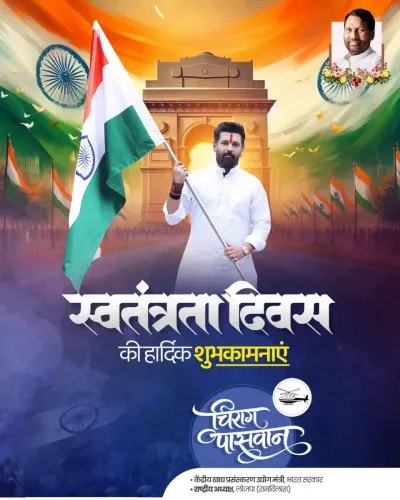
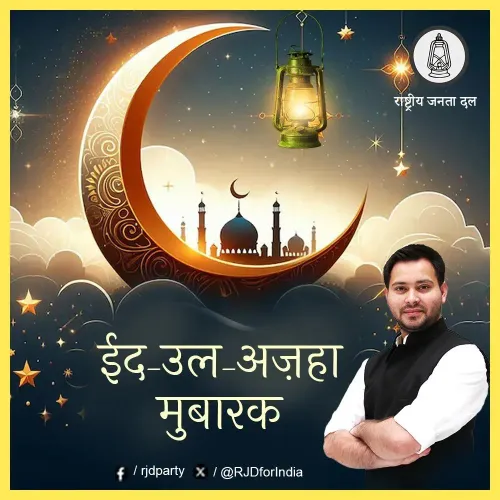
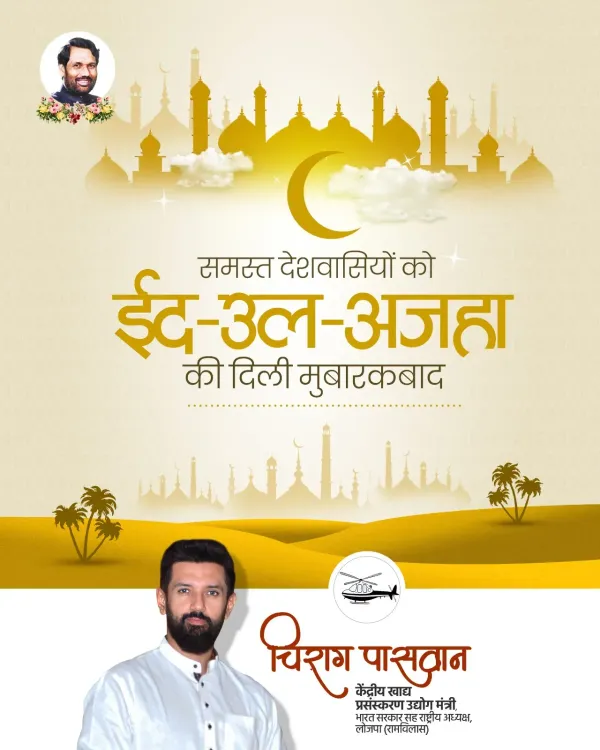
Posting on X, Paswan wrote in Hindi: 'Aman, sadbhav aur insaaniyat ka sandesh dene wale parv Eid-ul-Adha ki dheeron shubhkamnaaein' — wishing his followers 'abundant greetings on the occasion of Eid-ul-Adha, the festival that conveys a message of peace, harmony, and humanity.' The post was accompanied by an image and tagged with the hashtags #BakridMubarak and #Eid2026.
Eid-ul-Adha, also widely known as Bakrid, is one of the most significant festivals in Islam. It commemorates the willingness of Prophet Ibrahim to sacrifice his son as an act of obedience to God and is observed through prayers, animal sacrifice, and the distribution of meat among family, neighbours, and those in need — practices rooted in the values of charity and communal sharing.
Policy Backdrop
Paswan serves as the national president of the Lok Janshakti Party (Ram Vilas), a Bihar-based party allied with the National Democratic Alliance that joined the central government following the 2024 general elections. The party, founded by his late father Ram Vilas Paswan, has historically positioned itself as a voice for Scheduled Caste and backward caste communities, and has maintained a public commitment to social harmony.
Union ministers extending festival greetings on major religious occasions is a well-established convention in Indian political life. The Ministry of Minority Affairs and other central government offices have issued similar messages on Eid in prior years, reflecting a broader practice of public figures acknowledging the country's religious diversity.
Stakeholders and Impact
The message is directed at Indian Muslims who observe Eid-ul-Adha across the country, a community that numbers in the hundreds of millions. Festival greetings of this nature from senior ministers are widely regarded as symbolic gestures reinforcing constitutional values of secularism and social cohesion.
Political leaders across party lines — from the ruling coalition to the opposition — routinely post such messages on major religious occasions, including Diwali, Eid, Christmas, and Guru Nanak Jayanti. The practice underscores a shared public expectation that elected representatives acknowledge and respect India's plural religious fabric.
What's Next
Observers will watch whether Paswan's ministry follows the festival messaging with any substantive policy communication touching sectors relevant to the occasion — particularly given the Ministry of Food Processing Industries' oversight of livestock-linked processing industries. Any updates to meat processing or cold-chain infrastructure policy in the coming weeks could carry added resonance in this context.
Point of View
The Lok Janshakti Party (Ram Vilas), has maintained since its founding — positioning itself as a secular, inclusive force within the NDA coalition. For a party whose core base lies among Scheduled Caste voters in Bihar, visible acknowledgement of Muslim festivals serves as a signal of broad-based social solidarity. The message also reflects the NDA government's ongoing effort to project a pluralist image at the national level. In a politically charged environment, such gestures — however ceremonial — carry weight as markers of a leader's public persona and coalition arithmetic.
NationPress
11 Oct 2026
Frequently Asked Questions
Why did Chirag Paswan post Eid-ul-Adha wishes?
Chirag Paswan posted Eid-ul-Adha wishes as part of the long-standing Indian political convention of elected leaders publicly acknowledging major religious festivals to affirm social harmony and respect for the country's religious diversity.
What is Eid-ul-Adha or Bakrid?
Eid-ul-Adha, commonly called Bakrid in India, is a major Islamic festival that commemorates Prophet Ibrahim's act of obedience to God. It is observed through special prayers, animal sacrifice, and the distribution of meat among family, neighbours, and those in need.
Who is Chirag Paswan?
Chirag Paswan is the Union Minister of Food Processing Industries and the national president of the Lok Janshakti Party (Ram Vilas). He is the son of the late Ram Vilas Paswan and represents the Hajipur constituency in Bihar.
What party does Chirag Paswan lead?
Chirag Paswan leads the Lok Janshakti Party (Ram Vilas), a Bihar-based party allied with the National Democratic Alliance that joined the central government after the 2024 general elections.
What did Chirag Paswan say on Eid 2026?
Chirag Paswan wrote in Hindi that Eid-ul-Adha is a festival that conveys a message of peace, harmony, and humanity, and extended abundant greetings to the nation on the occasion.