Chirag Paswan flags makhana, arhar dal going global
Synopsis
Union Food Processing Minister Chirag Paswan amplified PM Modi's Mann Ki Baat remarks on Vocal for Local, citing makhana from Bihar's Purnia and arhar dal from Karnataka's Kalaburagi as examples of local produce reaching global markets through MOFPI's processing and packaging push.
Key Takeaways
PM Modi highlighted rising Indian consumer trust in homegrown products and the 'Vocal for Local' campaign in his Mann Ki Baat address on 25 October 2026 .
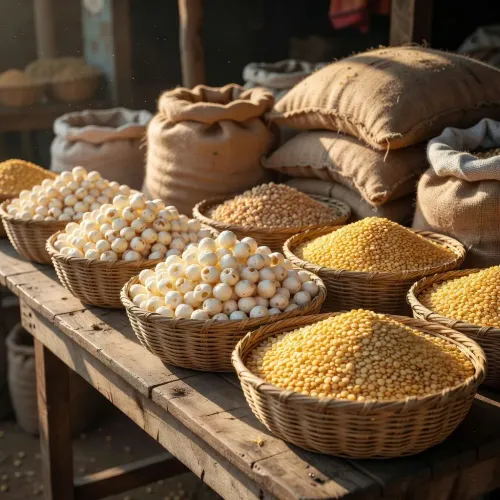
Minister Chirag Paswan cited Purnia's makhana (Bihar) and Kalaburagi's arhar dal (Karnataka) as examples of local produce entering overseas markets.
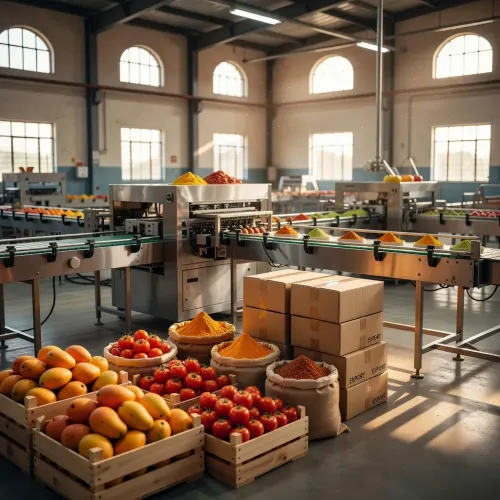
The Ministry of Food Processing Industries (MOFPI) is focusing on processing, modern packaging, value addition, and marketing to create global export opportunities.
Policy foundations include the Atmanirbhar Bharat package and the PM FME scheme , both launched in 2020 , which support micro food-processing units.
Paswan framed export-ready processing as a direct route to farmer income growth and the broader Aatmanirbhar Bharat vision.
Two farm products from opposite ends of India — makhana from Purnia, Bihar and arhar dal from Kalaburagi, Karnataka — are finding buyers beyond Indian borders, and Union Food Processing Minister Chirag Paswan wants the country to take note. Responding to Prime Minister Narendra Modi's Mann Ki Baat address on Sunday, October 25, 2026, Paswan positioned the Ministry of Food Processing Industries (MOFPI) as the engine turning local agricultural produce into globally competitive exports.
What PM Modi said in Mann Ki Baat — and why Paswan is amplifying it
In his monthly radio address, Prime Minister Modi highlighted the growing confidence among Indians in homegrown products and the positive momentum of the 'Vocal for Local' campaign. He specifically noted that Indian products are no longer confined to domestic shelves — they are reaching global markets. Paswan echoed and extended that message, citing Purnia's makhana reaching Greece and Kalaburagi's arhar dal reaching the Maldives as concrete proof points of that globalisation.
The minister framed MOFPI's role as creating the infrastructure that makes this possible: 'प्रसंस्करण, आधुनिक पैकेजिंग, मूल्य संवर्धन और बेहतर मार्केटिंग' — processing, modern packaging, value addition, and better marketing. In other words, the bridge between a farmer's field and a foreign shelf.
Purnia's makhana and Kalaburagi's pulses — the regional story behind the headline
Purnia district in Bihar is one of India's most recognised makhana-producing belts, with the aquatic crop long associated with ceremonial and nutritional use. Kalaburagi in northern Karnataka is a major pulse-growing district, significant enough that its agricultural identity is tied to arhar dal production. Both products carry strong regional identities — exactly the kind that benefit from Geographical Indication branding and export packaging investment.
That push sits within a broader policy architecture: the Atmanirbhar Bharat package of 2020 prioritised local manufacturing and agricultural value chains, while the PM Formalisation of Micro food processing Enterprises (PM FME) scheme, also launched in 2020, extended credit and technical assistance to micro-processing units for branding and upgradation. These are the upstream interventions that Paswan argues are now yielding downstream export results.
Processing, packaging, and farmer prosperity — the MOFPI pitch
The minister's core argument is straightforward: post-harvest losses in India have historically eaten into farm incomes, and the fix is not just better farming but better processing. Modern packaging that extends shelf life, value-added formats that command premium prices, and marketing pipelines that connect districts like Purnia and Kalaburagi to overseas buyers — these, Paswan says, are 'important steps towards farmer prosperity and an Aatmanirbhar Bharat.'
The Commerce Ministry's agricultural export data and any new state-level MoUs for processed food clusters will be the clearest near-term test of whether the on-ground results match the ministerial messaging.
The signal from both the PM and his food-processing minister is the same: Vocal for Local was never just a domestic consumption campaign — it was always a stepping stone to making 'Local' a global brand.
Point of View
Which gives policy messaging a mass-audience amplifier. The choice of Purnia and Kalaburagi is politically layered: Bihar and Karnataka are both electorally significant states, and citing district-level produce signals outreach to regional farming communities. The broader arc here is a government attempting to shift the Vocal for Local narrative from a domestic buy-Indian sentiment to a credible export-competitiveness story, with processed food as the chosen vehicle. Whether the export numbers substantiate the claims will determine if the messaging holds.
NationPress
25 Oct 2026
Frequently Asked Questions
What is the Vocal for Local campaign in India?
Vocal for Local is a campaign that encourages Indian consumers to buy domestically produced goods, reduce import dependence, and strengthen local manufacturing and agricultural value chains as part of the Aatmanirbhar Bharat self-reliance initiative.
What is makhana and where is it produced in India?
Makhana, also called fox nuts or lotus seeds, is an aquatic crop predominantly grown in Bihar, with Purnia district being one of its most recognised producing regions. It is valued for its nutritional properties and is increasingly marketed as a healthy snack globally.
What does the Ministry of Food Processing Industries do?
The Ministry of Food Processing Industries (MOFPI) is responsible for promoting value addition, modern packaging, infrastructure development, and export marketing of processed food products in India to reduce post-harvest losses and raise farmer incomes.
What is the PM FME scheme?
The PM Formalisation of Micro food processing Enterprises (PM FME) scheme was launched in 2020 under Atmanirbhar Bharat to provide micro food-processing units with credit access, technical assistance, and branding support to help them scale up and enter formal markets.
Is Kalaburagi known for arhar dal production?
Yes, Kalaburagi (formerly Gulbarga) in northern Karnataka is a major pulse-growing district and is strongly associated with arhar dal (pigeon pea) cultivation, making it a key contributor to India's pulse production.