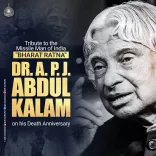
Chirag Paswan pays tribute to APJ Abdul Kalam on death anniversary
Synopsis
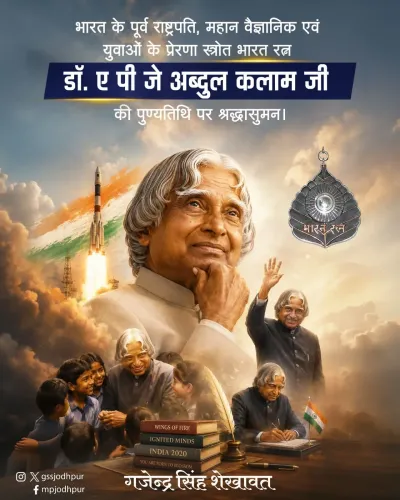
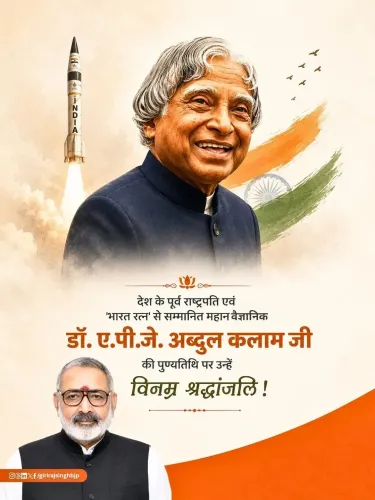
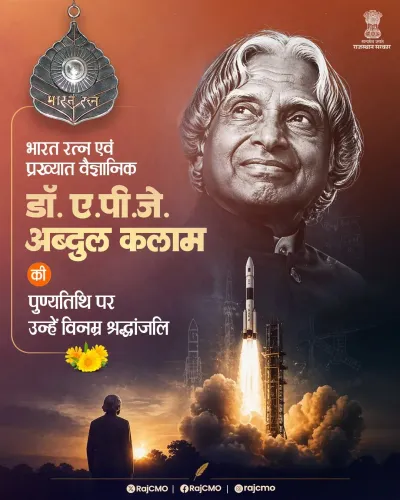
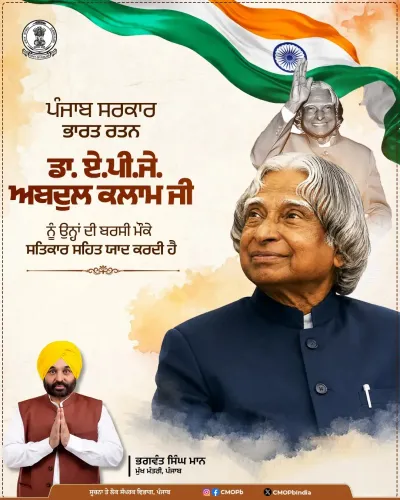
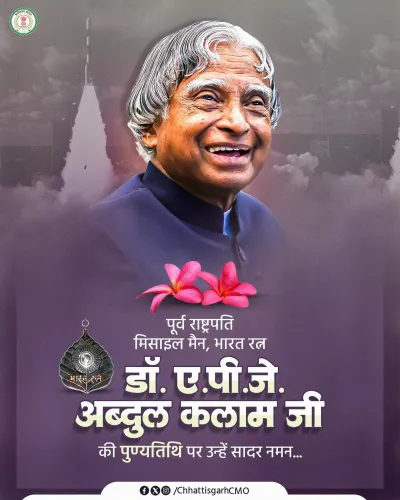
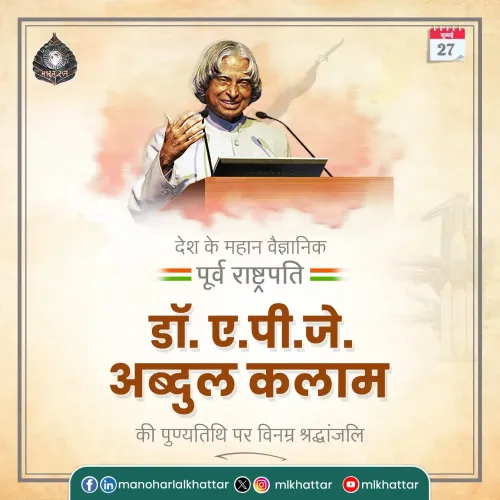
Union Food Processing Minister Chirag Paswan paid tribute to former President and Bharat Ratna awardee Dr. A.P.J. Abdul Kalam on his death anniversary on 27 July, calling his vision of a developed India and his commitment to science and education a lasting inspiration for future generations.
Key Takeaways
Chirag Paswan , Union Minister of Food Processing Industries, posted a tribute to Dr.
Abdul Kalam on his death anniversary, 27 July .
Kalam served as India's 11th President from 2002 to 2007 and was awarded the Bharat Ratna in 1997 .
Kalam led key missile development projects at DRDO and ISRO , earning the title 'Missile Man of India.' His 1998 book 'India 2020' outlined a vision of a developed India anchored in science, education and self-reliance — themes echoed in today's Viksit Bharat agenda.
Paswan's tribute reflects a broad cross-party practice of invoking Kalam's legacy in public discourse on innovation and national development.
Union Food Processing Minister Chirag Paswan paid tribute to former President and 'Missile Man' Dr. A.P.J. Abdul Kalam on his death anniversary on Monday, 27 July, honouring the scientist-statesman's lifelong dedication to science, education and nation-building.
Context
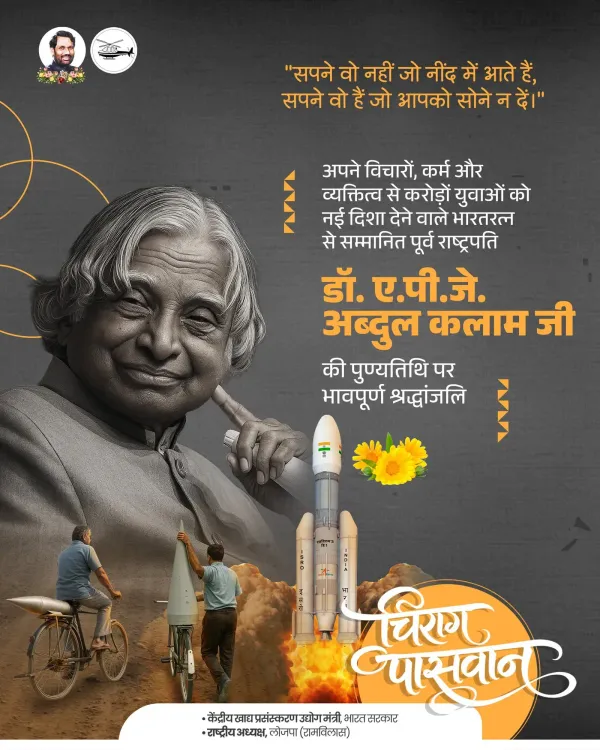
Posting on X, Paswan wrote: 'Vigyan, shiksha aur rashtranirman ke prati aajeevan samarpit Bharat Ratna, poorv Rashtrapati evam 'Missile Man' Dr. A.P.J. Abdul Kalam ji ki punyatithi par unhe vinamra shraddhanjali.' — offering a humble tribute to the Bharat Ratna awardee, former President and 'Missile Man' Dr. A.P.J. Abdul Kalam on his death anniversary, describing him as one who was lifelong devoted to science, education and nation-building. He added that Kalam's inspiring thoughts, simple life and dream of a developed India would continue to inspire future generations toward national service.
Dr. Kalam passed away on 27 July 2015, and the date is observed annually across government institutions and educational bodies with tributes and commemorative events. Paswan's post carried the hashtags #APJAbdulKalam, #MissileMan and #Inspiration.
Policy Backdrop
Dr. Kalam served as India's 11th President from 2002 to 2007, and before that led landmark missile development programmes at DRDO and ISRO, earning him the popular title 'Missile Man of India.' He was conferred the Bharat Ratna — India's highest civilian honour — in 1997 for his extraordinary contributions to science and technology.
Kalam co-authored the 1998 book 'India 2020', which laid out a vision for India to become a developed nation by 2020, with science, education and self-reliance as its three pillars. That vision has since been absorbed into mainstream political discourse, including the current government's Viksit Bharat framework, which echoes many of the same themes.
Stakeholders and Impact
Kalam's legacy holds particular resonance for students and youth, whom he engaged extensively through university visits, public lectures and his writings throughout his post-presidential years. His emphasis on scientific temper and grassroots innovation continues to inform policy conversations around education reform and technology-led development.
Tributes from Union ministers like Paswan on this anniversary reinforce a consistent cross-party pattern of invoking Kalam's ideals when articulating goals around self-reliance and innovation. The practice underscores how Kalam's persona has become a shared civic symbol, referenced by leaders across the political spectrum.
What's Next
Annual commemorations on 27 July have in past years prompted announcements on science education initiatives, youth outreach programmes and scholarships aligned with Kalam's vision. Institutions bearing his name — including Dr. A.P.J. Abdul Kalam Technical University in Uttar Pradesh — typically hold memorial events on this date. Whether this year's anniversary prompts fresh policy announcements in the science or education space remains to be seen, but the invocation of Kalam's 'Viksit Bharat' dream by a sitting Union minister signals the continued political salience of his legacy in shaping India's development narrative.
Point of View
' Paswan aligns his party's messaging with a legacy that transcends partisan lines, lending it broader civic legitimacy. The pattern of ministers referencing Kalam on 27 July has become a reliable signal of how the current political establishment frames its development narrative through the lens of scientific nationalism. For Paswan personally, who leads a party with a strong base in Bihar, invoking a figure celebrated for meritocracy and self-reliance also carries quiet electoral resonance.
NationPress
27 Jul 2026
Frequently Asked Questions
When did APJ Abdul Kalam die?
Dr. A.P.J. Abdul Kalam passed away on 27 July 2015 , and his death anniversary is observed annually with tributes from government institutions, educational bodies and political leaders across India.
Why is APJ Abdul Kalam called the Missile Man of India?
Dr. Kalam earned the title 'Missile Man of India' for his pivotal role in leading India's integrated guided missile development programme at DRDO and ISRO , which produced missiles including Agni and Prithvi.
What Bharat Ratna did APJ Abdul Kalam receive?
Dr. A.P.J. Abdul Kalam was conferred the Bharat Ratna — India's highest civilian award — in 1997 in recognition of his outstanding contributions to science and technology.
Who is Chirag Paswan?
Chirag Paswan is the Union Minister of Food Processing Industries in the Government of India and the national president of the Lok Janshakti Party (Ram Vilas) .
What was APJ Abdul Kalam's vision for India?
Dr. Kalam outlined his vision in the 1998 book 'India 2020' , calling for India to become a developed nation through science, education and self-reliance — a framework that continues to influence India's 'Viksit Bharat' policy goals.