Chirag Paswan pays tribute to Bhikhari Thakur on death anniversary
Synopsis
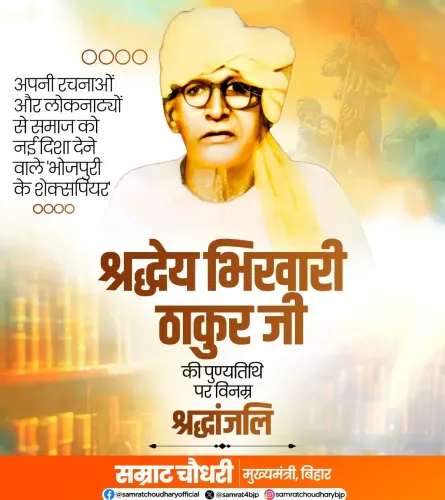
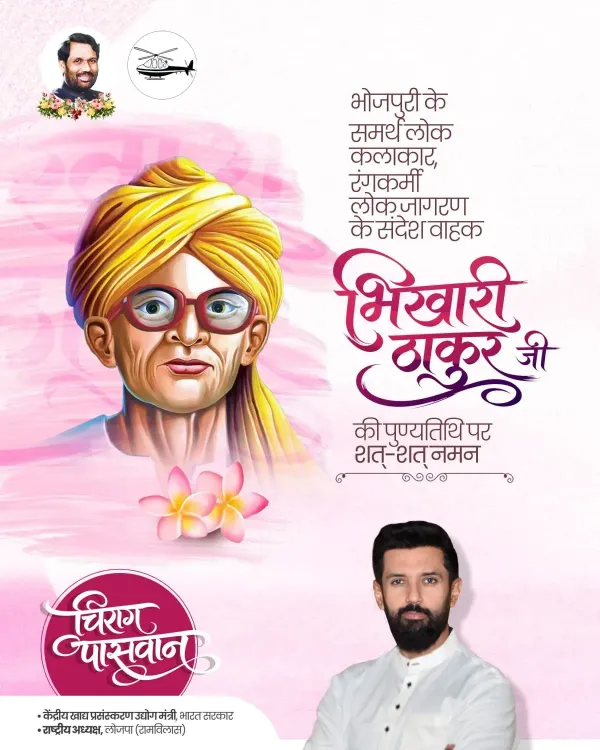
Union Minister Chirag Paswan on 10 July 2026 paid tribute to legendary Bhojpuri playwright Bhikhari Thakur (1887–1971) on his death anniversary, honouring the 'Shakespeare of Bhojpuri' for his unparalleled contributions to folk art, folk language, and social consciousness in Bihar.
Key Takeaways
Chirag Paswan , Union Food Processing Minister and LJP (Ram Vilas) chief, paid tribute to Bhikhari Thakur on his death anniversary on 10 July 2026 .
He described Thakur as the 'father of Bihar's folk-theatre tradition' and the 'Shakespeare of Bhojpuri.' Bhikhari Thakur (1887–1971) was a Bhojpuri playwright, actor, and singer best known for the folk play Bidesiya .
Thakur's work addressed migration, caste discrimination, and social reform through the loknatya (folk-drama) tradition of Bihar .
The tribute is part of a wider pattern of Bihar-origin politicians using cultural commemorations to reinforce regional identity and political outreach.
Union Food Processing Minister Chirag Paswan on Friday, 10 July 2026, paid homage to celebrated Bhojpuri playwright Bhikhari Thakur on his death anniversary, calling him an unparalleled contributor to folk art, folk language, and social consciousness.
Context
Posting on X in Hindi, Chirag Paswan offered his tribute to Bhikhari Thakur, describing him as 'बिहार की लोकनाट्य परंपरा के जनक' ('the father of Bihar's folk-theatre tradition') and 'भोजपुरी के शेक्सपियर' ('the Shakespeare of Bhojpuri'). The minister wrote that Thakur's contributions to folk art, folk language, and social awakening 'will remain a source of inspiration forever.'
Bhikhari Thakur (1887–1971) was a Bhojpuri playwright, actor, and singer from Bihar whose works — most famously Bidesiya — used itinerant folk theatre to address migration, caste discrimination, and social reform. He is widely regarded as the most significant figure in the loknatya (folk-drama) tradition of the Bhojpuri-speaking belt.
Policy Backdrop
Bihar-origin national politicians have long used social media to mark the anniversaries of regional cultural icons, reinforcing their connection to state identity and vernacular heritage. The practice has become a consistent feature of political outreach across parties active in Bihar, particularly as Bhojpuri-language media and digital platforms have expanded their reach.
Chirag Paswan, as national president of the Lok Janshakti Party (Ram Vilas) and a Union minister representing a prominent Bihar political family, occupies a position where cultural commemoration carries both symbolic and electoral resonance in the state's Bhojpuri-speaking constituencies.
Stakeholders and Impact
The tribute is of significance to Bhojpuri artists, folk performers, and cultural organisations working to preserve and promote the loknatya tradition. Bhikhari Thakur's legacy encompasses not only theatrical performance but also social commentary on issues such as gender inequality, untouchability, and the hardship of migrant labour — themes that remain relevant in Bihar and across the Bhojpuri diaspora.
Acknowledgement by a sitting Union minister keeps Thakur's name in public discourse and can lend momentum to grassroots efforts seeking formal recognition or institutional support for Bhojpuri folk arts.
What's Next
Death anniversaries and events such as Bihar Diwas have historically been occasions when state-level cultural programmes or proposals for archiving Bhojpuri folk texts gain traction. Advocates for the preservation of loknatya traditions may use the renewed attention around Thakur's anniversary to press for greater institutional backing for Bhojpuri folk heritage.
Point of View
Invoking a figure who championed social reform through vernacular art carries a layered message of identity and continuity. The gesture fits a broader arc in which Bihar-origin national politicians invest in cultural commemoration to maintain grassroots credibility alongside policy responsibilities. Whether such tributes translate into concrete institutional support for Bhojpuri folk heritage remains the more substantive question.
NationPress
10 Jul 2026
Frequently Asked Questions
Who was Bhikhari Thakur?
Bhikhari Thakur (1887–1971) was a celebrated Bhojpuri playwright, actor, and singer from Bihar, widely called the 'Shakespeare of Bhojpuri.' He is best known for his folk play Bidesiya , which addressed migration, caste, and social reform through the loknatya tradition.
Why did Chirag Paswan pay tribute to Bhikhari Thakur?
Chirag Paswan paid tribute on Bhikhari Thakur's death anniversary on 10 July 2026, honouring his unparalleled contributions to folk art, folk language, and social consciousness in Bihar.
What is Bhikhari Thakur's connection to Bihar?
Bhikhari Thakur is regarded as the father of Bihar's loknatya (folk-theatre) tradition. His Bhojpuri-language plays resonated deeply with the rural and migrant communities of Bihar and remain culturally significant today.
Who is Chirag Paswan?
Chirag Paswan is the Union Minister of Food Processing Industries and the national president of the Lok Janshakti Party (Ram Vilas). He is the son of the late Ram Vilas Paswan and represents a prominent Bihar political family.
What is the significance of Bhikhari Thakur's play Bidesiya?
Bidesiya is Bhikhari Thakur's most famous folk play, depicting the emotional and social hardship of labour migration from Bihar. It is considered a landmark work in Bhojpuri folk literature and social commentary.