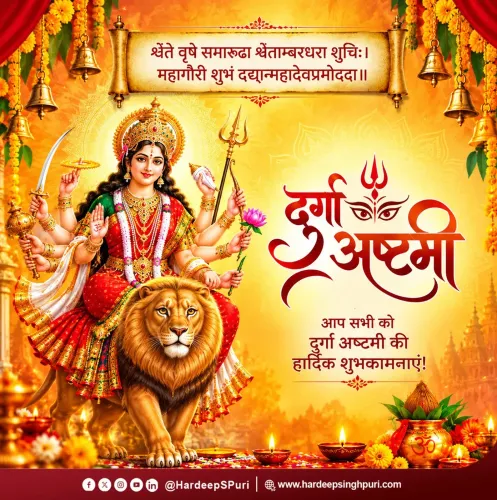
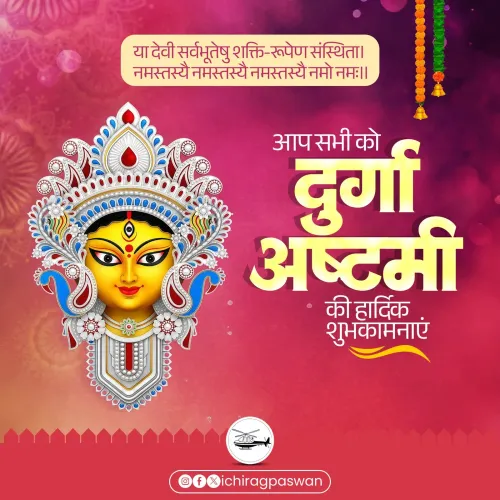
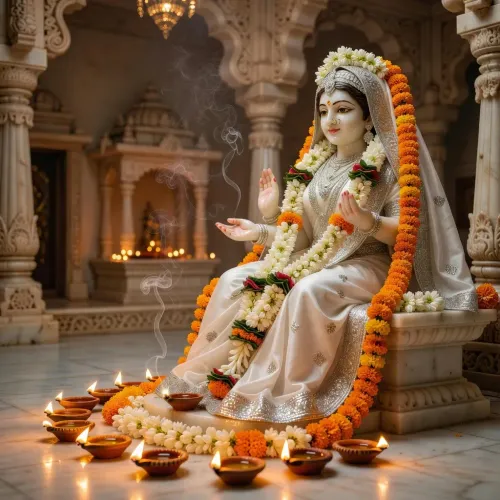
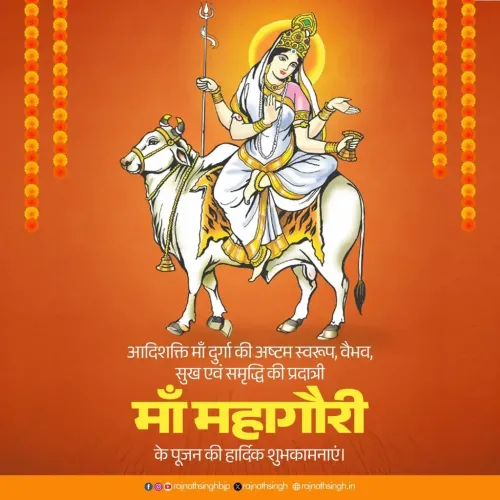
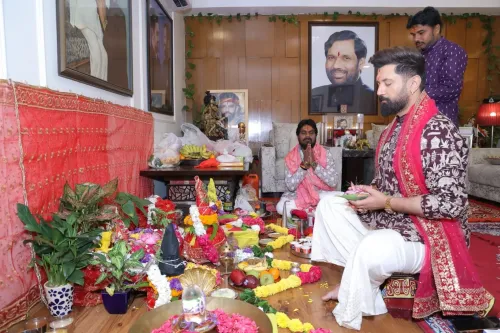
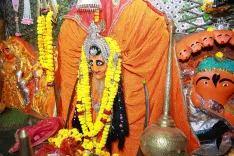
Chirag Paswan offers prayers to Maa Mahagauri on Navratri Ashtami
Synopsis
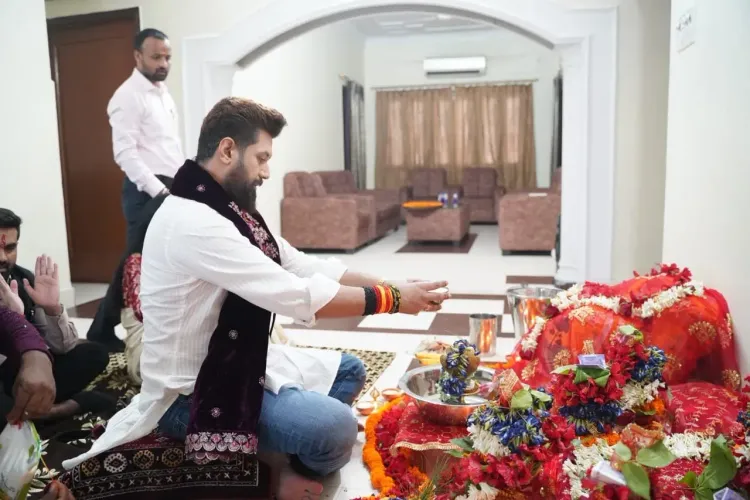
Union Food Processing Minister Chirag Paswan performed puja and havan for Maa Mahagauri on Navratri Ashtami on 18 October 2026, praying for happiness, peace, and prosperity for all Indians.
Key Takeaways
Chirag Paswan , Union Minister of Food Processing Industries and LJP (Ram Vilas) national president, observed Navratri Ashtami puja and havan on 18 October 2026 .
The occasion marks worship of Maa Mahagauri , the eighth of nine divine forms celebrated during Sharadiya Navratri.
Paswan shared the Sanskrit invocation Ya Devi Sarvabhuteshu Shakti-Rupena Sansthita — a classical prayer to the goddess as the embodiment of Shakti.
His prayer called for sukh, shanti, samridhi evam khushhali — happiness, peace, prosperity, and well-being — for all citizens of India.
The post, accompanied by four images , continues a well-established tradition of Indian political leaders publicly observing major Hindu festivals.
On the eighth and most luminous day of Sharadiya Navratri, Union Food Processing Minister Chirag Paswan performed vidhi-vidhan (ritually prescribed) puja and havan before Maa Mahagauri, seeking the goddess's blessings for peace and prosperity across India.
Sharing the occasion on Sunday, 18 October 2026, Paswan opened with the classical Sanskrit invocation: 'Ya Devi Sarvabhuteshu Shakti-Rupena Sansthita. Namastasyai Namastasyai Namastasyai Namo Namah' — 'Salutations again and again to the Goddess who resides in all beings in the form of Shakti.'
The eighth form: who is Maa Mahagauri?
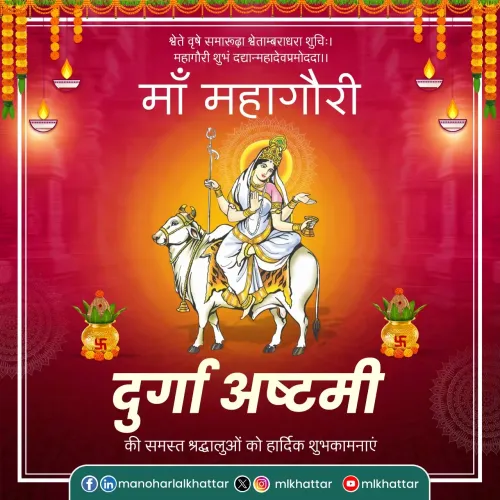
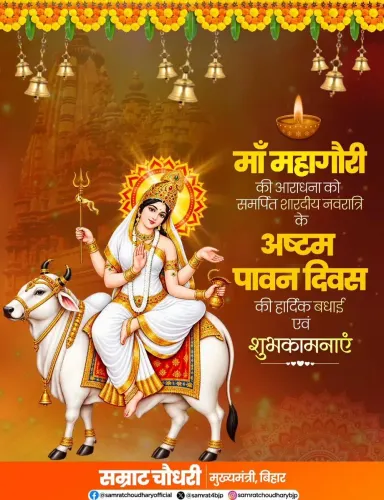
Maa Mahagauri is worshipped on the eighth day (Ashtami) of the nine-night festival, regarded as the form of the goddess that embodies purity, serenity, and fulfilment. Her name — Mahagauri, meaning 'the supremely radiant one' — reflects the belief that devotion to her washes away past sins and illuminates the path ahead. Ashtami is widely considered one of the most auspicious days of the entire Navratri cycle, drawing large congregations at temples and homes across the country.
Paswan's prayer for every Indian household
In his post, Paswan conveyed a prayer that Maa Mahagauri fill the lives of all citizens with 'sukh, shanti, samridhi evam khushhali' — happiness, peace, prosperity, and well-being — and suffuse every life with positive energy. The sentiment mirrors the devotional language that marks Navratri's communal spirit: personal faith expressed as a public wish for collective welfare.
As national president of the Lok Janshakti Party (Ram Vilas) and a Union Cabinet minister, Paswan's Navratri observance reflects a long tradition among Indian political leaders of publicly participating in major Hindu festivals — a practice that bridges civic life and cultural identity in one of the world's most religiously diverse democracies.
With Navami, the ninth and final day, following immediately, the festival build-up reaches its crescendo before Vijayadashami — the day that marks Rama's victory over Ravana — brings the season to a close.
Point of View
Signalling cultural alignment with a majority-Hindu electorate ahead of festival season. For Paswan, whose LJP (Ram Vilas) draws heavily from Bihar's Dalit and OBC communities, visible devotional participation reinforces grassroots credibility without requiring a policy statement. The post carries no direct legislative or administrative content, placing it firmly in the register of ceremonial politics. What it does reflect is the seamless overlap in modern India between personal faith, public persona, and electoral optics.
NationPress
18 Oct 2026
Frequently Asked Questions
Who is Maa Mahagauri and why is she worshipped on Navratri Ashtami?
Maa Mahagauri is the eighth of the nine forms of Goddess Durga celebrated during Navratri. She is worshipped on the eighth day, known as Ashtami, and is revered as the embodiment of purity, radiance, and divine grace, believed to cleanse devotees of past wrongs and bestow blessings.
What did Chirag Paswan do on Navratri Ashtami 2026?
Chirag Paswan performed a traditional puja and havan dedicated to Maa Mahagauri on 18 October 2026, the Ashtami day of Sharadiya Navratri, and prayed for the peace, prosperity, and well-being of all Indians.
What is the meaning of the Sanskrit shloka Chirag Paswan posted?
The shloka 'Ya Devi Sarvabhuteshu Shakti-Rupena Sansthita. Namastasyai Namastasyai Namastasyai Namo Namah' translates to: 'Salutations again and again to the Goddess who resides in all beings in the form of Shakti (divine energy).'
What party does Chirag Paswan lead?
Chirag Paswan is the national president of the Lok Janshakti Party (Ram Vilas), commonly abbreviated as LJP (RV), and also serves as Union Minister of Food Processing Industries in the central government.
When does Sharadiya Navratri 2026 end?
Sharadiya Navratri concludes on the ninth day, Navami, the day after Ashtami, followed by Vijayadashami — also called Dussehra — which marks the festival's ceremonial close.