Chirag Paswan visits CMFRI, hails marine fisheries research
Synopsis
Union Food Processing Minister Chirag Paswan visited CMFRI on World Environment Day, June 5, 2026, lauding the institute's research on marine resource conservation, fisheries management, and scientific support to India's seafood sector. He called the simultaneous pursuit of science, conservation, and livelihoods 'inspiring.'
Key Takeaways
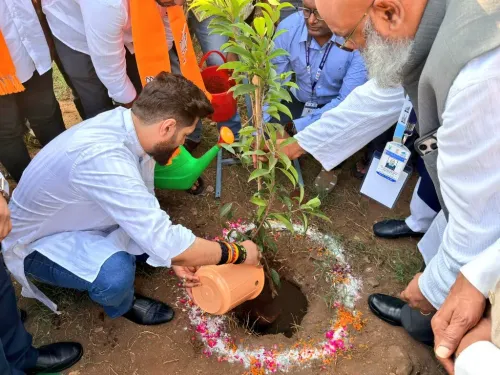
Chirag Paswan visited CMFRI on June 5, 2026 , coinciding with World Environment Day .
He praised CMFRI's work on marine fishery resource conservation, fisheries management, and scientific support to India's seafood sector.
CMFRI , established in 1947 under ICAR , is India's apex marine fisheries research body.
The visit connects to key policies including the National Policy on Marine Fisheries 2017 and Pradhan Mantri Matsya Sampada Yojana (2020) .
Potential policy linkages between CMFRI scientific advisories and Food Processing Ministry value-addition schemes are being watched.
India's marine fisheries sector supports approximately 4 million coastal fishing households.
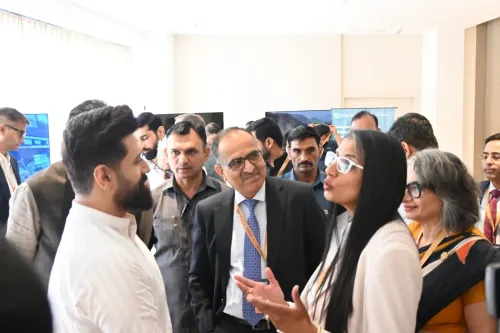
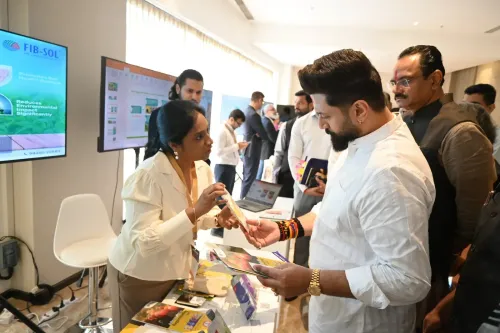
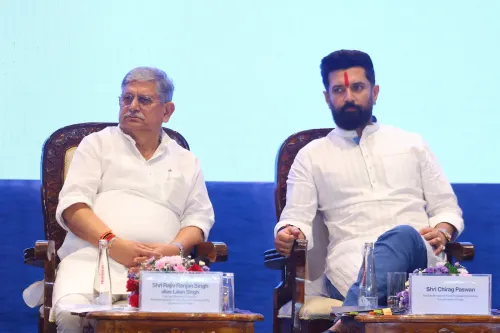
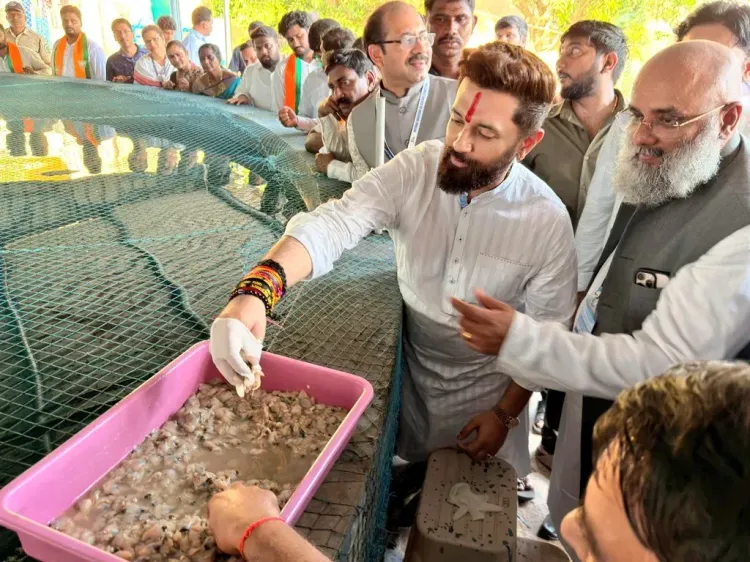
Union Food Processing Minister Chirag Paswan on Friday, June 5, 2026 visited the Central Marine Fisheries Research Institute (CMFRI), where he witnessed firsthand the institute's work on marine resource conservation, fisheries management, and providing a scientific foundation to India's seafood sector.
Posting on X, the minister wrote: 'Is mauke par CMFRI dwara samudri matsya sansadhanon ke sanrakshan, matsya palan aur desh ke samudri khadya kshetra ko vaigyanik aadhar pradan karne ki disha mein kiye ja rahe utkrisht karyon ko nikat se dekhne ka mauka mila.' ['On this occasion, I got the opportunity to closely observe the excellent work being done by CMFRI in the direction of conservation of marine fishery resources, fisheries management, and providing a scientific foundation to the country's seafood sector.'] He added that the efforts to simultaneously advance science, conservation, and livelihoods were 'inspiring.'
Context
The visit coincided with World Environment Day (June 5), lending symbolic weight to the minister's engagement with marine conservation research. CMFRI, established in 1947 under the Indian Council of Agricultural Research (ICAR), is India's apex body for marine fishery resource assessment and sustainable utilisation research. Its scientific advisories directly inform policy decisions affecting millions of coastal fishermen and seafood processors across the country.
Policy Backdrop
The visit comes against the backdrop of two key policy frameworks: the National Policy on Marine Fisheries 2017, which emphasised ecosystem-based management and scientific research for resource conservation, and the Pradhan Mantri Matsya Sampada Yojana, launched in 2020 to boost fish production while promoting sustainable aquaculture and marine fisheries management. Successive governments have sought to bridge the gap between marine research outputs and livelihood programmes, aligning with India's broader blue economy goals and the UN Sustainable Development Goal 14 on ocean conservation.
As the minister heading the Food Processing Ministry, Paswan's interest in CMFRI's work points to a potential convergence between scientific resource assessment and value-addition schemes in the marine products processing sector — an area where India holds significant export potential.
Stakeholders and Impact
India's marine fisheries sector supports the livelihoods of an estimated 4 million coastal fishing households, while the seafood processing industry is a major contributor to agricultural exports. CMFRI's research on stock assessments, conservation zones, and sustainable harvest levels directly determines the regulatory environment within which both fishermen and processors operate. A closer alignment between CMFRI's scientific findings and the Food Processing Ministry's schemes could strengthen the value chain from catch to processed export.
Coastal fishing communities, seafood exporters, and marine ecosystem advocates are all stakeholders in how the government translates CMFRI's advisories into actionable policy and investment.
What's Next
Observers will watch for any formal policy linkages that emerge between CMFRI's annual marine fish stock assessment reports and the Food Processing Ministry's schemes for marine product value addition. The minister's visit, timed on World Environment Day, may also signal a broader push to integrate conservation science into the ministry's planning for the seafood processing sector — a move that would have implications for both sustainable fisheries governance and India's seafood export competitiveness.
Point of View
Conservation, and livelihoods, the minister is laying rhetorical groundwork for potential policy convergence between ICAR's research outputs and his ministry's schemes. This fits a broader pattern of the current government seeking to frame agricultural and fisheries policy within a sustainability narrative, particularly as India pushes to expand its seafood export footprint. Whether the visit translates into concrete programmatic linkages or remains symbolic will be the real test.
NationPress
20 Oct 2026
Frequently Asked Questions
Why did Chirag Paswan visit CMFRI?
Chirag Paswan visited CMFRI on June 5, 2026 to observe the institute's work on marine fishery resource conservation, fisheries management, and scientific support to India's seafood sector, posting about the visit on World Environment Day.
What is CMFRI and what does it do?
The Central Marine Fisheries Research Institute (CMFRI) is an apex research body under ICAR, established in 1947, mandated to assess marine fishery resources, advance conservation science, and support sustainable utilisation of India's marine fisheries.
What is the Pradhan Mantri Matsya Sampada Yojana?
Pradhan Mantri Matsya Sampada Yojana is a government scheme launched in 2020 aimed at boosting fish production, promoting sustainable aquaculture, and improving marine fisheries management across India.
How does CMFRI research affect Indian fishermen?
CMFRI's stock assessments and conservation advisories directly inform regulations on fishing zones and harvest limits, affecting the livelihoods of an estimated 4 million coastal fishing households in India.
What is India's blue economy policy on marine fisheries?
India's blue economy framework, supported by the National Policy on Marine Fisheries 2017 and aligned with UN SDG-14, emphasises ecosystem-based management, scientific research, and sustainable exploitation of marine resources for long-term economic and environmental benefit.