Shivraj Singh Chouhan Hails NAFED Kalyan Scholarship for Farmers' Kids
Synopsis
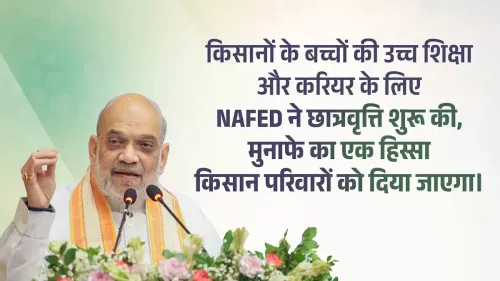
Union Agriculture Minister Shivraj Singh Chouhan has praised NAFED's newly launched 'Kalyan' Scholarship Scheme, which provides financial support to meritorious children of farmer families, calling it an inspiring and commendable step toward removing economic barriers to education in rural India.
Key Takeaways
Union Agriculture Minister Shivraj Singh Chouhan publicly praised NAFED on 23 June 2026 for launching the 'Kalyan' Scholarship Scheme for children from farmer families.
The scheme aims to remove financial barriers that prevent meritorious rural students from pursuing education, according to Chouhan's post on X.
NAFED , established in 1958 , is expanding its traditional marketing and procurement mandate into social-sector welfare with this initiative.
Chouhan stated that children from farming households have 'talent, ability, intellect, and potential' but are often held back by lack of money — a constraint the scholarship seeks to end.
Exact beneficiary numbers, selection criteria, scholarship amounts, and state-level rollout details are yet to be officially announced by NAFED.
The initiative reflects a broader national policy push encouraging agricultural cooperatives to complement income-support schemes like PM-KISAN with human-capital interventions.
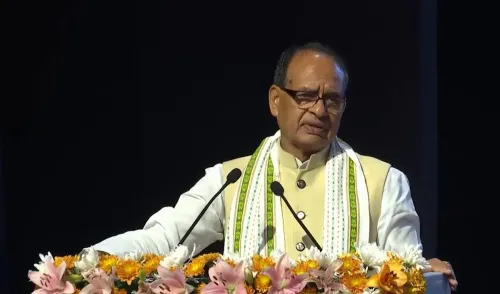
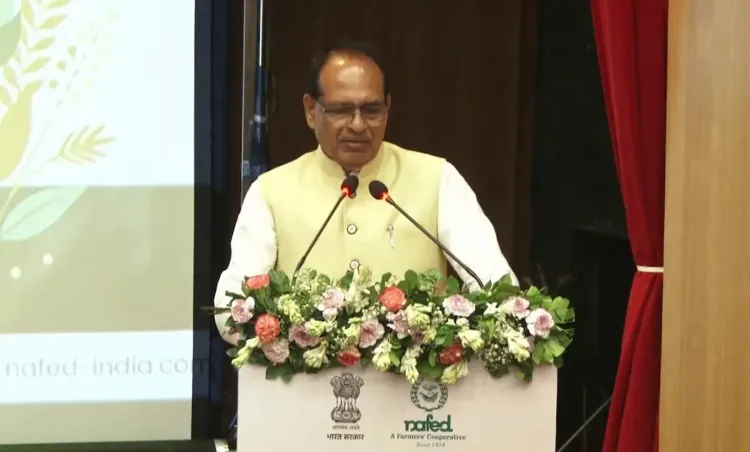
Union Agriculture Minister Shivraj Singh Chouhan on Tuesday, 23 June 2026 praised the National Agricultural Cooperative Marketing Federation of India (NAFED) for launching the 'Kalyan' Scholarship Scheme, which provides financial support to meritorious children from farmer families to pursue higher education.
Posting on X, Chouhan said he congratulated NAFED for the 'inspiring initiative' of awarding scholarships to talented sons and daughters of farmer families through the Kalyan scheme. In his words: 'yah sachmuch mein bahut abhinandaniya hai' ('this is truly most commendable'). He noted that children from farming households possess talent, ability, intellect, and potential, but financial constraints often stand in their way — a barrier that NAFED's scholarship now seeks to remove.
Context
NAFED, established in 1958, is the apex cooperative body under the Ministry of Agriculture and Farmers Welfare, mandated primarily for the marketing and procurement of agricultural produce. The Kalyan Scholarship Scheme marks a significant expansion of NAFED's role into social-sector welfare, specifically targeting educational mobility for rural households.
Chouhan's endorsement carries institutional weight: as the minister who oversees NAFED, his public praise signals that the scheme aligns with the ministry's broader agenda of holistic farmer welfare — one that goes beyond income support to address human-capital constraints in agricultural families.
Policy Backdrop
Successive central governments have encouraged agricultural cooperatives and Farmer Producer Organisations (FPOs) to widen their mandate beyond procurement into welfare activities that complement direct income-transfer schemes such as PM-KISAN. The Kalyan Scholarship Scheme fits squarely within this pattern, using NAFED's cooperative infrastructure to channel educational support to a constituency that has historically been underserved in higher-education access.
The initiative also reflects a policy recognition that non-income barriers — including the inability to afford college fees, hostel costs, and study materials — are as significant as income poverty in determining whether a farmer's child can access quality education. By removing what Chouhan called the 'badhyata' ('compulsion' or 'constraint') of money, the scheme aims to convert latent talent in rural households into skilled human capital.
Stakeholders and Impact
The primary beneficiaries are meritorious students from farmer families across India who face financial barriers to continuing education. Rural students applying for undergraduate or postgraduate programmes are expected to be the core recipients, though the exact eligibility criteria, beneficiary numbers, and funding scale are yet to be officially detailed by NAFED.
Agricultural cooperatives, state governments, and rural education bodies are indirect stakeholders: the scheme could serve as a template for other cooperative federations to replicate similar welfare interventions. If integrated with existing rural skilling or scholarship portals, the reach could be significantly amplified.
What's Next
NAFED and the Ministry of Agriculture are expected to release detailed guidelines covering selection criteria, scholarship amounts, eligible courses, and the application process in subsequent communications. Observers will watch whether the Kalyan Scheme is linked to established platforms such as the National Scholarship Portal or state-level education welfare programmes to streamline disbursement.
The scheme's rollout will be a test of agricultural cooperatives' capacity to deliver social-sector outcomes at scale — and could set a precedent for how India's cooperative ecosystem contributes to rural human-capital development beyond its traditional marketing mandate.
Point of View
Not just commodity marketing. This fits a broader BJP governance narrative of using existing institutional infrastructure to deliver welfare without creating new bureaucratic structures. By framing the scholarship as removing a 'compulsion' rather than providing charity, the minister is also making a political argument: that farmer families are capable and aspirational, not merely in need of income support. The scheme's real test will come in its implementation details and whether NAFED has the administrative bandwidth to run a credible, merit-based selection process at national scale.
NationPress
22 Sept 2026
Frequently Asked Questions
What is the NAFED Kalyan Scholarship Scheme?
The NAFED Kalyan Scholarship Scheme is an initiative by the National Agricultural Cooperative Marketing Federation of India (NAFED) that provides scholarships to meritorious children from farmer families to help them overcome financial barriers to higher education.
Who praised the NAFED Kalyan Scholarship and why?
Union Agriculture Minister Shivraj Singh Chouhan praised the scheme on 23 June 2026, calling it an 'inspiring and commendable' initiative that removes the financial constraint preventing talented children of farmers from pursuing education.
Who is eligible for the NAFED Kalyan Scholarship?
The scholarship targets meritorious sons and daughters of farmer families in India. Detailed eligibility criteria, including income limits, academic cut-offs, and eligible courses, are yet to be officially announced by NAFED.
What is NAFED and what does it do?
NAFED, or the National Agricultural Cooperative Marketing Federation of India, is the apex cooperative body under the Ministry of Agriculture established in 1958. It primarily handles marketing, procurement, and price-support operations for agricultural commodities, and is now expanding into farmer welfare activities.
How does the Kalyan Scholarship fit into India's farmer welfare policy?
The scheme aligns with a broader national policy encouraging agricultural cooperatives to go beyond marketing and complement direct income-transfer programmes like PM-KISAN by addressing non-income barriers such as education costs that limit social mobility for farming households.