Shivraj Singh Chouhan Plants Sapling in Delhi, Urges Citizens to Join Daily Drive
Synopsis
Union Agriculture Minister Shivraj Singh Chouhan planted a sapling in New Delhi on 4 June 2026 as part of his daily tree-plantation pledge, urging citizens to give a missed call on 8929629475 to enrol as 'Shiv Vriksh Mitra' volunteers and join the #OnePlantADay drive to protect nature for future generations.
Key Takeaways
Union Agriculture Minister Shivraj Singh Chouhan planted a sapling in New Delhi on 4 June 2026.
He framed it as part of a personal pledge to plant a tree every day.
Citizens are invited to give a missed call on 8929629475 to become a 'Shiv Vriksh Mitra'.
The post used the hashtag #OnePlantADay and carried two plantation images.
The appeal aligns with India's National Mission for a Green India and Paris Agreement forest cover goals.
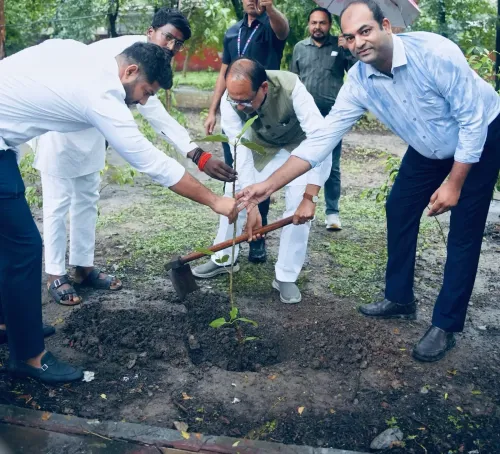
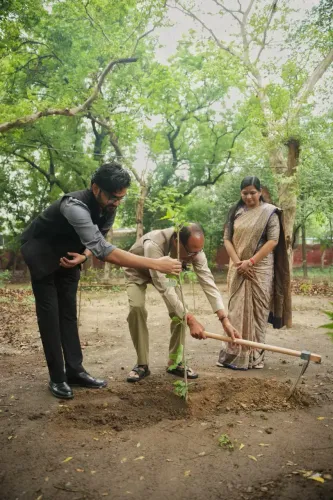
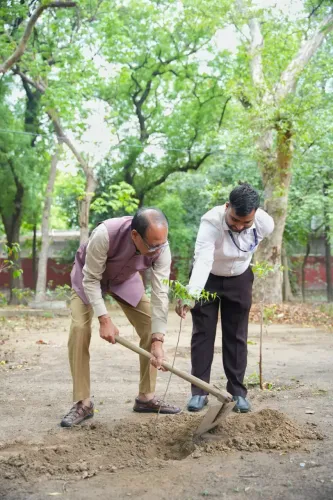
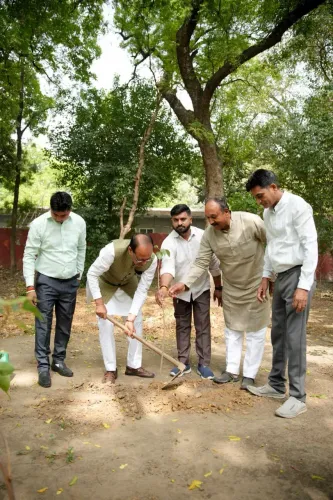
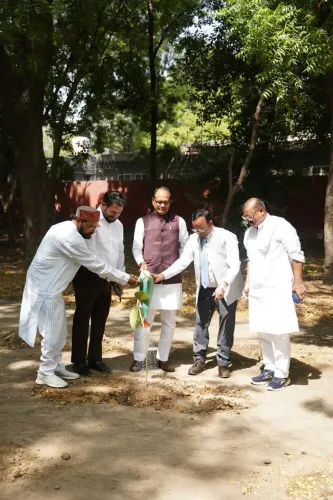
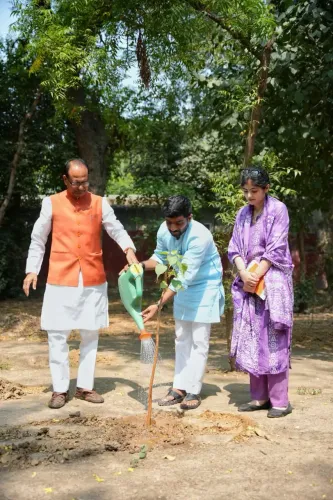
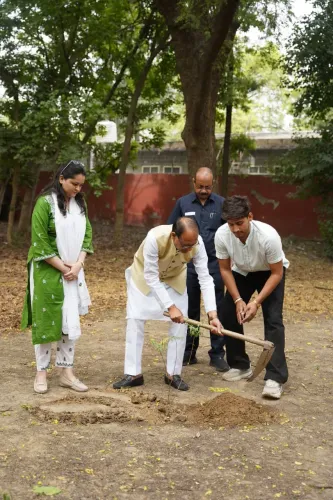
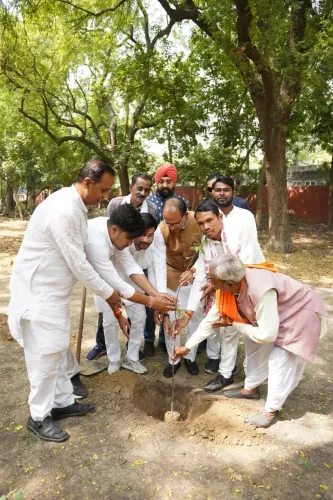
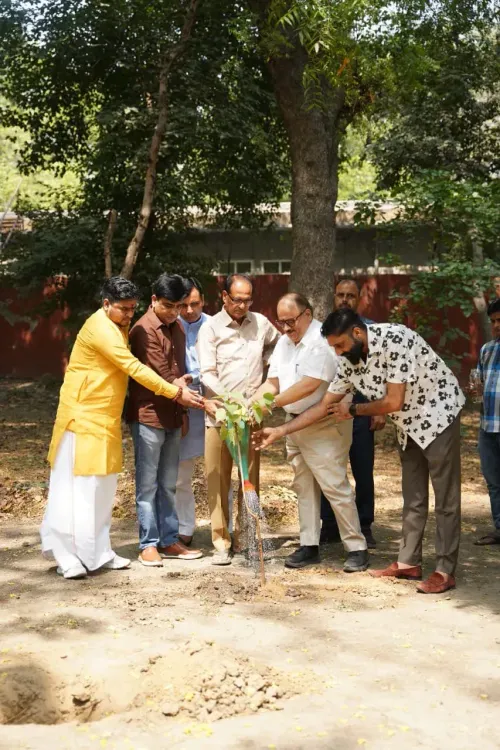
Union Agriculture Minister Shivraj Singh Chouhan planted a sapling in New Delhi on Thursday, 4 June 2026, continuing what he described as a personal pledge to plant a tree every day, and called on citizens to register as volunteers in a green outreach programme he is championing under the banner 'Shiv Vriksh Mitra' (Shiv's Tree Friend).
Context
In a post on X, the minister wrote in Hindi that he had planted a sapling in the capital 'as part of the resolve to plant trees daily', and appealed to the public to 'come, let us plant trees and make our own lives and the lives of future generations happier'. He shared a mobile number, 8929629475, asking supporters to give a missed call to enrol as a Shiv Vriksh Mitra.
The message closed with the line, 'Come, let us together take a pledge to save nature', and carried the hashtag #OnePlantADay. The post was accompanied by two images of the plantation activity.
Policy backdrop
The appeal sits within a long-standing arc of state-led afforestation in India. The National Mission for a Green India, launched under the National Action Plan on Climate Change of 2008, set targets for increasing forest and tree cover and restoring degraded ecosystems, and remains the principal framework for federally backed plantation drives.
India's wider climate commitments under the Paris Agreement include creating an additional carbon sink through forest and tree cover. Personal plantation pledges by senior ministers are often pitched as visible nudges to amplify these national goals at the citizen level.
Chouhan, a senior BJP leader and four-term former Chief Minister of Madhya Pradesh, has for years publicly associated himself with daily tree-planting as a personal discipline, a practice he carried into his current role as Union Minister of Agriculture and Farmers Welfare and Rural Development.
Stakeholders and impact
The missed-call enrolment model is a familiar political-mobilisation tool in India, used previously by parties and government campaigns to build large contact databases with minimal friction for participants. Applied to an environmental cause, it lowers the entry barrier for citizens who may not otherwise engage with formal volunteer programmes.
The primary stakeholders are ordinary citizens, resident welfare associations, school and college eco-clubs, and environmental non-profits that typically partner with such drives during the pre-monsoon and monsoon months when plantation survival rates are highest.
For the agriculture ministry, the optics of the minister planting saplings personally also align with the department's broader narrative on soil health, agro-forestry and farmer-led tree cultivation, areas where overlapping programmes on natural farming and rural livelihoods are already in motion.
What's next
The coming weeks will see state governments roll out their annual monsoon plantation drives, with several states having previously announced numerical targets running into crores of saplings. Updates on national forest cover are tracked periodically by the Ministry of Environment, Forest and Climate Change, and form the official yardstick against which such campaigns are eventually measured.
Whether the Shiv Vriksh Mitra outreach evolves into a structured volunteer network with verifiable plantation data, or remains a personal campaign by the minister, will determine its longer-term footprint. For now, the post extends a familiar template in Indian public life, of senior leaders using personal ritual and social media to seed mass participation in environmental action.
Point of View
Projecting a continuity of persona from his Madhya Pradesh chief ministership into his Union role. The missed-call enrolment mechanism borrows a tested political-mobilisation technique and grafts it onto a climate-friendly cause, which is low-risk and broadly appealing across the spectrum. For the BJP, it reinforces a soft-power narrative around individual responsibility and cultural reverence for trees, complementing harder policy levers on afforestation. The real test will be whether the outreach produces auditable plantation outcomes or remains primarily a visibility exercise.
NationPress
18 Oct 2026
Frequently Asked Questions
What is the Shiv Vriksh Mitra initiative?
It is a citizen outreach being promoted by Union Agriculture Minister Shivraj Singh Chouhan that invites people to enrol as volunteers in his daily tree-planting drive by giving a missed call on 8929629475.
How can I join Shivraj Singh Chouhan's One Plant A Day campaign?
According to his post, interested citizens can give a missed call to 8929629475 to register as a 'Shiv Vriksh Mitra' and participate in the #OnePlantADay initiative.
Where did Shivraj Singh Chouhan plant a tree on 4 June 2026?
He planted a sapling in New Delhi as part of his stated daily plantation pledge, and shared images of the activity on X.
What national programme supports tree plantation drives in India?
The National Mission for a Green India, launched under the 2008 National Action Plan on Climate Change, is the principal central framework for afforestation and ecosystem restoration.
Why do Indian ministers promote personal tree-planting drives?
Such drives serve both as symbolic public engagement with environmental goals and as practical support to India's commitments under the Paris Agreement to expand forest and tree cover.