CJI Surya Kant launches Punjab youth drug rehabilitation drive, runs till October 31
Synopsis
The Chief Justice of India personally inaugurated Punjab's most structured legal-services-led drug rehabilitation drive to date — a three-phase, quarter-long campaign that explicitly targets incarcerated addicts alongside at-risk youth, and is designed to repeat every quarter rather than end in October.
Key Takeaways
Chief Justice of India Justice Surya Kant launched the Comprehensive Youth Recovery and Rehabilitation Campaign in Punjab on 18 July 2025 .
The campaign runs until 31 October 2025 and will be repeated every quarter for long-term impact.
A three-phase plan covers institutional mapping (July), voluntary counselling and de-addiction referrals (September), and post-treatment rehabilitation (October).
Special focus is placed on incarcerated persons with substance dependence, helping them recover with dignity.
All District Legal Services Authorities (DLSAs) in Punjab will implement the drive in mission mode, supported by health, prison, education, police, and civil society partners.
Recovered youth will be linked with schools, vocational training, employment exchanges, and sports programmes to prevent relapse.
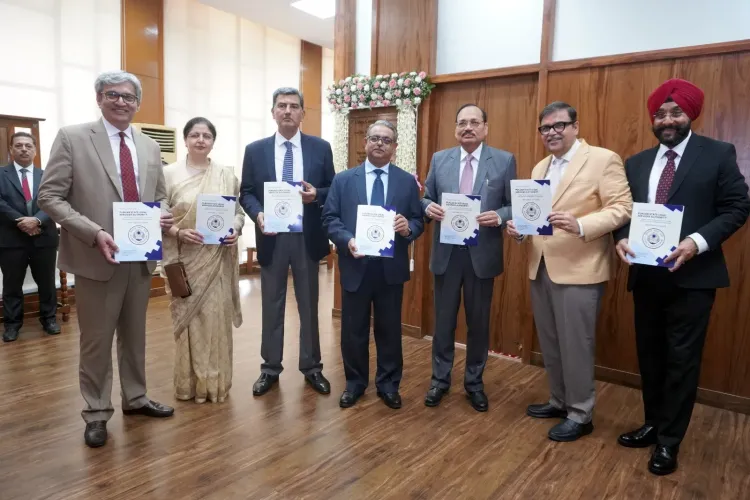
Chief Justice of India Justice Surya Kant on Saturday, 18 July 2025, formally launched the Comprehensive Youth Recovery and Rehabilitation Campaign in Punjab, a state-wide, three-month initiative designed to combat rising substance abuse among young people. The campaign was inaugurated in Chandigarh in the presence of the Acting Chief Justice of the Punjab and Haryana High Court and several sitting High Court judges.
Campaign Structure and Three-Phase Plan
The drive will be run in mission mode by all District Legal Services Authorities (DLSAs) under the Punjab State Legal Services Authority (PSLSA) and is scheduled to operate until 31 October 2025. Officials confirmed the campaign will not conclude in October but will be repeated every quarter for sustained, long-term impact.
A structured three-phase plan underpins the initiative. Phase One (18–31 July) focuses on institutional preparation, capacity building, district-level mapping, and identification of vulnerable individuals and high-risk areas. Phase Two (1–30 September) covers voluntary counselling, family counselling, and referrals to government de-addiction centres, with strict confidentiality maintained for all beneficiaries. Phase Three (1–31 October) addresses post-treatment rehabilitation and follow-up, linking recovered youth with schools, colleges, vocational training, skill development programmes, employment exchanges, and sports and yoga initiatives to prevent relapse.
Focus on Incarcerated Youth and Vulnerable Groups
A notable feature of the campaign is its explicit attention to incarcerated persons suffering from substance dependence. Authorities said special focus will be placed on helping imprisoned individuals overcome addiction with dignity — an acknowledgement that Punjab's prisons house a significant population of drug-dependent inmates. This is the first time the legal services framework in the state has directly embedded prison-based rehabilitation into a structured quarterly drive of this scale.
Multi-Sectoral Network to Drive Implementation
The campaign draws on a broad coalition of government and civil society actors. The implementing network includes the Health Department, Prison Department, education and skill development agencies, police, civil society organisations, and community leaders. The PSLSA has appealed to parents, teachers, youth groups, and healthcare professionals to actively participate in building a drug-free Punjab.
This comes amid persistent concern over Punjab's drug crisis, which has been a subject of political and judicial scrutiny for over a decade. Notably, this is among the most structured legal-services-led interventions in the state, integrating judicial oversight with public health infrastructure.
Significance and What Comes Next
The involvement of the Chief Justice of India in inaugurating a state-level rehabilitation drive signals the judiciary's intent to move beyond adjudication into preventive and restorative action. With the first phase already under way, district authorities are expected to complete vulnerability mapping by 31 July, paving the way for the counselling rollout in September. The campaign's quarterly repetition model, if executed consistently, could serve as a replicable template for other states grappling with substance abuse.
Point of View
However well-structured, can deliver public health outcomes that the health ministry itself has struggled to achieve. The quarterly repetition model is the most credible design element here — one-off drives have historically produced optics, not outcomes. The real test will be whether district-level implementation holds after the inaugural momentum fades and the Chief Justice's attention moves elsewhere.
NationPress
17 Oct 2026
Frequently Asked Questions
What is the Comprehensive Youth Recovery and Rehabilitation Campaign in Punjab?
It is a state-wide, three-month anti-drug initiative launched by Chief Justice of India Justice Surya Kant on 18 July 2025, running until 31 October 2025. The campaign is implemented by all District Legal Services Authorities in Punjab and targets substance-dependent youth, including incarcerated individuals, through counselling, de-addiction referrals, and post-treatment rehabilitation.
What are the three phases of the Punjab drug rehabilitation campaign?
Phase One (18–31 July) involves institutional preparation and vulnerability mapping. Phase Two (1–30 September) covers voluntary and family counselling plus referrals to de-addiction centres. Phase Three (1–31 October) focuses on post-treatment follow-up and linking recovered youth with education, vocational training, and employment opportunities.
Will the campaign end in October 2025?
No. Officials confirmed the drive will be repeated every quarter beyond October 2025 to ensure long-term support for affected youth, making it a sustained intervention rather than a one-time event.
Why is there a special focus on incarcerated persons in this campaign?
Punjab's prisons house a significant population of drug-dependent inmates. The campaign specifically addresses this group to help them overcome addiction with dignity, recognising that rehabilitation inside correctional facilities is critical to reducing relapse after release.
Who is implementing the campaign and how can people participate?
All District Legal Services Authorities in Punjab are implementing the drive in mission mode, supported by the Health Department, Prison Department, education agencies, police, and civil society. The Punjab State Legal Services Authority has appealed to parents, teachers, youth groups, and healthcare professionals to join the effort.