CJP founder Abhijeet Dipke: Movement's win wasn't Pradhan's exit but public courage
Synopsis
The Cockroach Janta Party's founder says the Delhi student movement's real victory was not forcing a minister's exit — it was breaking a decade-long culture of fear around questioning the government. With a volunteer base that grew from 20 to 300, the CJP is now deciding what kind of organisation it wants to become — and it is not a political party.
Key Takeaways
CJP founder Abhijeet Dipke called citizens' courage to question the government — not Dharmendra Pradhan's resignation — the movement's greatest achievement.
The outfit's volunteer base grew from 10–20 people at the start of the protests to more than 300 .
Dipke ruled out immediate electoral ambitions, describing the CJP as a 'public pressure group' .
He cited 10–12 years of citizen reluctance to speak out against the government due to fear of police action or legal consequences.
Education remains the organisation's core focus, with plans to extend support to students across multiple states.
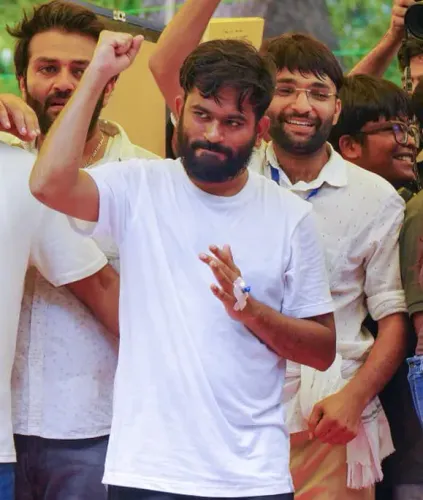
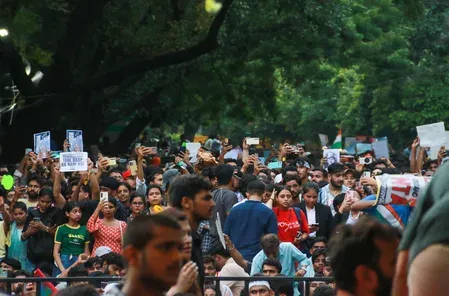
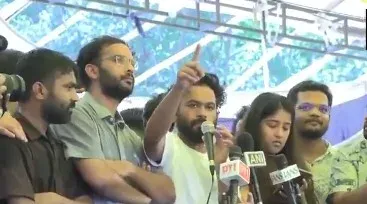
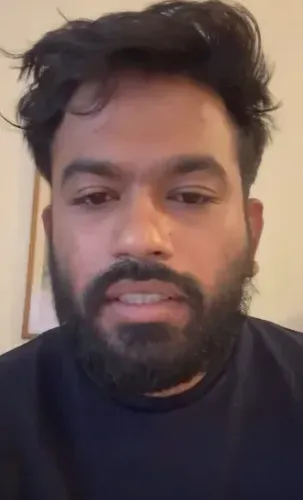
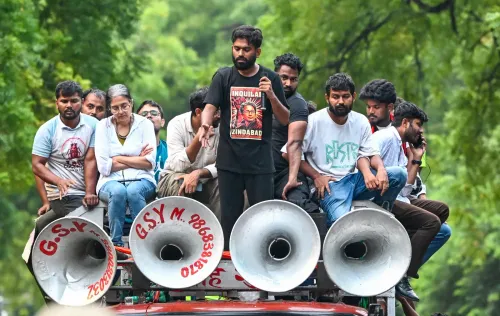
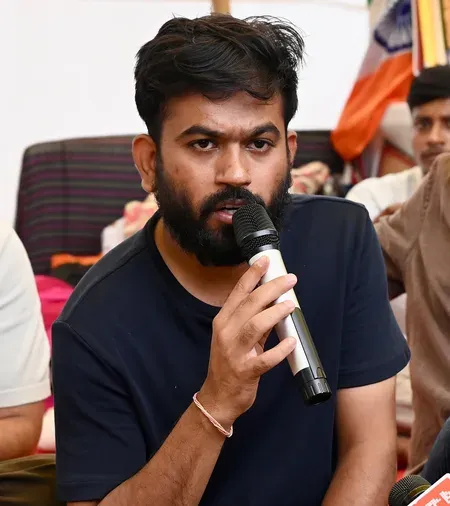
Cockroach Janta Party (CJP) founder Abhijeet Dipke on Monday, 3 August said the student-led protest movement's most significant achievement was not the resignation of Education Minister Dharmendra Pradhan, but the renewed willingness of ordinary citizens to challenge the government without fear. Speaking in New Delhi, Dipke outlined the outfit's immediate priorities and ruled out any near-term foray into electoral politics.
Regrouping After the Protests
Dipke said the organisation's first order of business is to consolidate its expanded volunteer base before charting its next steps. 'Right now our focus is to regroup. When we started this protest, our team was very small, around 10 to 20 people. But as the movement progressed, many people and volunteers came forward. Today, our volunteer team has grown to more than 300 people,' he said. He added that the leadership intends to seek feedback from volunteers on what could have been done better before deciding the structure of the organisation going forward.
The 'Biggest Achievement' — Not Pradhan's Resignation
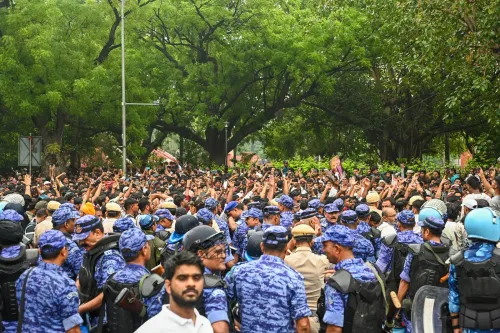
Dipke was emphatic that the movement's true measure of success lay beyond any single ministerial scalp. 'For me, the biggest achievement of this protest is not the resignation of Dharmendra Pradhan. The biggest achievement is the courage and determination shown by people to question the government, demand answers, and come out on the streets to fight for their rights,' he said. He argued that for the past 10–12 years, many citizens had been reluctant to speak out against the government, fearing police action, legal cases, or even imprisonment.
Democracy and the Duty to Listen
Invoking the foundational principles of democratic governance, Dipke argued that elected governments are obligated to respond when citizens raise legitimate concerns. 'This is how democracy should function. When people express their concerns, the government should listen and act on them. When lakhs of students were demanding the removal of Dharmendra Pradhan, he should have been removed,' he said. He drew a parallel with the Emergency era, contending that mass public movements — not electoral contests alone — have historically been the more effective check on state overreach.
No Electoral Ambitions — For Now
Asked whether the CJP plans to contest elections, Dipke was unequivocal. The organisation, he said, sees itself as a 'public pressure group' rather than a political party. 'During the Emergency, if people had thought they could end it only by contesting elections, it would not have been possible,' he noted. He framed youth issues — unemployment, education quality, and the cost of living — as inherently political, tied directly to decisions made by those in power.
Focus on Education Across States
Dipke reaffirmed that education remains the CJP's core issue and that the group intends to extend its presence wherever students face systemic challenges. 'Wherever there is an issue related to education, we will be there. The education system in almost every state is facing challenges, and students are deeply frustrated,' he said. The remarks signal an ambition to scale the organisation's grassroots reach well beyond the New Delhi protests that first brought it national attention.
Point of View
The CJP insulates itself from the inevitable question of what it actually won. But the harder test lies ahead: translating a protest moment into a durable organisation is where most such movements falter. The jump from 20 to 300 volunteers is real, but 300 is a thin base for the pan-India education agenda Dipke is now articulating. His explicit rejection of electoral politics also carries a risk — pressure groups without institutional leverage tend to fade once the media cycle moves on. The Emergency analogy is powerful rhetoric, but the Emergency ended through elections, not street pressure alone.
NationPress
18 Sept 2026
Frequently Asked Questions
What does CJP founder Abhijeet Dipke consider the biggest achievement of the Delhi protests?
Dipke says the movement's greatest achievement was restoring citizens' willingness to question the government without fear — not the resignation of Education Minister Dharmendra Pradhan. He argued that for 10–12 years, many people had been reluctant to speak out due to fear of police action or legal consequences.
How large is the Cockroach Janta Party's volunteer base after the protests?
The CJP's volunteer base has grown from 10–20 people at the start of the protests to more than 300. Dipke said the organisation plans to seek feedback from these volunteers before deciding its future structure and direction.
Will the CJP contest elections?
No, at least not in the immediate future. Dipke explicitly ruled out electoral ambitions, describing the CJP as a 'public pressure group' rather than a political party. He drew a parallel with the Emergency era to argue that mass public movements are a more effective check on government than electoral contests alone.
What issues will the CJP focus on going forward?
Education is the organisation's stated core focus. Dipke said the CJP will extend its presence to any state where students face systemic challenges. He also identified unemployment and the cost of living as political issues that the group intends to address.
Why did students demand Dharmendra Pradhan's resignation?
The source does not detail the specific grievances that led to demands for Pradhan's removal, beyond indicating they were part of a broader student-led protest movement. Dipke's remarks suggest the protests centred on education policy and accountability.