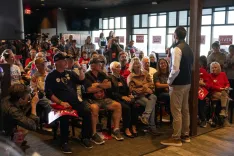
Typhoid-hit Abhijeet Dipke vows protest until Dharmendra Pradhan quits
Synopsis
Even a typhoid diagnosis has not stopped Abhijeet Dipke, whose Cockroach Janta Party is pressing the Centre to sack Education Minister Dharmendra Pradhan over the NEET paper leak scandal. With 47 NTA officials dismissed, a stricter anti-leak bill cleared by Cabinet, and three rounds of talks underway, the government has moved — but not on the one demand the CJP says is non-negotiable.
Key Takeaways
Abhijeet Dipke , founder of the Cockroach Janta Party , confirmed a typhoid diagnosis on 25 July but pledged the protest would continue.
The CJP's central demand remains the resignation of Union Education Minister Dharmendra Pradhan , whom it holds responsible for the NEET paper leak .
A third round of talks with the Centre was scheduled for Saturday; the second round on Friday yielded in-principle agreement on compensation and legal cases but no decision on Pradhan's exit.
The government has replaced the Education Secretary and sacked 47 NTA officials , steps the CJP called insufficient.
The Union Cabinet approved a Draft Bill proposing up to 10 years jail and a ₹10 crore fine for organised paper leaks — stricter than the current law.
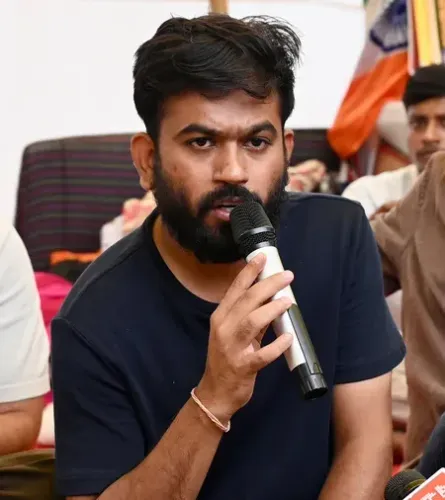
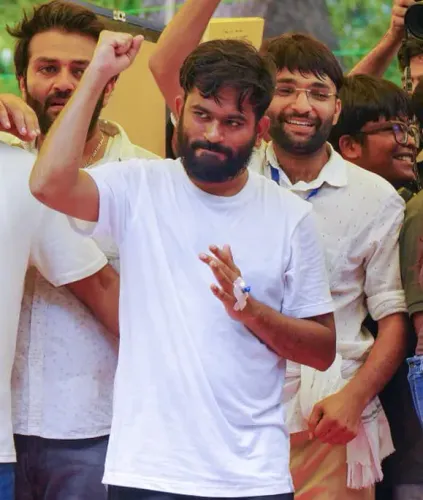
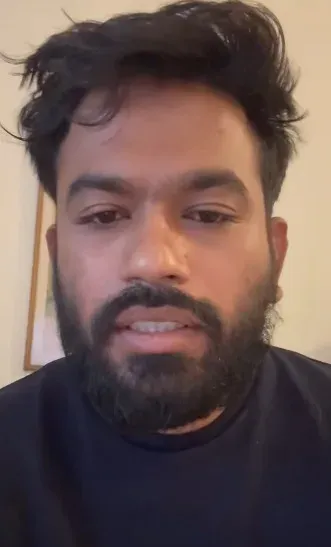
Abhijeet Dipke, founder of the Cockroach Janta Party (CJP), announced on Saturday, 25 July that he has been diagnosed with typhoid, but insisted the protest movement demanding the resignation of Union Education Minister Dharmendra Pradhan would not halt. The disclosure came via a post on social media platform X, where Dipke wrote: 'Have been diagnosed with typhoid, but the fight will go on until Dharmendra Pradhan resigns.'
Dipke's Health Update
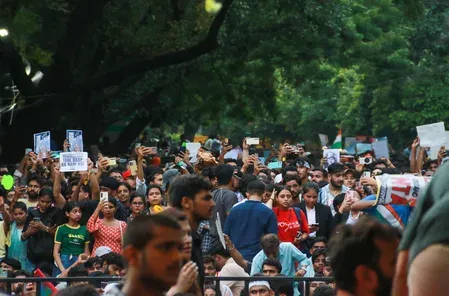
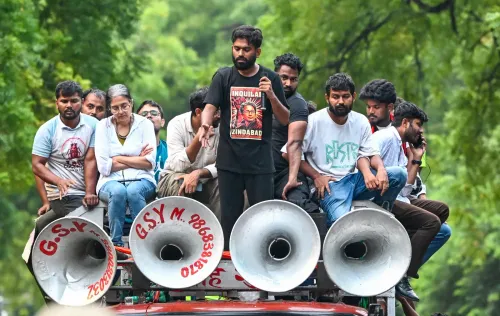
In a video message, Dipke said his blood test reports had confirmed typhoid and that he was receiving IV drips every morning as part of his treatment. Despite the illness, he expressed gratitude to CJP supporters — whom he called 'cockroaches' in keeping with the party's identity — for sustaining peaceful demonstrations across the country. 'I firmly believe that if we continue our peaceful protest, Dharmendra Pradhan's resignation will surely happen,' he said.
CJP's Stand Ahead of Third Round of Talks
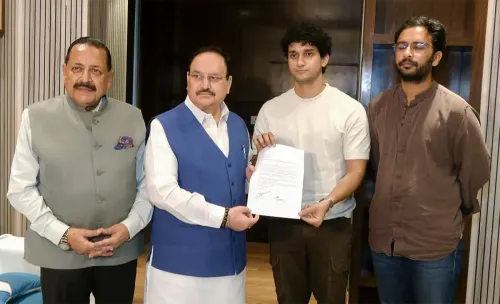
The statement came hours before a scheduled third round of talks with the Centre. On Friday, Union Ministers J.P. Nadda and Jitendra Singh had held a second round of discussions with a CJP delegation at the Constitution Club in New Delhi, where the government indicated it would revert on the party's demands.
CJP spokesperson Ashutosh Ranka said on Saturday morning that further talks were pointless unless the government was prepared to remove the Education Minister. 'In yesterday's meeting, we received a positive response regarding compensation and legal cases. We got an in-principle agreement, and we hope to receive the written agreement today as well. However, there has still been no concrete decision on our main demand — the resignation of Dharmendra Pradhan,' Ranka told reporters.
Ranka added that media reports suggesting Pradhan would not resign had cast doubt on the value of continued dialogue. 'If Dharmendra Pradhan is not going to resign, then please tell us what the point of holding such meetings is?' he said.
Government's Steps on the Paper Leak Row
Amid the ongoing controversy over paper leaks in competitive examinations, the government has replaced the Education Secretary and sacked 47 officials of the National Testing Agency (NTA). The CJP, however, rejected these measures as insufficient. Ranka argued that 'ultimate accountability' rested with the Education Minister, holding him directly responsible for the paper leaks and for the deaths by suicide of students following the NEET paper leak. 'He must resign,' Ranka said.
While the CJP acknowledged the government's decision on educational reforms and amendments to The Public Examinations (Prevention of Unfair Means) Act, 2024, it maintained that Pradhan's resignation remained the non-negotiable central demand.
Cabinet Clears Stricter Anti-Leak Bill
The Union Cabinet, chaired by Prime Minister Narendra Modi at the Parliament House complex on Friday, approved a Draft Bill proposing significantly stricter penalties for examination paper leaks. In cases of organised paper leaks, the Bill proposes a jail term of up to 10 years and a maximum fine of ₹10 crore — a substantial increase over the existing law, which prescribes three to five years imprisonment for individuals and five to ten years with a minimum fine of ₹1 crore for organised offences. Prime Minister Modi had publicly committed to fast-track courts and enhanced penalties to protect students' futures before the Cabinet gave its nod.
With the third round of talks imminent and the CJP holding firm on its central demand, the standoff between the protest movement and the Centre shows no sign of an early resolution.
Point of View
Sacking 47 NTA officials, and fast-tracking a tougher anti-leak law — is a classic bureaucratic containment strategy designed to absorb pressure without conceding the political headline. The CJP has read this correctly: none of those steps touch ministerial accountability. Pradhan's continuation signals that the Centre is betting the protest will dissipate before the political cost of keeping him rises further. Whether a typhoid-stricken founder and a street movement can sustain that pressure long enough to change that calculus is the real question this standoff poses.
NationPress
24 Oct 2026
Frequently Asked Questions
Why is Abhijeet Dipke protesting against Dharmendra Pradhan?
Abhijeet Dipke and the Cockroach Janta Party are demanding the resignation of Union Education Minister Dharmendra Pradhan, holding him accountable for paper leaks in competitive examinations — particularly the NEET paper leak — and for the deaths by suicide of students following the controversy.
What is Abhijeet Dipke's current health condition?
Dipke announced on 25 July that he has been diagnosed with typhoid and is receiving IV drips every morning as part of his treatment. Despite his illness, he has said the protest movement will not stop until Dharmendra Pradhan resigns.
What action has the government taken over the paper leak row?
The government has replaced the Education Secretary and sacked 47 officials of the National Testing Agency (NTA). The Union Cabinet also approved a Draft Bill proposing up to 10 years in jail and a ₹10 crore fine for organised paper leaks, tougher than the existing law.
What happened in the talks between the CJP and the Centre?
By 25 July, two rounds of talks had been held, with a third scheduled for Saturday. The second round, involving Union Ministers J.P. Nadda and Jitendra Singh at the Constitution Club, yielded an in-principle agreement on compensation and legal cases but no commitment on the CJP's main demand — Dharmendra Pradhan's resignation.
What does the amended Public Examinations Act propose?
The Draft Bill approved by the Union Cabinet proposes a jail term of up to 10 years and a maximum fine of ₹10 crore for organised paper leaks — significantly stricter than the existing Public Examinations (Prevention of Unfair Means) Act, 2024, which prescribes three to five years for individuals and five to ten years with a minimum ₹1 crore fine for organised offences.