Over 3,000 detained in Delhi as police block CJP protest at Jantar Mantar
Synopsis
Delhi was transformed into a fortress on 10 October as authorities detained over 3,000 protesters — including Mamata Banerjee, Arvind Kejriwal, and CJP leaders — to prevent a march on Jantar Mantar demanding the CEC's resignation over the SIR controversy. With protesters vowing to return Sunday and the Supreme Court set for a special sitting, the confrontation is far from over.
Key Takeaways
More than 3,000 anti-CEC protesters were detained in New Delhi on 10 October 2026 , including Mamata Banerjee , Arvind Kejriwal , and CJP leaders.
The protest demanded the resignation of Chief Election Commissioner Gyanesh Kumar over alleged irregularities in the Special Intensive Revision (SIR) of electoral rolls.
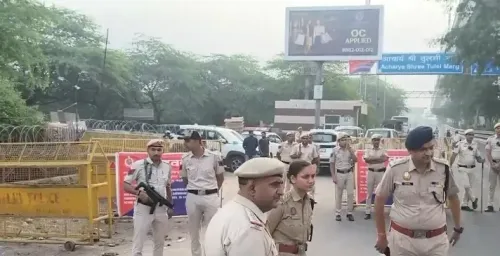
Over 30,000 police and paramilitary personnel were deployed; 45 Metro stations were closed and internet restrictions imposed in central Delhi.
Minor clashes were reported at Jhandewalan and near Akashwani Bhavan ; all detainees were released by evening.
CJP leader Ajinkya Shinde announced a fresh march on 11 October (Sunday).
The Supreme Court is expected to hold a special Sunday sitting on a contempt petition over the Metro closure order.
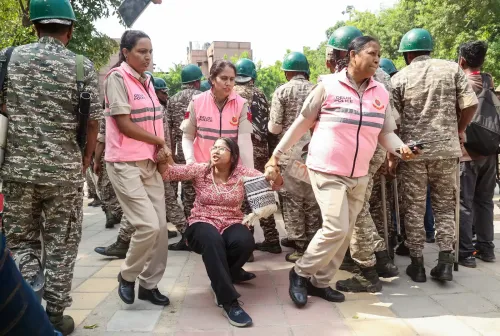
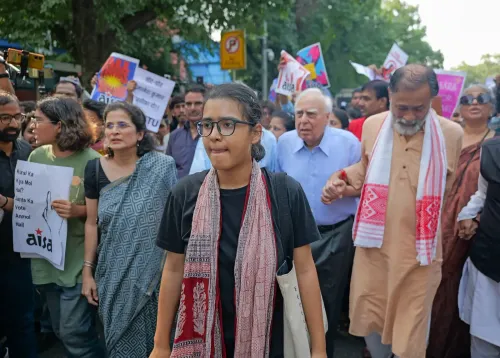
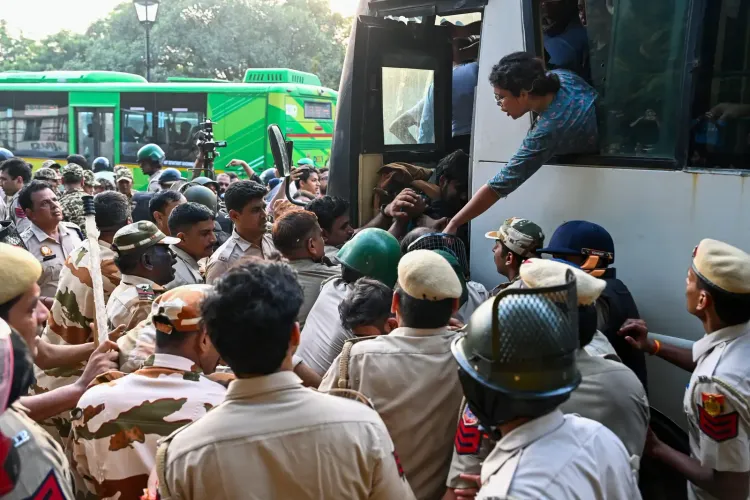
More than 3,000 anti-Chief Election Commissioner (CEC) protesters were detained across New Delhi on Saturday, 10 October 2026, as authorities deployed an unprecedented security apparatus around the capital to prevent a large-scale demonstration at Jantar Mantar. The crackdown forced the Citizens for Justice and Peace (CJP)-led agitation to splinter into several smaller gatherings across the city.
Key Detentions and Arrests
CJP leaders Abhijeet Dipke, Saurav Das, and Ashutosh Ranka were detained at around 10.30 am by police at Indira Gandhi International Airport as they arrived to march to Jantar Mantar. The protesters were demanding the resignation of Chief Election Commissioner Gyanesh Kumar over alleged irregularities in the conduct of the Special Intensive Revision (SIR) of electoral rolls.
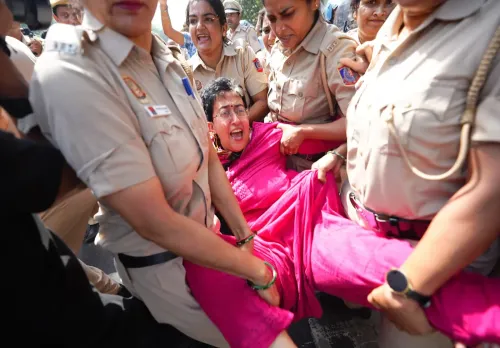
West Bengal Chief Minister Mamata Banerjee, along with several Members of Parliament from the All India Trinamool Congress (TMC), was detained from South Avenue in central Delhi. Aam Aadmi Party (AAP) leader and former Delhi Chief Minister Arvind Kejriwal, whose residence had been surrounded by Delhi Police since morning, was detained as soon as he attempted to step out to join the protest. Social media influencer Dhruv Rathee was also detained at his residence in Gurugram at around 8 am, according to a post on the CJP's official X handle, with reportedly around 50 plain-clothes police personnel arriving at his home.
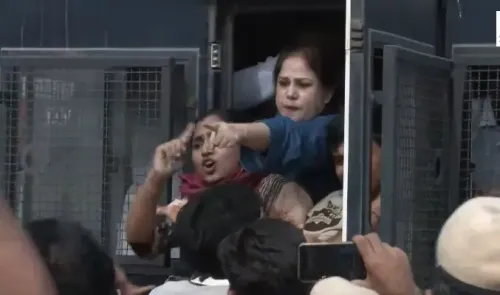
All detained individuals were taken to holding locations including Chhatrasal Stadium and various police stations, and were released later in the evening, according to police.
Security Measures and Disruptions
More than 30,000 police and paramilitary personnel were deployed across the capital. Forty-five Metro stations in the vicinity of Jantar Mantar were closed, internet restrictions were imposed in central Delhi, and traffic curbs were enforced on dozens of stretches from as early as 6 am. Schools, colleges, and courts were directed to shift to online mode for the day.
Drone surveillance was conducted at key locations, and vehicles were checked at Delhi's border entry points. Police equipped with body cameras maintained close watch on demonstrators throughout the city. The authorities had earlier denied permission for the protest, citing concerns of a repeat of the CJP's July protest at Jantar Mantar, which had turned violent.
Clashes and Incidents
Minor clashes were reported from multiple parts of the city. Stones were pelted at a bus carrying detainees in the Jhandewalan area of New Delhi. Some protesters clashed with police near Akashwani Bhavan after breaking through barricades, police said.
Political Reactions
Delhi Chief Minister Rekha Gupta condemned the protest, accusing Congress leader Rahul Gandhi, AAP leader Kejriwal, and the CJP of disrupting the peace and security of Delhi residents for political ends. 'Let it be known: Delhi will not be held hostage,' she said.
Congress MP Priyanka Gandhi Vadra criticised the mass detentions, calling the security crackdown evidence that the government is 'terrified' that its 'illegitimacy' is being exposed. Congress President Mallikarjun Kharge, in a post on social media platform X, said, 'Our youth, students, lawyers, journalists, social activists, farm union leaders, YouTubers, content creators, everyone who is questioning this regime (BJP government) is being detained. Modi Govt has turned the ‘Mother of Democracy’ into a ‘Muzzled Democracy’.'
Congress General Secretary Jairam Ramesh, also posting on X, said, 'The country’s capital has been turned into a fortress. Armed security personnel are deployed everywhere. The PM-HM duo is badly rattled and unnerved by the peaceful protests of concerned youth over the systematic attempt to strip away the right to vote granted under Article 326 of the Constitution.'
Kejriwal, for his part, said, 'They want to suppress this issue of ‘vote chori’ and continue doing it. But the people of this country will not allow this to happen.'
What Comes Next
CJP leader Ajinkya Shinde announced that protesters will march again towards Jantar Mantar on Sunday, 11 October, and will not stand down until CEC Gyanesh Kumar resigns. Separately, the Supreme Court is likely to hold a special sitting on Sunday to hear a contempt petition alleging that the blanket closure of Delhi Metro stations and suspension of train services violated a court order. A bench of Justice Joymalya Bagchi and Justice V. Mohana is expected to preside, according to a lawyer representing petitioner Shailendra Mani Tripathi.
Point of View
000 personnel, 45 Metro closures, and internet curbs — raises a pointed question: did the State’s response exceed what public order required? Denying assembly permissions, surrounding leaders’ homes at dawn, and detaining a social media influencer at his residence all represent escalations that the courts may scrutinise. The Supreme Court’s willingness to convene a special Sunday sitting suggests the judiciary shares that concern. The deeper issue is the SIR itself: if the election commission’s revision process is above reproach, a transparent rebuttal would be more effective than a security lockdown. The optics of barricading a democracy to protect an electoral institution are, at minimum, self-defeating.
NationPress
10 Oct 2026
Frequently Asked Questions
Why were over 3,000 people detained in Delhi on 10 October 2026?
They were detained as part of a large-scale CJP-organised protest demanding the resignation of Chief Election Commissioner Gyanesh Kumar over alleged irregularities in the Special Intensive Revision (SIR) of electoral rolls. Authorities had denied permission for the demonstration and deployed over 30,000 security personnel to prevent a march on Jantar Mantar.
Who are the prominent figures that were detained?
West Bengal Chief Minister Mamata Banerjee, along with several TMC MPs, was detained from South Avenue in central Delhi. AAP leader and former Delhi Chief Minister Arvind Kejriwal was detained outside his residence, and CJP leaders Abhijeet Dipke, Saurav Das, and Ashutosh Ranka were held at Indira Gandhi International Airport. Social media influencer Dhruv Rathee was also detained at his Gurugram home.
What is the Special Intensive Revision (SIR) that sparked the protest?
The SIR is a process conducted by the Election Commission of India to revise and update electoral rolls. Protesters affiliated with the CJP allege that the SIR under CEC Gyanesh Kumar was conducted with irregularities that could affect voters’ rights under Article 326 of the Constitution, which guarantees universal adult suffrage.
Is the Supreme Court involved in the Delhi protest situation?
Yes. The Supreme Court is likely to hold a special sitting on Sunday, 11 October 2026, to hear a contempt petition alleging that the blanket closure of Delhi Metro stations to prevent the protest violated a prior court order. The bench of Justice Joymalya Bagchi and Justice V. Mohana is expected to preside.
What happens next after Saturday’s detentions?
CJP leader Ajinkya Shinde announced that protesters will march again towards Jantar Mantar on Sunday, 11 October, and will continue the agitation until CEC Gyanesh Kumar resigns. The Supreme Court’s special Sunday hearing adds a legal dimension that could affect how authorities respond to any renewed protest.