CJP's Abhijeet Dipke detained before Tiranga Assembly at Connaught Place
Synopsis
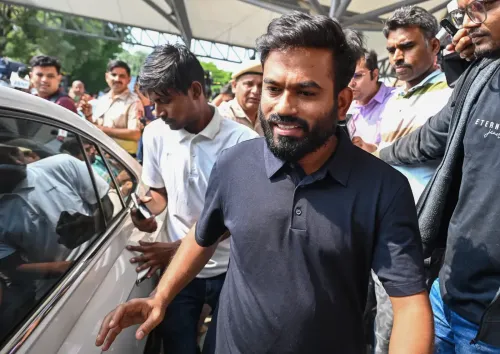
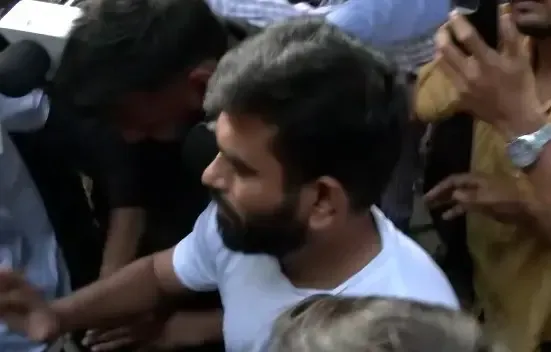
CJP founder Abhijeet Dipke was detained by Delhi Police on Friday before he could reach his own 'Tiranga Assembly' at Central Park, Connaught Place — hours after being served two legal notices citing missing NDMC permission and a court-imposed undertaking barring him from causing public disturbance for one year.
Key Takeaways
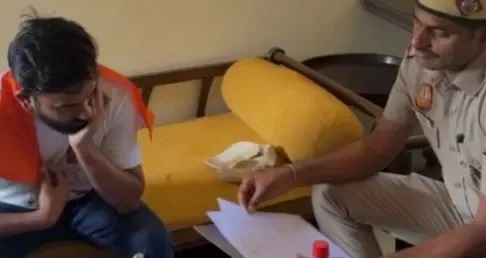
Abhijeet Dipke , founder of the Cockroach Janta Party (CJP) , was detained by Delhi Police on 16 October 2026 ahead of the 'Tiranga Assembly' at Central Park, Connaught Place .
Police served two notices — one citing Section 163 of the BNSS and prohibitory orders at the venue, and another referencing a prior court-imposed one-year undertaking against public disturbance.
The NDMC had not granted permission for the event.
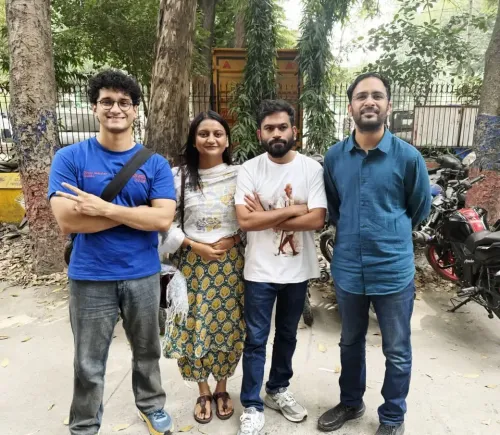
Dipke and co-conveners Ashutosh Ranka and Saurav Das were previously 'bound down' following a preventive detention at an airport.
Dipke posted on X defending peaceful protest as a democratic right and accusing authorities of excessive restrictions on citizens.
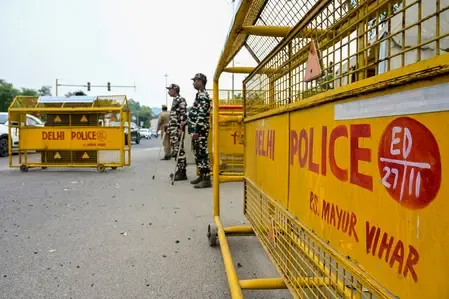
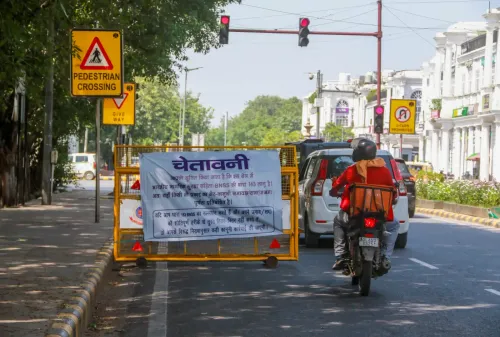
Cockroach Janta Party (CJP) founder and convener Abhijeet Dipke was detained by Delhi Police on Friday, 16 October, while en route to his own 'Tiranga Assembly' event, planned for 5 pm at Central Park, Connaught Place, New Delhi. The detention came hours after police served Dipke two formal notices directing him to call off the gathering, citing the absence of permission from the New Delhi Municipal Council (NDMC) and the existence of prohibitory orders at the venue.
Why Dipke Was Detained
Delhi Police served two separate notices to Dipke ahead of the assembly. The first, issued by New Delhi district authorities under the Delhi Police Act, invoked Section 163 of the Bharatiya Nagarik Suraksha Sanhita (BNSS), which was reportedly in force at Central Park, prohibiting individuals from visiting the area. Police warned that any violation of prohibitory orders would attract legal action.
The second notice came from South West Delhi authorities and referenced an earlier legal undertaking — described as being 'bound down' — that applied to Dipke, along with CJP co-conveners Ashutosh Ranka and Saurav Das. According to officials, the three were previously placed under this undertaking following their preventive detention at an airport and subsequent production before a court, which had directed them not to cause any public disturbance for a period of one year.
Dipke's Defence: Peaceful Protest as Democratic Right
Earlier on Friday, Dipke publicly defended the CJP's right to protest, asserting that peaceful demonstrations were a fundamental democratic right. In a post on X, he argued that demanding accountability from the government, protesting against injustice, and questioning elected representatives could not be labelled anarchy.
He maintained that the party remained committed to Mahatma Gandhi's principles of peace and non-violence, despite what he described as attempts to provoke CJP members. 'Businesses do not suffer because of peaceful protests. They suffer when the govt decides to shut down an entire city, suspend Internet services, restrict the movement of its own citizens and turn the city into a war zone,' Dipke posted.
Protests Across Multiple Cities
Dipke also pointed to the CJP's record of organising peaceful demonstrations in several cities, including Mumbai, Pune, Jaipur, Lucknow, Bengaluru, and Nagpur, to underscore the group's stated commitment to non-violent activism. The Tiranga Assembly at Connaught Place was intended to be the latest in this series of protests.
Broader Context
This is not the first time Dipke and his co-conveners have faced preventive detention. Their earlier detention at an airport and the subsequent court-imposed undertaking indicate a pattern of pre-emptive action by authorities against CJP gatherings. Critics argue such measures curtail legitimate civil dissent; authorities maintain that events without requisite permissions and held in areas under prohibitory orders pose a public order risk.
As of Friday evening, the status of Dipke's detention and any formal charges remained subject to further developments.
Point of View
Permissions are refused or not sought, prohibitory orders are invoked, and the organiser is picked up before reaching the venue. What distinguishes this instance is the court-imposed one-year undertaking already in place against Dipke and his co-conveners — making the legal exposure more concrete than a routine preventive detention. The broader question is whether pre-emptive detentions of this kind withstand scrutiny under Article 19, particularly when the stated purpose is a flag-hoisting assembly named after the national tricolour. Authorities have a legitimate interest in managing public order in a high-footfall area like Connaught Place; the tension lies in whether that interest is being exercised proportionately or as a tool to blunt civil dissent.
NationPress
16 Oct 2026
Frequently Asked Questions
Why was Abhijeet Dipke detained by Delhi Police?
Dipke was detained on 16 October while heading to the 'Tiranga Assembly' he had called at Central Park, Connaught Place. Delhi Police cited the absence of NDMC permission for the event and the enforcement of prohibitory orders under Section 163 of the BNSS at the venue.
What is the Cockroach Janta Party (CJP)?
The Cockroach Janta Party (CJP) is a pressure group founded and convened by Abhijeet Dipke. It has organised peaceful protests in several Indian cities, including Mumbai, Pune, Jaipur, Lucknow, Bengaluru, and Nagpur, and describes itself as committed to Mahatma Gandhi's principles of non-violence.
What is the 'bound down' undertaking mentioned in the notice?
A 'bound down' undertaking is a legal obligation placed on an individual by a court, typically after preventive detention, requiring them not to cause public disturbance for a specified period. Dipke, along with co-conveners Ashutosh Ranka and Saurav Das, was placed under such an undertaking for one year following their earlier detention at an airport and subsequent court appearance.
What did Dipke say in his post on X before the detention?
Dipke posted on X that demanding accountability from the government and protesting against injustice could not be labelled anarchy. He argued that businesses suffer not from peaceful protests but from government-imposed city shutdowns, Internet suspensions, and movement restrictions.
What happens next after Dipke's detention?
As of Friday evening, the status of Dipke's detention and any formal charges remained subject to further developments. Delhi Police had warned that legal action would be taken for violating prohibitory orders, which could result in a formal case being registered against him.