CM Bhupendra Patel Reviews India's First Maritime Heritage Complex at Lothal
Synopsis
Gujarat CM Bhupendra Patel visited Lothal on 16 October 2026 to review construction of India's first National Maritime Heritage Complex — a project anchored in PM Modi's 'Vikas Bhi, Virasat Bhi' vision — and directed officials to ensure time-bound completion of Phase-1 and Phase-2.
Key Takeaways
Gujarat CM Bhupendra Patel conducted an on-site review of the National Maritime Heritage Complex (NMHC) at Lothal on 16 October 2026 .
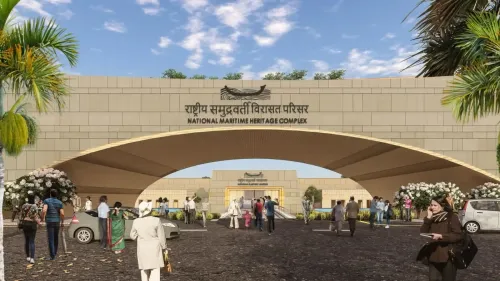
The NMHC will be India's first national-level maritime heritage project, showcasing Indus Valley Civilization seafaring history through galleries and the world's tallest Lighthouse Museum .
PM Narendra Modi laid the NMHC foundation stone at Lothal in March 2022 as part of the Sagarmala Programme -linked heritage initiative.
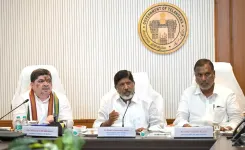
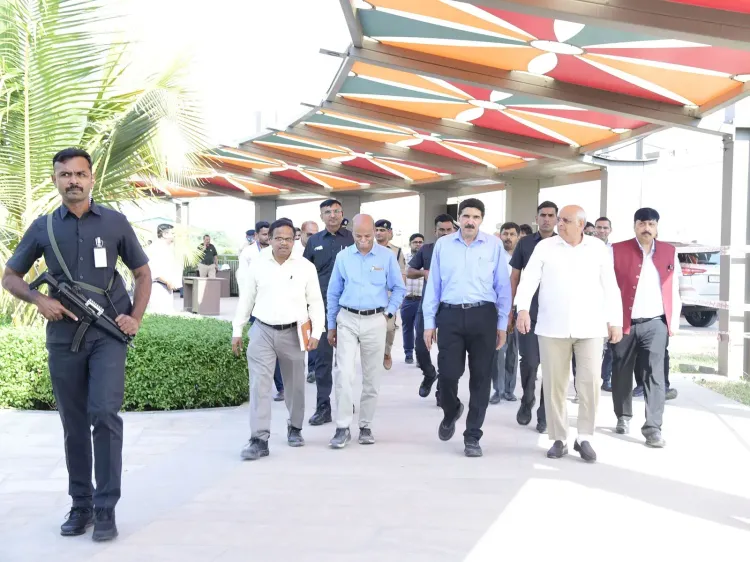
Patel held a detailed review meeting with senior officials assessing progress of Phase-1 and Phase-2 and emphasised time-bound completion.
The project aligns with the Swadesh Darshan and PRASHAD schemes and fits the broader Central Government push to convert archaeological sites into global tourist destinations.
Lothal , excavated in the 1950s , is believed to house the world's earliest known dockyard, giving the complex a globally significant historical foundation.
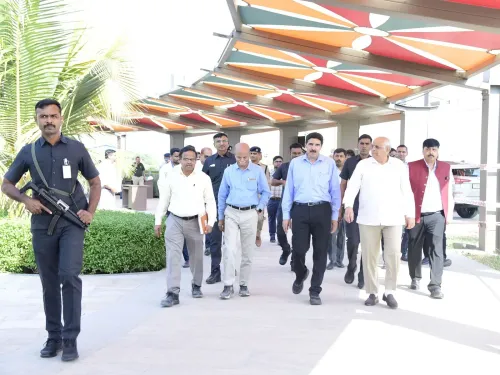
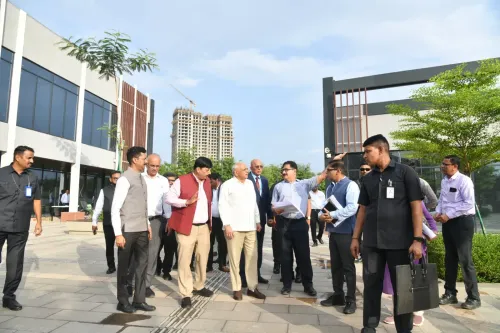
Four-thousand-year-old Lothal — once a thriving Harappan port city — is being transformed into a global heritage destination, and Gujarat Chief Minister Bhupendra Patel visited the site on Friday, 16 October 2026 to personally review construction progress on India's first National Maritime Heritage Complex (NMHC).
Patel described the visit as part of Prime Minister Narendra Modi's overarching vision of 'Vikas Bhi, Virasat Bhi' ('Development too, Heritage too') — a governing philosophy that frames world-class infrastructure and ancient cultural memory as complementary, not competing. The CM held a detailed review meeting with senior officials to assess the progress of Phase-1 and Phase-2 of the complex, and made a pointed emphasis on time-bound completion.
What Will Rise at Lothal
The NMHC, once complete, will house magnificent galleries dedicated to India's ancient seafaring history — tracing maritime networks that stretched from the Indus Valley Civilization across the Arabian Sea to Mesopotamia. The centrepiece headline: the world's tallest 'Lighthouse Museum', a structure designed to become an international landmark. The project's ambitions place it firmly in the same league as premier maritime museums in Rotterdam and Hamburg.
Lothal, located in Bhal region of Gujarat, was excavated in the 1950s and is considered one of the most significant Harappan sites in the world — home to what archaeologists identify as the world's earliest known dockyard. That history now provides the spine of an international-scale tourism project.
From Foundation Stone to Construction Review
Prime Minister Modi laid the NMHC foundation stone at Lothal in March 2022, linking it to the broader Sagarmala Programme's heritage initiative. The project sits within a wider Central Government push, accelerated since 2014, to convert India's most significant archaeological sites into premium global tourist destinations. Gujarat alone has seen similar ambitions channelled into sites such as Vadnagar and Dholavira — the latter now a UNESCO World Heritage Site.
The NMHC also draws on the Swadesh Darshan and PRASHAD frameworks, which combine hard infrastructure upgrades — roads, visitor facilities, digital interpretation — with a focused national narrative around India's ancient trade and civilisational networks. At Lothal, the maritime angle gives that narrative a particularly compelling hook: a civilisation that sailed when Europe was still in the Bronze Age.
The Pressure Patel Put on the Clock
The CM's instruction to ensure 'time-bound completion' is the sharpest political signal of the day. Large heritage-infrastructure projects in India have historically faced delays — land acquisition, inter-agency coordination, monsoon interruptions. By visiting in person and issuing that directive publicly, Patel is attaching political accountability to the construction calendar. The next watchpoints are Phase-1 handover timelines and whether a high-profile inauguration — likely anchored by the Prime Minister — is being factored into Gujarat's tourism calendar.
When the complex opens, Lothal will not merely be an excavation site for archaeologists. It will be India's argument, in stone and steel, that its maritime civilisation deserves a place in the world's memory.
Point of View
Virasat Bhi' framing is also strategically significant: it pre-empts the standard critique that heritage focus comes at the cost of development spending, by arguing the two are the same bet. Gujarat's back-to-back wins at Dholavira (UNESCO listing) and now Lothal suggest the state is positioning itself as India's flagship archaeology-to-tourism conversion story — with international tourist footfall and soft-power dividends as the ultimate scorecard.
NationPress
16 Oct 2026
Frequently Asked Questions
What is the National Maritime Heritage Complex at Lothal?
The National Maritime Heritage Complex (NMHC) is India's first national-level maritime heritage project being built at Lothal in Gujarat. It will feature galleries on ancient Indian seafaring history, artefacts from the Indus Valley Civilization, and the world's tallest Lighthouse Museum.
When was the NMHC foundation stone laid at Lothal?
Prime Minister Narendra Modi laid the foundation stone for the NMHC at Lothal in March 2022, linking it to the Sagarmala Programme's heritage initiative.
Why is Lothal historically significant?
Lothal is one of the most important Harappan-era sites in the world. Excavated in the 1950s, it is home to what archaeologists consider the world's earliest known dockyard, evidence of a sophisticated maritime civilisation dating back roughly 4,500 years.
What is PM Modi's 'Vikas Bhi, Virasat Bhi' vision?
'Vikas Bhi, Virasat Bhi' — meaning 'Development too, Heritage too' — is Prime Minister Modi's governing framework that positions modern infrastructure development and ancient cultural preservation as complementary national goals, not trade-offs.
What did Gujarat CM Bhupendra Patel do at Lothal on 16 October 2026?
CM Bhupendra Patel visited Lothal on 16 October 2026 to review ongoing construction of the NMHC, held a detailed meeting with senior officials on Phase-1 and Phase-2 progress, and directed that all works be completed on a strict timeline to make it a premier global tourist attraction.