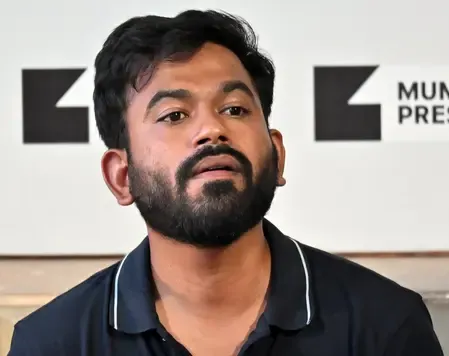
CJP founder Abhijeet Dipke defends peaceful protests as democratic right
Synopsis
CJP founder Abhijeet Dipke has flipped the script on the government's disruption narrative — arguing it is state-imposed shutdowns and Internet suspensions, not street protests, that harm businesses and citizens. His personal assault in Jaipur, met with non-retaliation, puts a human face on the party's Gandhian positioning.
Key Takeaways
CJP founder Abhijeet Dipke defended peaceful protests as a constitutional democratic right in an X post on 16 October 2026 .
Dipke accused the government of disrupting businesses and citizens through city shutdowns , Internet suspensions , and movement restrictions .
He disclosed he was personally assaulted during a Jaipur protest but chose not to retaliate, citing the party's non-violence commitment.
The CJP has held peaceful protests in Mumbai , Pune , Jaipur , Lucknow , Bengaluru , and Nagpur .
Dipke invoked the Constitution and the legacies of Mahatma Gandhi and Dr.
Ambedkar to underpin the party's approach.
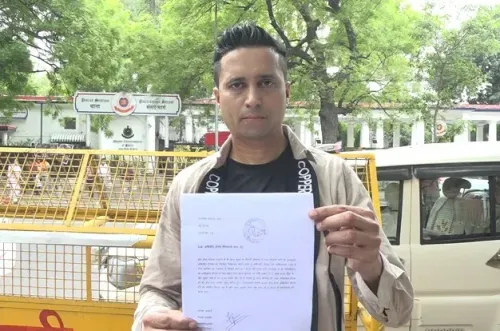
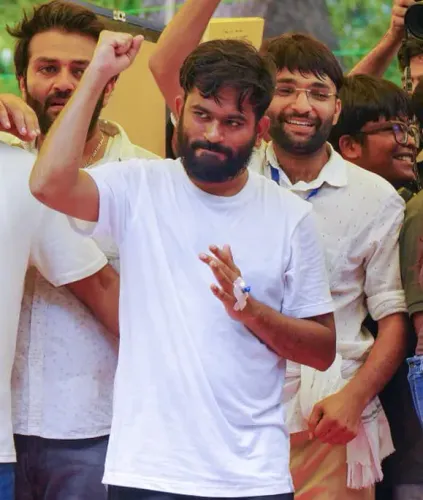
Cockroach Janta Party (CJP) founder Abhijeet Dipke on Friday, 16 October 2026, staunchly defended his party's protest activities, asserting that peaceful demonstrations are a fundamental democratic right guaranteed by the Constitution. In a strongly worded post on X, Dipke simultaneously accused the government of being the real disruptor — through city shutdowns, Internet suspensions, and restrictions on citizens' movement.
What Dipke Said
Dipke directly challenged the framing of the CJP's activities as anarchist, arguing that demanding accountability, protesting injustice, and questioning elected representatives are among the most basic expressions of democracy. 'Demanding answers from the govt is not anarchy, protesting against injustice on the streets is not anarchy, and questioning those who hold public office is certainly not anarchy. These are the most fundamental expressions of democracy,' he said in his post.
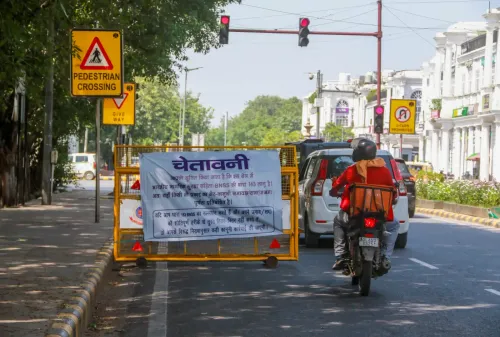
On the economic disruption argument often levelled against protesters, Dipke turned the charge around: 'Businesses do not suffer because of peaceful protests. They suffer when the govt decides to shut down an entire city, suspend Internet services, restrict the movement of its own citizens and turn the city into a war-zone.'
Gandhian Commitment and Personal Assault
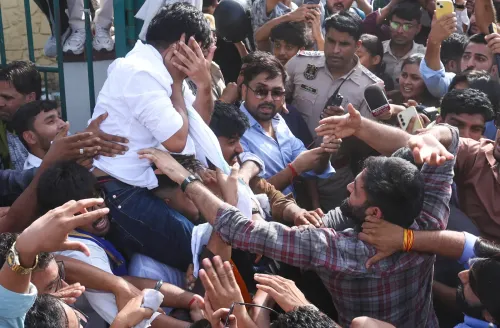
Dipke invoked Mahatma Gandhi's legacy to underline the CJP's non-violent stance, stating that the party has organised peaceful protests across Mumbai, Pune, Jaipur, Lucknow, Bengaluru, and Nagpur without incident. He disclosed that he was personally assaulted during a protest in Jaipur, yet chose not to retaliate — citing the party's founding commitment to non-violence.
'Since its inception, the Cockroach Janta Party has maintained that we will always follow Gandhi ji's path of peace and non-violence, and we have stood by that commitment... I was personally assaulted in Jaipur, but even then, I chose not to retaliate because responding to violence with violence goes against everything we believe in,' he stated.
Constitutional Grounding
The CJP founder grounded his defence in the Constitution, explicitly referencing it as the document 'drafted under the leadership of Dr. B.R. Ambedkar.' He argued that constitutional rights — including the right to peaceful dissent — were the party's primary tool, and that no provocation would cause the CJP to abandon those values.
Accountability and the Limits of Electoral Democracy
Dipke closed with a broader argument about post-election accountability, maintaining that a government elected by citizens remains answerable to them beyond polling day. 'A govt that has been elected by the people is bound to listen to the people, not silence them. Democracy does not end once the votes have been counted,' he said. This comes amid a wider national debate over the boundaries of protest rights, government responses to public demonstrations, and the use of Internet shutdowns as an administrative tool — a practice India leads globally by frequency, according to multiple civil liberties organisations.
Point of View
He makes it harder for critics to sustain the 'anarchist' label. The more substantive point — that Internet shutdowns and city lockdowns cause measurable economic harm — is well-documented, yet rarely attributed to government action in mainstream political discourse. Whether the CJP can translate this framing into sustained public sympathy depends on whether future protests remain incident-free and whether the government's responses continue to appear disproportionate. The invocation of constitutional rights is also a deliberate legal shield: framing dissent in Ambedkarite terms makes suppression politically costly.
NationPress
16 Oct 2026
Frequently Asked Questions
Who is Abhijeet Dipke and what is the Cockroach Janta Party?
Abhijeet Dipke is the founder of the Cockroach Janta Party (CJP), a political pressure group that describes itself as committed to Mahatma Gandhi's principles of peace and non-violence. The party has organised protests in multiple Indian cities including Mumbai, Pune, Jaipur, Lucknow, Bengaluru, and Nagpur.
What did Dipke say about the government's restrictions?
Dipke accused the government of being the real source of disruption, arguing that city shutdowns, Internet suspensions, and restrictions on citizens' movement — not peaceful protests — are what harm businesses and daily life. He made these remarks in a post on X on 16 October 2026.
Why did Dipke bring up his assault in Jaipur?
Dipke disclosed he was personally assaulted during a CJP protest in Jaipur but chose not to retaliate, citing the party's foundational commitment to non-violence. He presented the incident as evidence that the CJP practices what it preaches, even under provocation.
How does Dipke respond to the 'anarchist' label?
Dipke rejected the characterisation outright, arguing that demanding accountability, protesting injustice, and questioning elected officials are the most fundamental expressions of democracy — not anarchy. He framed peaceful dissent as a constitutional right rooted in the document drafted under Dr. B.R. Ambedkar's leadership.
What broader argument did Dipke make about democracy?
Dipke argued that electoral victory does not end a government's accountability to citizens, stating that democracy does not end once the votes have been counted. He called on citizens to continue questioning those in power and speaking out against injustice.