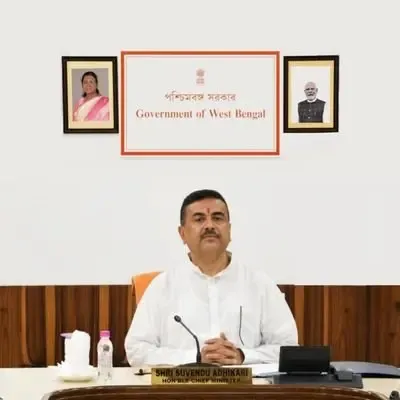
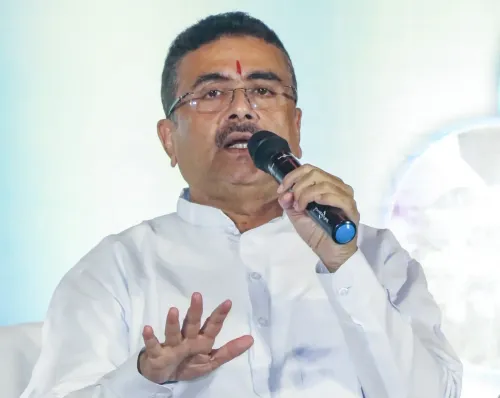
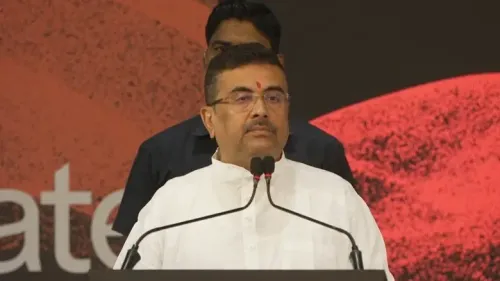
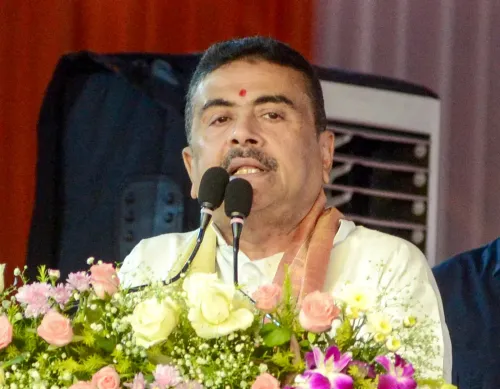
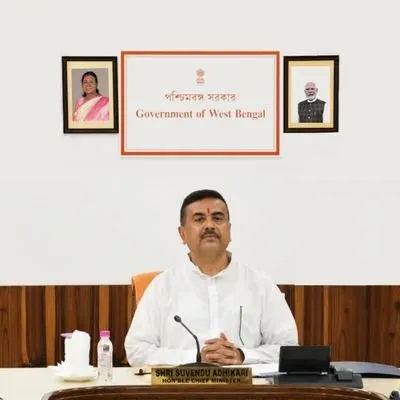
West Bengal land bank for industries: 6-category survey to guide CM Adhikari's plan
Synopsis
West Bengal's new government is betting on a six-category land survey to build an industrial land bank — directly buying land from farmers rather than forcing acquisition. It's a calculated break from both the TMC's investor-dependent model and the Left Front's Singur-Nandigram legacy, and its success will hinge entirely on how fast and fairly the survey is executed.
Key Takeaways
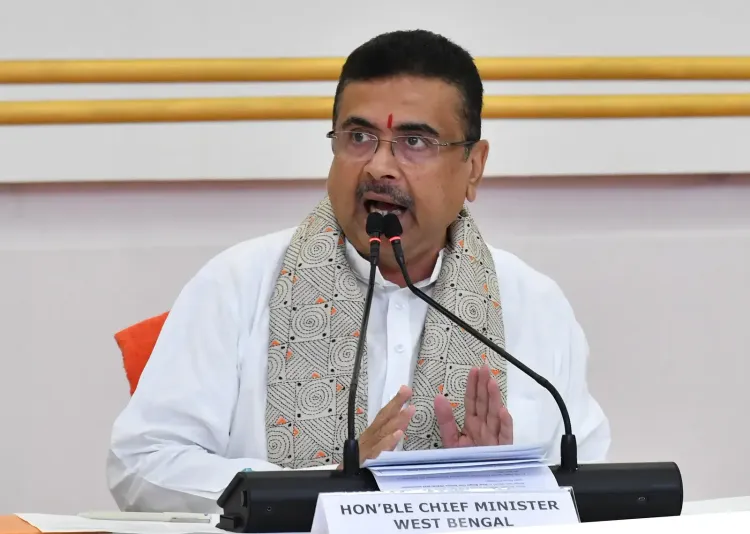
Chief Minister Suvendu Adhikari has decided to create a dedicated 'land bank' for industrial projects in West Bengal , announced on 20 November 2026 .
A detailed survey will classify land into six categories : government-vested land, encroached government land, land held by closed industrial units, land in industrial parks, wetlands, and privately owned farmland.
The state government will directly purchase land from owners to build the bank, then transfer plots to industries — avoiding forced acquisition.
The approach is described as a 'middle path' , contrasting with the previous TMC government's investor-led model and the Left Front's controversial acquisitions in Singur and Nandigram .
Economist Probir Mukherjee said state intervention is essential given West Bengal's highly fragmented landholding pattern.
The new West Bengal government, led by Chief Minister Suvendu Adhikari, has decided to create a dedicated 'land bank' for industrial projects in the state, with a detailed survey classifying land parcels into six broad categories set to form the foundation of the initiative. The plan, announced on 20 November 2026, marks a significant policy departure from both the previous Trinamool Congress (TMC) government's approach and the land acquisition controversies of the Left Front era.
How the Land Bank Will Be Built
According to sources from the State Secretariat Nabanna, the government will first conduct a comprehensive survey of the nature of land holdings across the state. Once completed, land parcels will be classified into six categories: government-vested land, encroached government land, land held by closed industrial units, available land within different industrial parks, wetlands, and farmland owned by individual landowners or farmers.
'Once the classification is done properly, the state government will have a clear idea of which land parcels would be readily available for immediate inclusion in the proposed land bank and which land will have to be directly purchased or acquired by the state government,' a State Secretariat source said.
The 'Middle Path' Approach
Chief Minister Adhikari has described the government's strategy as a deliberate middle path — avoiding both the hands-off approach of the previous administration and the forceful acquisition that triggered mass protests in Singur and Nandigram under the Left Front government.
Under the new policy, the state government will directly purchase land from individual owners to populate the land bank, and subsequently transfer plots to new and proposed industrial projects as required. 'The policy of the previous Mamata Banerjee-led Trinamool Congress government to leave the entire responsibility of land purchase to the investor concerned was an absurd proposition considering the highly fragmented landholding nature. Similarly, forceful land acquisition is bound to be counter-productive for the administration, as was witnessed by the Left Front government on issues like Singur and Nandigram. So the new state government is adopting a middle path, balancing the interests of both the industry fraternity and the land owners,' the State Secretariat source said.
Expert View: Why It Matters for Investment
Industry and economic observers say the policy addresses a structural bottleneck that has historically deterred large-scale investment in West Bengal. Kolkata-based economist Probir Mukherjee argued that state intervention in land procurement is unavoidable given the region's fragmented holding pattern.
'In a state like West Bengal where the land-holding pattern is extremely fragmented, attracting big ticket investment will never be possible without the state government playing a role in land procurement. At the same time, forceful land acquisition can be counter-productive, as it happened in the cases of Singur and Nandigram during the Left Front regime. So, from all aspects, the new land policy adopted by the state government will be ideal as it maintains a balance between the interests of investors, land-owners and other stakeholders,' Mukherjee said.
Earlier Policy Announcement and What Comes Next
The land bank framework follows the state government's new industrial policy unveiled earlier this month, which outlined an alternative route for land procurement. The classification survey is now the critical next step — its findings will determine which plots enter the land bank immediately and which require direct purchase or formal acquisition proceedings.
With West Bengal historically struggling to convert investor interest into on-ground project commissioning, the credibility of this survey — and the speed of its execution — will be closely watched by industry bodies and potential investors alike.
Point of View
And past state-level land surveys in India have routinely overrun timelines and budgets. The deeper question is whether direct state purchase — which requires sustained fiscal commitment — can be executed at the scale and speed that big-ticket investors demand. The Singur and Nandigram references, though historically accurate, also carry a political subtext: the new government is explicitly framing itself against both its predecessors, which is as much about electoral positioning as industrial policy.
NationPress
20 Nov 2026
Frequently Asked Questions
What is West Bengal's proposed land bank for industries?
It is a dedicated pool of land that the West Bengal government, under Chief Minister Suvendu Adhikari, plans to create by surveying and classifying state land parcels, then directly purchasing suitable plots from owners to hand over to industrial projects. The initiative was announced on 20 November 2026 as part of the state's new industrial policy.
What are the six categories of land in the West Bengal survey?
The survey will classify land into government-vested land, encroached government land, land held by closed industrial units, available land within industrial parks, wetlands, and farmland owned by individual landowners or farmers. The classification will determine which parcels can be immediately included in the land bank and which must be purchased.
How is this policy different from previous West Bengal governments?
The previous Trinamool Congress government left land procurement entirely to investors, which proved difficult given the state's fragmented holdings. The Left Front government attempted forceful acquisition, triggering the Singur and Nandigram protests. The Adhikari government says it is taking a middle path — with the state directly buying land from willing owners before handing it over to industry.
Why is land acquisition such a sensitive issue in West Bengal?
West Bengal has extremely fragmented landholding patterns, making large-scale land assembly difficult without state intervention. Past attempts at forced acquisition — notably at Singur and Nandigram under the Left Front — led to major protests and political fallout, making any new land policy a carefully watched issue.
What happens after the land survey is completed?
Once the survey classifies land parcels, the government will identify plots for immediate inclusion in the land bank and those requiring direct purchase or acquisition. The required land will then be transferred to new and proposed industrial projects as part of West Bengal's broader effort to attract large-scale investment.