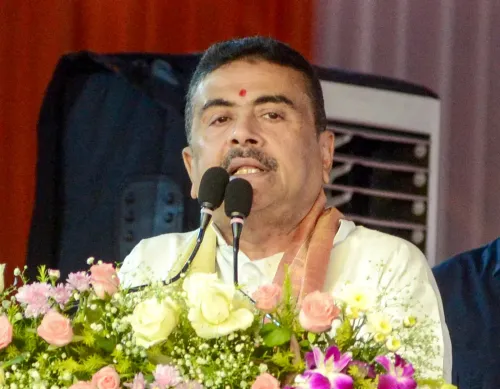
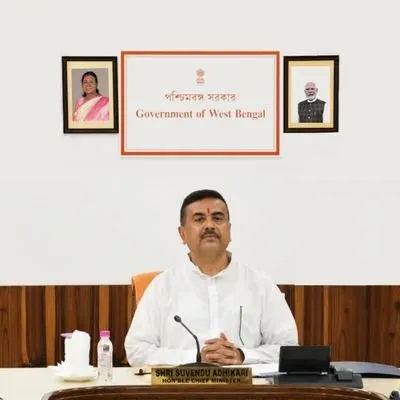
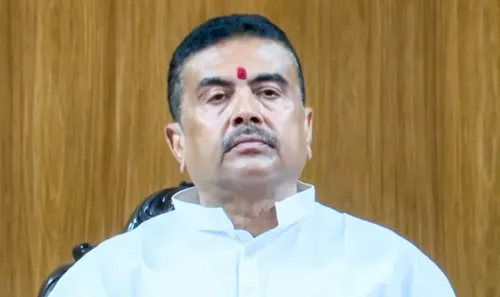
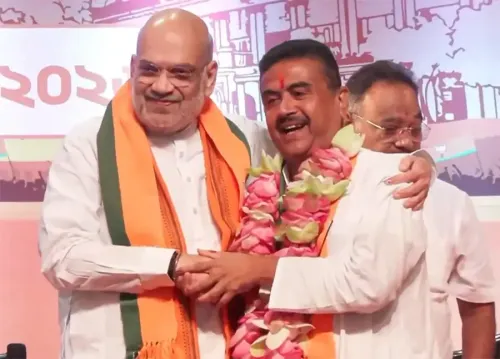
Bengal's new industrial policy: CM Adhikari unveils land bank route for investors
Synopsis
West Bengal's new government has quietly resolved one of India's most politically charged investment barriers — land acquisition — by sidestepping both forced takeovers and policy inaction. Chief Minister Suvendu Adhikari's direct-purchase land bank model, already tested on 33 business groups in six months, is a pointed repudiation of both Left-era Singur tactics and TMC-era passivity, and could reposition Bengal as a credible industrial destination.
Key Takeaways
West Bengal CM Suvendu Adhikari announced a new land procurement framework on 5 November 2026 as part of the state's new industrial policy.
The core mechanism is a government-run land bank , built by directly purchasing land from owners and allocating it to industrial projects.
Additional land sources include existing industrial parks and clusters of recovered encroached land .
In the first six months of the new government, land has already been handed over to 33 business groups .
The policy explicitly distances itself from Left Front -era forced acquisition (linked to Singur and Nandigram) and TMC -era inaction on land procurement.
Economist Probir Mukherjee backed the approach, citing West Bengal's fragmented land-holding pattern as a structural barrier to big-ticket investment.
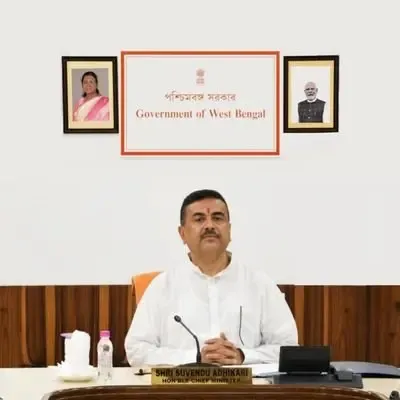
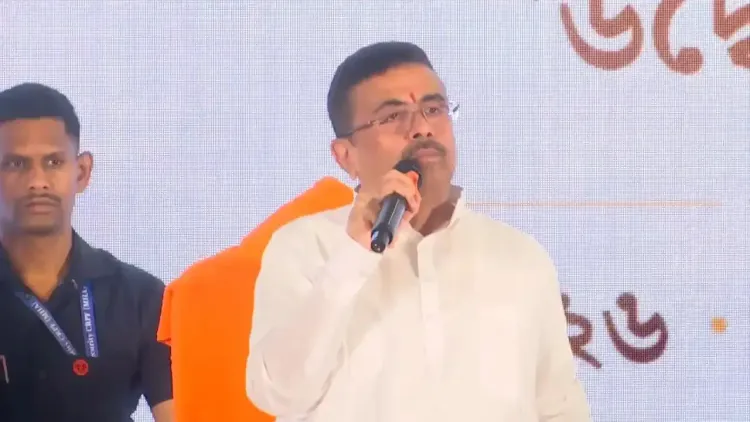
West Bengal Chief Minister Suvendu Adhikari on 5 November 2026 unveiled a new land procurement framework for the state, announcing that the government would directly purchase land from landowners to create a dedicated land bank, which would then be allocated to new and proposed industrial projects. The announcement came alongside the launch of West Bengal's new industrial policy, and is intended to balance the interests of investors, landowners, and other stakeholders.
The Land Bank Model Explained
At the heart of the new policy is a three-pronged approach. The state government will, as its principal mechanism, buy land directly from individual owners — bypassing coercive acquisition — and pool it into a centralised land bank. From this bank, plots will be allocated to incoming industrial projects on demand.
Beyond the land bank, the policy also draws on two additional sources: land available within existing industrial parks across the state, and clusters of erstwhile encroached land recovered by the state government. Chief Minister Adhikari stated that in the first six months of his government, land had already been handed over to 33 business groups, signalling early momentum.
A Deliberate Break from the Past
Adhikari positioned the new framework as a conscious departure from the approaches of both his predecessors. He argued that the Left Front government resorted to forceful land acquisition for industrial projects — a policy he described as one the new dispensation is 'strongly against' — while the Trinamool Congress (TMC) government played 'no role in land procurement for new industries,' which, he claimed, acted as a negative factor in attracting large-scale investment to the state.
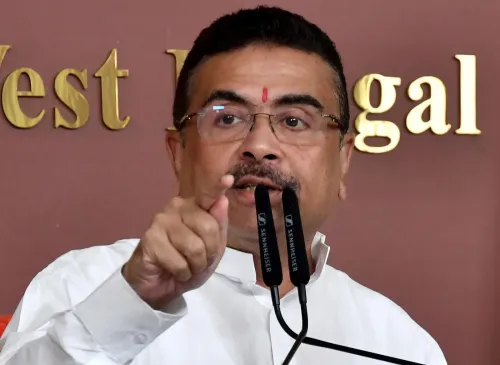
'The Left Front government followed the policy of forceful land acquisition from landowners for industrial projects, which we are strongly against. The Trinamool Congress played no role in land procurement for new industries, which acted as a negative factor for attracting big-ticket investments. We will not adopt any of these two policies, and instead the state government will directly purchase land from the landowners,' Adhikari said.
Expert View: Right Direction, Right Timing
Industry and economic observers broadly welcomed the direction. Probir Mukherjee, a Kolkata-based economist, noted that West Bengal's highly fragmented land-holding pattern makes it structurally difficult to attract large investments without active state intervention in land assembly.
'In a state like West Bengal where the land-holding pattern is extremely fragmented, attracting big-ticket investment will never be possible without the state government playing a role in land procurement,' Mukherjee said.
He also flagged the cautionary history of Singur and Nandigram — the two land acquisition controversies during the Left Front era that catalysed a mass political backlash — as evidence that forced acquisition is counterproductive. 'The new land policy adopted by the state government will be ideal as it maintains a balance between the interests of investors, land-owners and other stakeholders,' he added.
What Comes Next
The government has indicated it is already operationally prepared to service incoming industrial demand, with Adhikari stating the administration is 'well settled to meet the land requirement for new industrial units.' How quickly the land bank scales — and whether voluntary purchase pricing remains competitive — will be the key implementation tests in the months ahead.
Point of View
But the devil lies in execution. Direct purchase at market rates in a fragmented landholding state can be expensive and slow — the government will need deep fiscal commitment and transparent pricing to avoid the model collapsing into a bottleneck. The claim of land already delivered to 33 business groups in six months is striking, but without disclosure of the sectors, scale, or investment commitments involved, it is difficult to gauge real momentum. Most importantly, the absence of a legal or institutional framework — a dedicated Land Bank Authority, for instance — raises questions about whether this is policy or political positioning ahead of investment summits.
NationPress
5 Nov 2026
Frequently Asked Questions
What is West Bengal's new land procurement policy for industries?
The policy, announced on 5 November 2026 by Chief Minister Suvendu Adhikari, involves the state government directly purchasing land from individual landowners and pooling it into a land bank, from which plots are allocated to new industrial projects. It also draws on land in existing industrial parks and recovered encroached land.
How is this different from previous West Bengal governments' approach?
Chief Minister Adhikari has drawn a sharp contrast with both predecessors: the Left Front government used forceful land acquisition, most infamously at Singur and Nandigram, while the Trinamool Congress government reportedly played no active role in land procurement for industries. The new policy positions direct, voluntary purchase as a middle path.
What progress has the new government made on land allocation so far?
According to Chief Minister Adhikari, the government has already handed over land to 33 business groups in the first six months of its tenure, indicating early operational activity under the new framework.
Why is land procurement such a critical issue for West Bengal's industrialisation?
West Bengal has an extremely fragmented land-holding pattern, making it structurally difficult to assemble large contiguous plots for big-ticket industrial projects without government facilitation. Economist Probir Mukherjee noted that attracting large investments 'will never be possible without the state government playing a role in land procurement.'
What are the risks to the new land bank model?
The main implementation risks include the cost and pace of voluntary land purchases at market rates in a fragmented market, the fiscal capacity of the state to build and maintain a sizable land bank, and the absence so far of a detailed legal or institutional framework governing the bank's operations.