CM Bhagwant Mann adds new pilgrimage buses from Aug 1
Synopsis
Punjab Chief Minister Bhagwant Mann, speaking at a Shiva devotional event in Mohali on 30 July 2026, announced new Tirth Yatra buses to Khatu Shyam, Salasar, Vrindavan and Rishikesh from 1 August, framing the move alongside free electricity and the Mawan-Dhiyan Satikar Yojana as direct welfare for citizens.
Key Takeaways
New Tirth Yatra buses to Khatu Shyam, Salasar, Vrindavan and Rishikesh will launch from 1 August 2026 .
The announcement was made at the 'Ikk Shaam Bhagwan Shiv De Naam' event in Mohali on 30 July 2026 .
CM Mann cited the scheme as honouring the 'faith and sentiments of elders' in Punjab.
The pilgrimage expansion joins existing AAP welfare measures: free electricity up to 300 units and the Mawan-Dhiyan Satikar Yojana for women.
Mann invoked Punjab's pluralist identity, describing communal harmony as 'a beautiful bouquet where love grows, not hatred.'
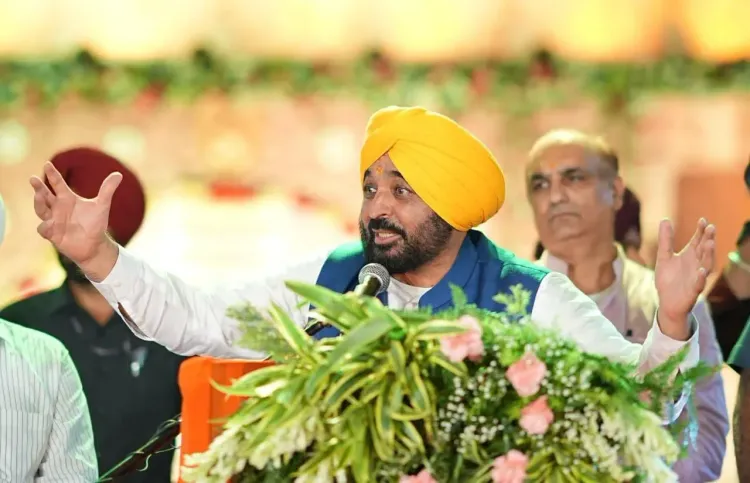
At a gathering that blended devotion with governance, Punjab Chief Minister Bhagwant Mann attended the 'Ikk Shaam Bhagwan Shiv De Naam' ('An Evening in the Name of Lord Shiva') event in Mohali on Thursday, 30 July 2026 — and left the congregation with a concrete announcement: new subsidised pilgrimage buses rolling out from 1 August.
Four sacred destinations, one departure date
Mann announced that the Punjab government's Tirth Yatra (pilgrimage) scheme will expand to cover four new routes: Khatu Shyam and Salasar in Rajasthan, and Vrindavan and Rishikesh in Uttar Pradesh and Uttarakhand respectively. The buses are framed explicitly as a gesture toward the state's elderly — 'buzurgaan di shraddha te bhavnaawan' ('the faith and sentiments of elders') — who form the core of pilgrimage travel in the region.
Speaking at the event, Mann said Punjab's collective spirit is 'ikk khoobsurat guldaste vang' — like a beautiful bouquet — where 'love and solidarity grow, not hatred.' The religious setting gave the welfare announcement a distinctly community-first framing, linking spiritual access to the state's pluralist identity.
Where the pilgrimage scheme fits Punjab's welfare stack
The Tirth Yatra bus expansion sits alongside two other flagship benefits Mann cited from the same stage: free electricity up to 300 units per household, introduced after the Aam Aadmi Party swept to power in 2022, and the Mawan-Dhiyan Satikar Yojana — a scheme providing financial support and dignity to women beneficiaries across the state. Together, Mann argued, they represent a government spending public tax money directly on the public: 'Your government is spending your tax money on you.'
Punjab has a long tradition of state-facilitated pilgrimage access, reflecting its layered spiritual heritage of Sikh shrines, Hindu temples, and Sufi dargahs. The AAP administration has consistently leaned into this pluralism as both social policy and political messaging since taking office.
What the 1 August rollout means for pilgrims
The immediate test will be passenger uptake. Khatu Shyam, a major Vaishnavite shrine in Rajasthan's Sikar district, draws millions of devotees annually; Salasar Balaji, also in Rajasthan, is similarly high-footfall. Adding Vrindavan and Rishikesh broadens the scheme's spiritual geography considerably, spanning four states and multiple faith traditions within Hinduism. Whether the buses run on a fixed schedule, a booking system, or a first-come basis will determine how effectively the elderly demographic Mann invoked can actually use them.
Mann closed with 'Har Har Mahadev' — a salutation to Lord Shiva — underlining that the evening was as much devotional as it was political. The kicker for Punjab's pilgrims: the buses leave in two days.
Point of View
Tangible beneficiaries — elderly pilgrims — announced in a high-visibility devotional setting that reinforces the party's claim to both governance competence and religious inclusivity. Packaging it alongside free electricity and the women's dignity scheme signals a deliberate pre-election welfare consolidation narrative. For Punjab's opposition, the challenge is that subsidised pilgrimage access is politically difficult to oppose without appearing indifferent to religious sentiment. The real metric will be execution: if the buses run smoothly from 1 August, Mann owns a durable grassroots story; if they don't, the announcement becomes a liability.
NationPress
30 Jul 2026
Frequently Asked Questions
Which pilgrimage sites will Punjab's new Tirth Yatra buses cover from August 2026?
The new buses announced by CM Bhagwant Mann will cover Khatu Shyam and Salasar in Rajasthan, and Vrindavan and Rishikesh , starting 1 August 2026 .
What is the Mawan-Dhiyan Satikar Yojana mentioned by Bhagwant Mann?
The Mawan-Dhiyan Satikar Yojana is a Punjab government scheme providing financial support and dignity to women beneficiaries across the state, introduced under the AAP administration.
Is the Tirth Yatra bus service in Punjab free for senior citizens?
CM Mann framed the new pilgrimage buses as a welfare measure honouring the faith of elders, but specific fare details or eligibility criteria were not announced in the post.
Where did Bhagwant Mann make the Tirth Yatra bus announcement?
He made the announcement at the 'Ikk Shaam Bhagwan Shiv De Naam' devotional event held in Mohali, Punjab on 30 July 2026 .
How much free electricity does the Punjab government provide under AAP?
The AAP government in Punjab provides free electricity up to 300 units per household per month, a scheme introduced after the party came to power in 2022 .