Owaisi Slams Rajendra Prasad After Vande Mataram Bill Passes
Synopsis
AIMIM president Asaduddin Owaisi erupted after a Vande Mataram bill passed in Lok Sabha during the 2026 monsoon session, accusing India's first President Rajendra Prasad of committing a 'big mistake' at the republic's founding — reigniting a 75-year constitutional debate over the national song.
Key Takeaways
A Vande Mataram bill passed in the Lok Sabha during the 2026 monsoon session , advancing a long-contested legislative effort.
AIMIM president Asaduddin Owaisi responded sharply, accusing India's first President Rajendra Prasad of making a 'big mistake' at the republic's founding.
The 1950 Constituent Assembly designated Vande Mataram as the national song — not anthem — partly to address religious objections from Muslim groups.
Owaisi's framing targets the constitutional ambiguity created in 1950 , not solely the current government, broadening his objection beyond partisanship.
The bill now moves toward the Rajya Sabha ; if passed, legal challenges at the Supreme Court over mandatory-singing provisions are widely anticipated.
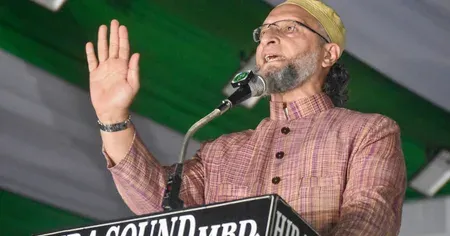
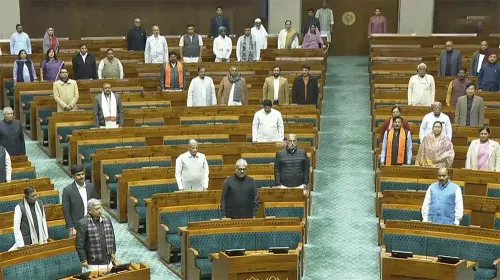
A bill mandating Vande Mataram cleared the Lok Sabha during the 2026 monsoon session — and AIMIM president Asaduddin Owaisi wasted no time firing back, directing his sharpest criticism not at the ruling dispensation but at India's first President, Rajendra Prasad, accusing him of making a 'big mistake' at the founding moment of the republic.
Owaisi's charge against a founding father
Owaisi's post declared that Rajendra Prasad had committed a 'big mistake' — 'badi galti' — a pointed reference to the 1950 Constituent Assembly decision that designated Vande Mataram as the national song while reserving the status of national anthem for Jana Gana Mana. By naming Prasad, the AIMIM chief is arguing that the ambiguity built into that founding settlement has now been weaponised by legislation decades later.
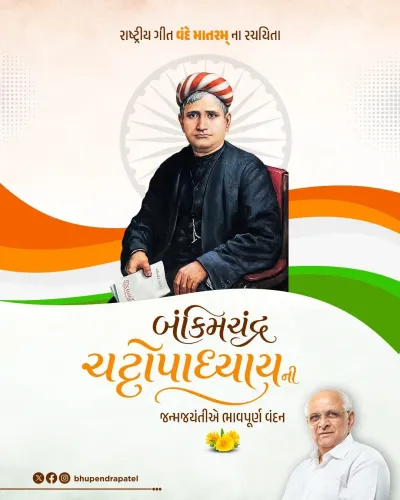
The distinction mattered then, and it matters now. Objections to compulsory singing of Vande Mataram — rooted in the song's origins in Bankim Chandra Chatterjee's novel Anandamath and its imagery that some Muslim scholars consider incompatible with Islamic monotheism — were precisely why the Constituent Assembly drew a careful line between song and anthem in the first place. Owaisi's argument is that Prasad should have drawn that line more firmly.
Why a Lok Sabha vote reignites a 75-year debate
Legislative attempts to give Vande Mataram a more binding, mandatory status have surfaced periodically over the decades, each time colliding with the same constitutional fault lines around secularism and religious freedom. The 2026 monsoon session bill — its precise provisions not yet fully in the public domain — appears to have cleared the lower house, setting up a potential Rajya Sabha battle and, almost certainly, legal challenges.
For AIMIM, a party that has built its identity around representing Muslim political interests in Parliament, this is precisely the kind of symbolic-but-consequential legislation it exists to contest. Owaisi's framing — blaming a Congress-era founding father rather than only the current government — is a deliberate rhetorical move: it widens the target and signals that the objection is constitutional, not merely partisan.
What comes next in Parliament and the courts
The bill now faces the Rajya Sabha, where the arithmetic is different and opposition coordination will be tested. If it clears both houses, implementation orders will determine whether singing is compulsory in schools, government offices, or public events — the details that will decide whether this becomes a live legal controversy. Petitions challenging any mandatory-singing provision would almost certainly reach the Supreme Court, which has previously held that compelling citizens to sing a national song can raise fundamental-rights questions.
Owaisi has put a constitutional argument on the table. The rest of Parliament — and the judiciary — will now have to answer it.
Point of View
A tactically significant shift. It places AIMIM's objection in the language of original intent and secularism, which is harder to dismiss as routine opposition. The bill's passage through Lok Sabha marks another moment in a decades-long pattern of symbolic legislation intersecting with minority-rights anxieties, and the Rajya Sabha vote will reveal how far opposition unity on cultural-identity bills actually extends. A Supreme Court challenge, if it comes, could finally force a definitive ruling on whether compulsory participation in a national song crosses the line drawn by fundamental rights — a question the republic has deferred since 1950.
NationPress
30 Jul 2026
Frequently Asked Questions
What is the Vande Mataram bill passed in Lok Sabha 2026?
A bill related to Vande Mataram was passed in the Lok Sabha during the 2026 monsoon session, though its precise provisions — including whether it mandates compulsory singing — are still emerging. It now moves to the Rajya Sabha.
Why did Owaisi criticise Rajendra Prasad over Vande Mataram?
Owaisi argued that India's first President Rajendra Prasad made a 'big mistake' at the time of the republic's founding by not drawing a firmer constitutional line on Vande Mataram, leaving room for the current legislation decades later.
Why do some Muslims object to singing Vande Mataram?
Some Muslim scholars and community leaders have long held that certain verses of Vande Mataram, drawn from Bankim Chandra Chatterjee's novel Anandamath, are incompatible with Islamic monotheism — a concern that shaped the Constituent Assembly's 1950 decision to designate it as the national song, not the national anthem.
What is the difference between India's national anthem and national song?
Jana Gana Mana is India's national anthem, carrying full constitutional status and mandatory respect protocols. Vande Mataram was designated the national song in 1950 — accorded equal honour but without the same binding obligations, a distinction now at the centre of the new bill's controversy.
Can the Vande Mataram bill be challenged in the Supreme Court?
Yes. If the bill becomes law and mandates compulsory singing, it is widely expected to face Supreme Court petitions on grounds that it may infringe on the fundamental right to freedom of conscience and religion under the Indian Constitution.