CM Bhagwant Mann Hails Punjab's Education Revolution at Gurdaspur Lok Milni
Synopsis
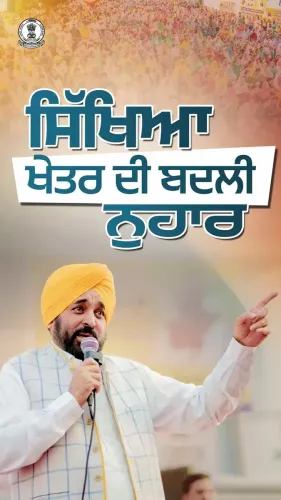
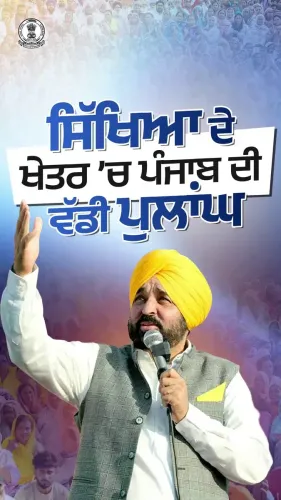
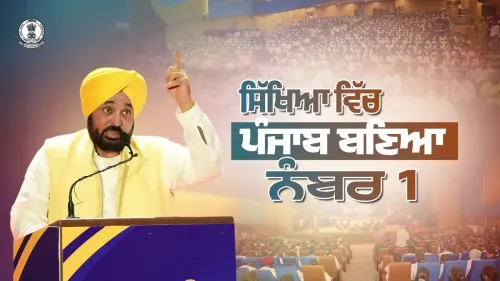
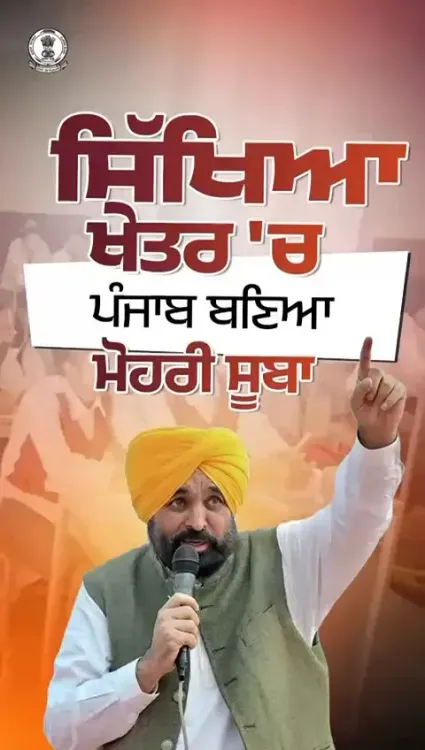
Chief Minister Bhagwant Mann addressed residents at a Lok Milni in Sohal village, Gurdaspur on 22 November 2026, stating that Punjab's 'Sikhya Kranti' has made the state India's foremost education destination through significant reforms in government schooling.
Key Takeaways
CM Bhagwant Mann addressed a 'Lok Milni' public interaction event in Sohal village, Gurdaspur on 22 November 2026 .
He declared Punjab has become the country's leading state in education under the government's 'Sikhya Kranti' (Education Revolution) initiative.
The AAP government in Punjab has pursued school infrastructure upgrades, teacher recruitment and free facilities since coming to power in March 2022 .
The reform model is modelled on AAP's earlier education overhaul in Delhi, adapted for Punjab's scale and demographics.
Gurdaspur is a border district where improved public schooling carries particular social and strategic significance.
Verifiable outcome data — enrolment figures and learning assessments — will be the benchmark test of the government's claims.
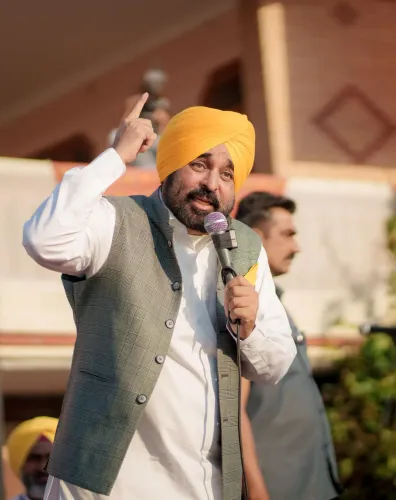
At a packed public gathering in Sohal village, Gurdaspur district, Punjab Chief Minister Bhagwant Mann declared on Sunday, 22 November 2026 that the state has emerged as the country's leading education destination — a claim he anchored to what his government calls the 'Sikhya Kranti' (Education Revolution).
What Mann Said at the Sohal Lok Milni
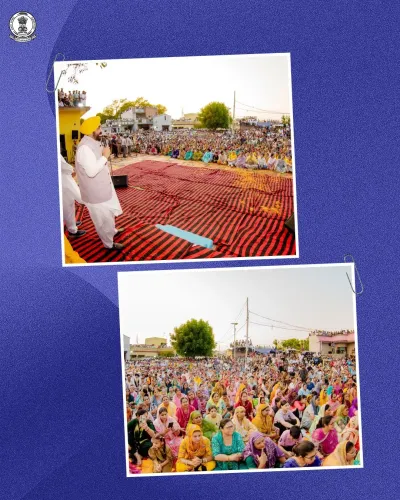
Speaking at the 'Lok Milni' — a town-hall-style public interaction programme that the Aam Aadmi Party government has used to stay connected with rural constituencies — Mann told residents that significant changes had been made in the education sector under Punjab's 'Sikhya Kranti', positioning the state as a frontrunner nationally. The Chief Minister's Office of Punjab shared the address on X, broadcasting it to a wider audience.
The 'Lok Milni' format itself is part of Mann's governing style: regular grassroots outreach sessions held across districts, intended to surface local grievances and showcase delivered promises directly to citizens.
The AAP Education Blueprint — From Delhi to Punjab
When AAP swept Punjab in March 2022, education reform was central to its pitch. The party had already built a reputation in Delhi for overhauling government school infrastructure, training teachers and improving enrolment figures — and it promised to replicate that model in Punjab on a larger scale.
Since then, the Punjab government has pursued parallel drives: school infrastructure upgrades, teacher recruitment and retention, and free facilities designed to draw students away from costly private institutions. Gurdaspur, a border district in the state, sits at the intersection of these efforts — a region where strengthening public schooling carries added strategic and social weight.
Why 'Education Revolution' Claims Matter Now
India's state governments are increasingly measured against each other on learning outcomes, enrolment data and board-exam results — a competitive dynamic that makes education a potent political asset. For Mann, staging a Lok Milni in a rural Gurdaspur village and centering it on schooling sends a deliberate signal: the revolution is not just an urban story, it reaches the village level.
What Punjab's data ultimately shows — in enrolment numbers, learning assessments and budget allocations — will be the true test of that claim. Those figures are expected to crystallise as the state heads into its next budget cycle.
Point of View
The AAP government signals that its education narrative has moved beyond urban showcase schools into the countryside. The 'Sikhya Kranti' brand serves a dual purpose — it differentiates Punjab's AAP model from rival state governments while reinforcing the party's core identity ahead of future electoral cycles. However, the gap between proclaimed revolution and independently verified learning outcomes remains the most consequential question in this story, and opposition parties are likely to press on exactly that front. Until Punjab releases auditable data, the claim of national leadership in education rests on political assertion as much as measurable progress.
NationPress
22 Nov 2026
Frequently Asked Questions
What is the 'Sikhya Kranti' initiative in Punjab?
'Sikhya Kranti' is the Bhagwant Mann-led AAP government's education reform programme launched after coming to power in March 2022, focusing on government school infrastructure upgrades, teacher recruitment and free facilities to strengthen public education in Punjab.
What is a 'Lok Milni' event?
A 'Lok Milni' is a public interaction or town-hall-style gathering organised by the Punjab government where Chief Minister Bhagwant Mann directly addresses citizens across districts to hear local concerns and communicate government achievements.
Where did CM Bhagwant Mann hold the Lok Milni on 22 November 2026?
CM Bhagwant Mann held the Lok Milni at Sohal village in Gurdaspur district, Punjab, on Sunday, 22 November 2026.
Is Punjab really the top education state in India?
The claim that Punjab has emerged as the country's leading education state was made by CM Bhagwant Mann at the Lok Milni event. The AAP government points to school reforms modelled on the Delhi experience, but independent verification through enrolment and learning-outcome data is awaited.
How is AAP's Punjab education model different from other states?
AAP's Punjab education model emphasises government school infrastructure revival, teacher training and free facilities — drawing on its earlier Delhi experience — to reduce reliance on private schools and improve public education quality at the grassroots level.