CM Bhagwant Mann Issues 10 Lakh Smart Ration Cards in Punjab
Synopsis
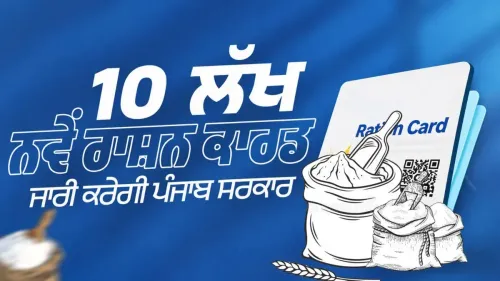
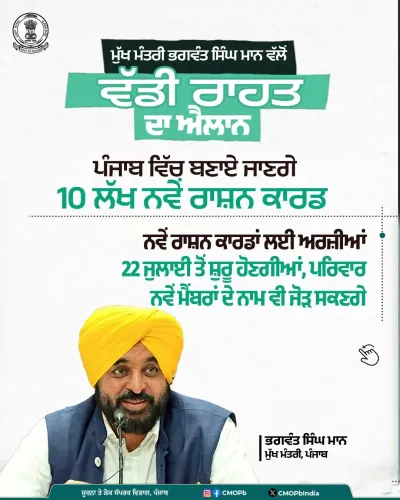
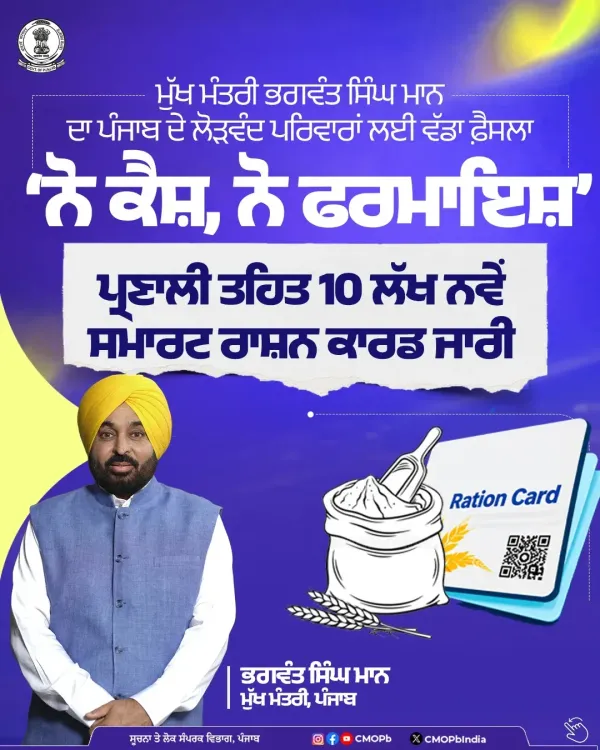
CM Bhagwant Mann has announced 10 lakh new Smart Ration Cards for Punjab's needy families — widows, daily-wage workers, SC and EWS households — through a 'No Cash, No Farmaish' transparent process, providing 5 kg free wheat monthly and Meri Rasoi food kits.
Key Takeaways
10 lakh new Smart Ration Cards issued by the Punjab government for vulnerable families.
Eligibility covers widows, daily-wage workers, Scheduled Caste families, and EWS households .
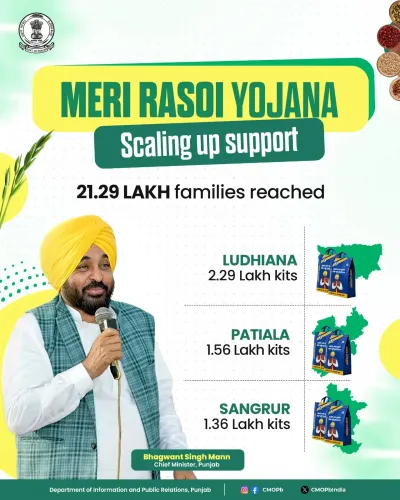
Each cardholder receives 5 kg of free wheat per month plus a Meri Rasoi ration kit with essential food items.
Cards issued under a 'No Cash, No Farmaish' framework — no recommendations or cash payments required for access.
The initiative builds on the National Food Security Act, 2013 , which mandates subsidised grain for priority households via state PDS networks.
Rollout transparency will be tested by monthly kit distribution reports and future state audit findings.
No recommendation, no cash, no favouritism — just a card that works. Chief Minister Bhagwant Singh Mann on Wednesday, 18 November 2026, announced the issuance of 10 lakh new Smart Ration Cards for Punjab's most vulnerable families, delivered through a process the government has branded 'No Cash, No Farmaish' — a pointed signal that this round of welfare access owes nothing to political connections or under-the-table dealings.
Who gets the card — and what it delivers
The beneficiary list reads like a portrait of Punjab's most economically exposed households: widows, daily-wage workers, Scheduled Caste families, and Economically Weaker Section (EWS) households. Each new cardholder will receive 5 kg of free wheat every month, along with a Meri Rasoi ('My Kitchen') ration kit stocked with essential food items — a bundle designed to cover the basics that a family most urgently needs.
The Smart Ration Card system digitises the entire eligibility and delivery chain, cutting out the intermediaries who have historically made PDS access conditional on connections or cash. It is part of a broader national arc — rooted in the National Food Security Act of 2013 — that has pushed state governments to replace opaque, recommendation-driven lists with data-verified, category-based eligibility.
Punjab's transparency bet in a system long plagued by leakages
India's Public Distribution System has carried a persistent, well-documented ghost: ghost beneficiaries, duplicate cards, and genuine families locked out by bureaucratic gatekeeping. Punjab's 'No Cash, No Farmaish' framing is a direct counter-narrative to that history — an explicit promise that the Aam Aadmi Party government under Mann will not let welfare allocations become patronage currency.
State governments across India have progressively digitised ration infrastructure over the past decade, but the political will to enforce clean eligibility — and publicly commit to it — remains uneven. By announcing the number (10 lakh cards), naming the beneficiary categories, and anchoring the rollout in an anti-corruption slogan, the Punjab government is staking its credibility on a verifiable outcome. The distribution reports, once monthly kits start flowing, will be the real test.
For the widows and daily labourers who make up the core of this list, the kicker is simpler: a card that arrives without asking for anything in return is already a departure from the norm.
Point of View
No Farmaish' branding is as much a political declaration as a policy mechanism — the AAP government is explicitly distancing itself from the patronage-based PDS culture that opposition parties have long used to consolidate local influence. By digitising eligibility and naming vulnerable sub-categories publicly, Mann is building an accountability trail that future administrations will find difficult to quietly dismantle. If the monthly distribution data matches the promised 10 lakh beneficiaries, it strengthens AAP's core governance-over-politics pitch ahead of Punjab's next electoral cycle. The real stress-test, however, is whether the 'transparent process' can survive the pressure that politically connected intermediaries typically apply at the last-mile delivery stage.
NationPress
18 Nov 2026
Frequently Asked Questions
What is the Meri Rasoi ration kit in Punjab?
'Meri Rasoi' is a Punjab government scheme that provides monthly ration kits containing essential food items to eligible households, distributed alongside free wheat under the state's Smart Ration Card system.
Who is eligible for the new Smart Ration Cards in Punjab?
The new Smart Ration Cards target widows, daily-wage workers, Scheduled Caste families, and Economically Weaker Section households identified as needy by the Punjab government.
What does the 'No Cash, No Farmaish' policy mean?
'No Cash, No Farmaish' means the Punjab government has committed to issuing ration cards without any cash payment or personal recommendation — eligibility is determined purely by transparent, data-based criteria.
How much free wheat do new Smart Ration Card holders get in Punjab?
Each new beneficiary under the scheme receives 5 kg of free wheat every month, along with the Meri Rasoi food kit.
How many Smart Ration Cards has Punjab issued in 2026?
The Punjab government, under Chief Minister Bhagwant Singh Mann, has issued 10 lakh (one million) new Smart Ration Cards in November 2026 for vulnerable families across the state.