CM Bhagwant Mann Launches 'Punjab da Crorepati' for Youth
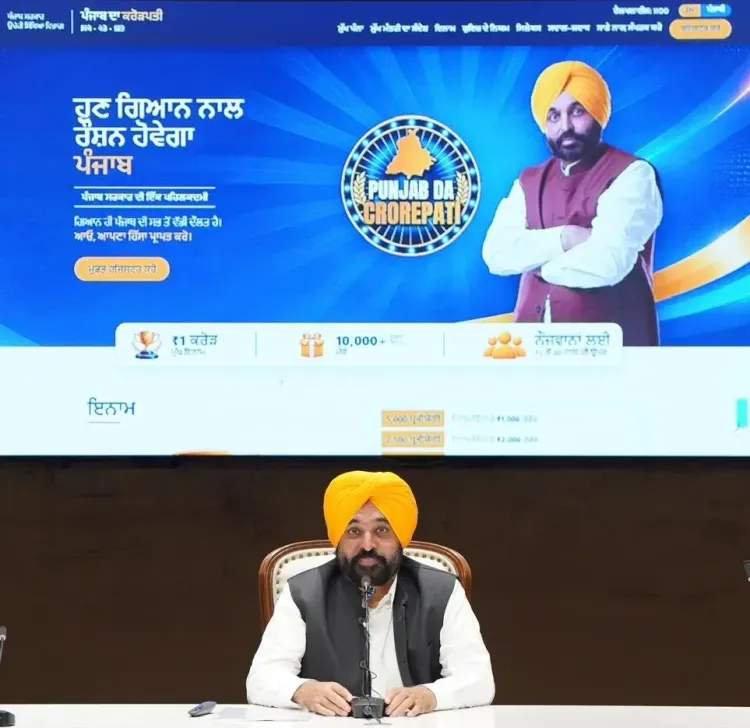
Synopsis
Punjab Chief Minister Bhagwant Mann has announced 'Punjab da Crorepati', a competition awarding ₹1 crore to the top finisher and prizes to 10,000 participants, aimed at energising youth preparation for government jobs across the state.
Key Takeaways
Punjab da Crorepati competition announced by CM Bhagwant Mann on 14 November 2026 .
The winner receives ₹1 crore ; each of 4 runners-up receives ₹10 lakh .
The top 10,000 participants will receive prizes, making it a mass-scale incentive programme.
The scheme is explicitly designed to prepare Punjab's youth for government jobs .
The announcement fits the Aam Aadmi Party 's education-first governance model introduced since 2022 .
Specific competition format, eligibility criteria, and syllabus have not yet been announced.
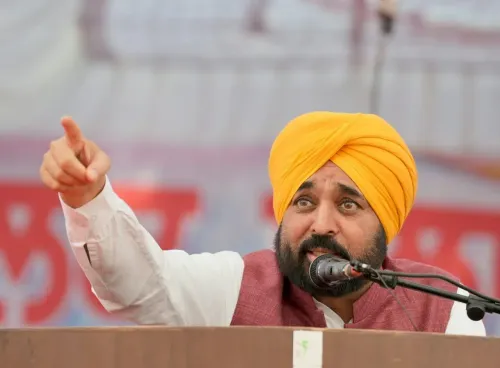
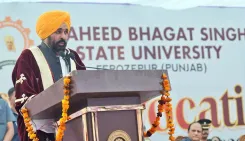
A ₹1 crore top prize. A government job at the finish line. On Saturday, 14 November 2026, Punjab Chief Minister Bhagwant Mann announced the 'Punjab da Crorepati' competition — a high-stakes quiz-style contest designed to push young Punjabis straight into the arena of government job preparation.
Posting in Punjabi, Mann declared: 'ਪੰਜਾਬ ਦੇ ਨੌਜਵਾਨਾਂ ਲਈ ਵੱਡੀ ਖ਼ੁਸ਼ਖ਼ਬਰੀ' — 'Big good news for Punjab's youth' — before laying out the prize structure in full. The winner walks away with ₹1 crore. Each of the 4 runners-up receives ₹10 lakh. The top 10,000 participants earn prizes, ensuring that the competition rewards effort at scale, not just the single topper.
What 'Punjab da Crorepati' is actually built to do
Strip away the prize money and the core logic is clear: Mann is using financial incentives to convert passive job-seekers into active exam-ready competitors. The competition is explicitly framed around preparing youth for government jobs — sarkari naukri — which remain the most coveted employment destination for millions of young Indians, particularly in states where private-sector opportunity is uneven.
Mann put the philosophy plainly: 'ਕਲਮ ਹੀ ਕੌਮ ਦੀ ਤਕਦੀਰ ਬਦਲਦੀ ਹੈ' — 'It is the pen that changes the destiny of a nation.' He added that he wants books in the hands of Punjab's youth, with the government standing beside them at every step. The closing line carried his signature political charge: 'ਇਨਕਲਾਬ ਜ਼ਿੰਦਾਬਾਦ' — 'Long live the revolution.'
AAP's education-first playbook, now in Punjab
The Aam Aadmi Party government, which swept Punjab in 2022, came to office with education reform as a centrepiece — borrowing heavily from its Delhi model of school upgrades, mohalla clinics, and youth skilling. 'Punjab da Crorepati' fits neatly into that playbook: a visible, media-friendly, prize-based intervention that simultaneously generates aspiration and forces structured study.
Prize-linked competitive schemes have appeared across Indian states as governments grapple with youth unemployment numbers that remain stubbornly high. The Punjab model stands out for the sheer scale of its reach — 10,000 rewarded participants is not a pilot; it is a mass mobilisation. Rollout details including eligibility criteria and the specific syllabus or format have not yet been released.
The stakes for Punjab's job-seeking generation
Youth unemployment and the allure of migration — both domestic and international — have long defined the social texture of Punjab. For years, families invested in sending children abroad rather than betting on competitive exams at home. Mann's announcement is, at one level, a direct counter-argument to that impulse: stay, study, compete, and the state has your back financially.
Whether the scheme converts into measurable employment outcomes will depend entirely on what comes next — the exam structure, the coaching support, and whether winners and high-scorers receive any direct pathway into government recruitment pipelines. The prize money grabs attention. The architecture that follows will determine whether 'Punjab da Crorepati' is a moment or a movement.
Point of View
Government-exam preparation — to simultaneously generate buzz and shift youth energy away from migration narratives. It extends the party's Delhi-origin playbook into Punjab's specific socio-economic anxieties around youth unemployment and brain drain. The real policy test, however, is what follows the prize structure: without a formal exam framework, coaching pipeline, or recruitment linkage, the scheme risks being aspirational theatre rather than structural intervention. Watch whether this competition is integrated into Punjab's broader public-service commission calendar or remains a standalone media event.
NationPress
14 Nov 2026
Frequently Asked Questions
What is 'Punjab da Crorepati'?
'Punjab da Crorepati' is a competition announced by Punjab Chief Minister Bhagwant Mann to help youth prepare for government jobs, with a top prize of ₹1 crore, four runners-up prizes of ₹10 lakh each, and rewards for the top 10,000 participants.
Who can participate in the Punjab da Crorepati competition?
The competition is targeted at Punjab's youth preparing for government jobs. Specific eligibility criteria, age limits, and registration details had not been released at the time of the announcement on 14 November 2026.
How much is the prize money for Punjab da Crorepati?
The winner receives ₹1 crore, the four runners-up each receive ₹10 lakh, and the top 10,000 participants receive additional prizes as announced by CM Bhagwant Mann.
Why did Bhagwant Mann launch this scheme?
CM Mann stated the goal is to put books in the hands of Punjab's youth and prepare them for government jobs, framing education as the force that changes a nation's destiny — consistent with AAP's broader education-first governance approach since 2022.
Is Punjab da Crorepati similar to other state government schemes in India?
Yes. Prize-linked or scholarship-based competitive exam schemes have been used by several Indian state governments to incentivise youth participation in public sector job preparation, though Punjab's scheme is notable for rewarding as many as 10,000 participants.