CM Bhagwant Mann Raises Drone Threat With Army Chief

Synopsis
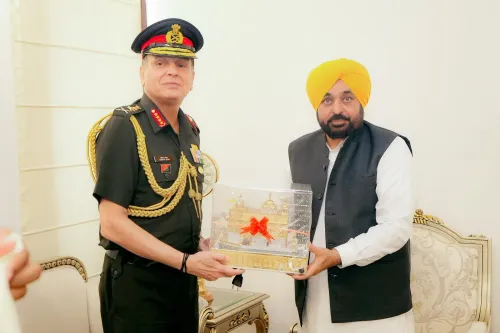
Chief Minister Bhagwant Mann met the Chief of Army Staff on August 12, 2026, urging deployment of anti-drone technology and low-lying interceptive radars along Punjab's 532-km Pakistan border, calling the state the first in India to install its own anti-drone system to counter cross-border smuggling.
Key Takeaways
CM Bhagwant Mann met the Chief of Army Staff on August 12, 2026 to discuss border security.
Punjab shares a 532-km hostile border with Pakistan , making it India's most exposed state to drone-based smuggling.
Mann called for anti-drone technology and low-lying interceptive radars as an immediate operational need.
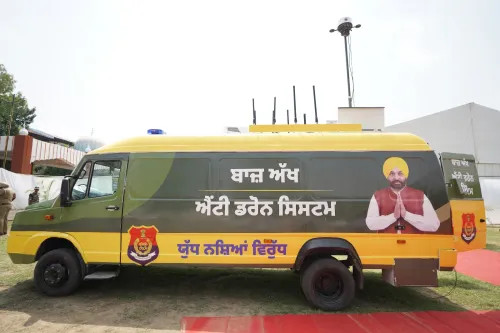
The CMO stated Punjab is the first Indian state to install its own anti-drone technology .
Drone incursions from Pakistan carrying arms and narcotics have been a recurring security challenge since the late 2010s.
The meeting signals a push for deeper army-state coordination on low-altitude border surveillance.
Drone smuggling across Punjab's western frontier has turned into one of India's most persistent border-security headaches — and on Wednesday, August 12, 2026, Chief Minister Bhagwant Mann took the fight to the top, raising the issue directly with the Chief of Army Staff in a high-level meeting. The Chief Minister's Office of Punjab said Mann pressed for anti-drone technology and low-lying interceptive radars to plug the gaps along the state's 532-km border with Pakistan.
What Mann told the Army Chief
Quoting the Chief Minister directly, the CMO said: 'Punjab has a 532 km hostile border with Pakistan, due to which anti-drone technology along with low-lying interceptive radars is the need of the hour to check cross-border smuggling through drones.' Mann also claimed that Punjab is the first state in the country to install its own anti-drone technology — a significant assertion that underscores how urgently the state has moved to fill surveillance gaps the central grid has not fully covered.
Why Punjab's 532-km frontier is ground zero for drone incursions
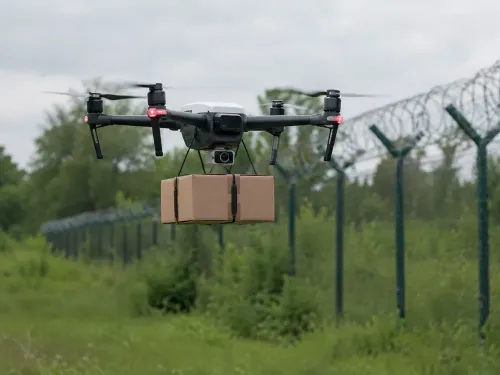
Since the late 2010s, drone-borne consignments — arms, narcotics, counterfeit currency — have been intercepted with alarming regularity along Punjab's international border. Low-altitude, slow-moving quadcopters are difficult to detect with conventional radar, and the flat agricultural terrain of the border belt offers little natural obstruction. Security agencies have flagged the corridor as one of the most exploited aerial smuggling routes on the subcontinent.
Punjab has previously sought central assistance for border surveillance technology in coordination with the Ministry of Home Affairs. Mann's direct engagement with the Chief of Army Staff signals that the state is now pushing for a more integrated, army-backed approach — not just administrative coordination but active technological collaboration.
States stepping in where national grids leave gaps
Punjab's move to deploy its own anti-drone systems reflects a wider pattern emerging across India's border states: when central procurement cycles move slowly, state governments are increasingly funding localised solutions. The technology stack typically involves radio-frequency jammers, optical sensors, and the low-lying interceptive radars Mann specifically named — systems designed to catch objects flying below the threshold of conventional air-defence radar.
Whether other border states follow Punjab's template — and whether the Centre steps in with matching funds or a unified national grid — is the next question the security establishment will have to answer.
A state that once waited for Delhi to solve its border problem is now writing the playbook itself — and taking it straight to the Army Chief's desk.
Point of View
The move serves a dual purpose: it demonstrates executive urgency on a genuine security crisis, and it positions Punjab as a proactive state rather than a passive recipient of central policy. The broader significance lies in the precedent: if states begin deploying independent anti-drone grids, India's border surveillance architecture could become a patchwork of state and central systems, raising interoperability questions that Delhi will eventually have to resolve.
NationPress
12 Aug 2026
Frequently Asked Questions
Why did CM Bhagwant Mann meet the Chief of Army Staff?
CM Bhagwant Mann met the Chief of Army Staff to press for anti-drone technology and low-lying interceptive radars along Punjab's 532-km border with Pakistan, which has seen repeated drone-based smuggling of arms and narcotics.
Is Punjab really the first state in India to install anti-drone technology?
The Chief Minister's Office of Punjab has claimed that Punjab is the first state in India to install its own anti-drone technology, though this specific claim has not been independently verified.
How long is Punjab's border with Pakistan?
According to CM Bhagwant Mann's statement to the Chief of Army Staff, Punjab shares a 532-km international border with Pakistan.
What is being smuggled through drones across the Punjab-Pakistan border?
Security agencies have intercepted drone consignments carrying arms, narcotics, and counterfeit currency across the Punjab-Pakistan border, a problem that has intensified since the late 2010s.
What is a low-lying interceptive radar and why does Punjab need it?
Low-lying interceptive radars are surveillance systems designed to detect slow-moving, low-altitude objects like quadcopter drones that fall below the detection threshold of conventional air-defence radar — making them critical for countering drone smuggling along flat border terrain like Punjab's.