CM Bhajan Lal Highlights Disability Welfare Push in Rajasthan
Synopsis
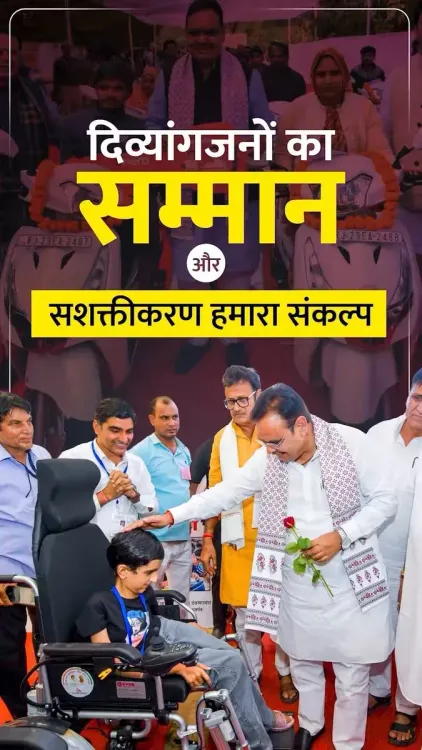
Rajasthan Chief Minister Bhajan Lal Sharma on 17 July 2026 highlighted state welfare schemes for persons with disabilities, citing UDID cards, equal opportunity policy, scholarships, enhanced pensions, and assistive device distribution as drivers of divyangjan empowerment under a 'Viksit Rajasthan' vision.
Key Takeaways
CM Bhajan Lal Sharma on 17 July 2026 reaffirmed the Rajasthan government's commitment to disability welfare under the 'Viksit Rajasthan' vision.
The UDID card is being used to deliver direct benefits to persons with disabilities, reducing intermediaries in scheme delivery.
Key schemes cited include an equal opportunity policy , special divyangjan scholarships , enhanced pensions , and assistive device distribution .
The state's approach is framed as aligned with PM Narendra Modi 's national vision for inclusive development.
The policy framework draws on the Rights of Persons with Disabilities Act, 2016 , which mandates reservations and expanded entitlements for divyangjan.
Implementation data on pension disbursements, scholarship coverage, and UDID enrolment in Rajasthan will be the key indicators to watch.
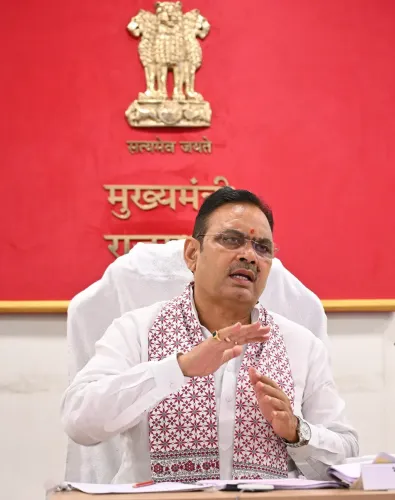
Rajasthan Chief Minister Bhajan Lal Sharma on Friday, 17 July 2026, highlighted the state government's ongoing welfare initiatives for persons with disabilities, asserting that divyangjan are playing a leading role in building a 'Viksit Rajasthan' through their creativity and resolve.
Context
In his post, CM Sharma stated — 'हमारे दिव्यांग भाई-बहन आज अपनी अद्वितीय रचनात्मकता और दृढ़ संकल्प से विकसित राजस्थान के निर्माण में अग्रणी भूमिका निभा रहे हैं' ('Our differently-abled brothers and sisters are today playing a leading role in building a Viksit Rajasthan through their unique creativity and firm resolve'). He specifically cited schemes including the UDID card for direct benefit access, an equal opportunity policy, special scholarships for divyangjan, enhanced pensions, and distribution of assistive devices as pillars of this effort. The Chief Minister framed these measures as part of a broader commitment to inclusive growth aligned with Prime Minister Narendra Modi's vision.
Policy Backdrop
The Unique Disability ID (UDID) card initiative was launched nationally to digitise disability certification and directly link beneficiaries to central and state schemes, reducing intermediaries and leakages. The programme operates under the framework of the Rights of Persons with Disabilities Act, 2016, which expanded legal protections, reservations, and entitlements for persons with disabilities across India. Rajasthan's BJP-led administration has sought to align state-level programmes — including pension enhancements and assistive device drives — with this central legislative and digital infrastructure.
The emphasis on self-reliance (aatmanirbhar) and equal opportunity reflects a consistent policy thread running through successive BJP-governed states, which have adopted the RPWD Act framework to extend welfare delivery at the grassroots level. Scholarship programmes for students with disabilities and targeted pension revisions have been recurring instruments in this approach.
Stakeholders and Impact
The primary beneficiaries of the schemes cited by CM Sharma are Rajasthan's divyangjan population — persons with physical, visual, hearing, intellectual, and other recognised disabilities. Direct benefit transfer through the UDID card is designed to eliminate delays and ensure that pensions, scholarships, and device subsidies reach eligible individuals without bureaucratic friction. Students with disabilities stand to benefit from scholarship continuity, while older beneficiaries and those requiring mobility or sensory aids depend on the assistive device distribution drives.
The equal opportunity policy referenced in the post is aimed at ensuring divyangjan are not excluded from employment and education pipelines, a concern that the Rights of Persons with Disabilities Act, 2016 addresses through mandatory reservation provisions in government jobs and educational institutions.
What's Next
Attention will now turn to state budget allocations and implementation data for disability pensions and scholarships in Rajasthan, as well as updates on UDID enrolment coverage and the scale of assistive device distribution drives. CM Sharma's public reaffirmation of these commitments signals that disability welfare will remain a visible plank of the state government's 'Viksit Rajasthan' narrative heading into the coming months. Consistent delivery on pension enhancements and scholarship disbursements will be the metric by which these stated commitments are ultimately judged.
Point of View
Reinforcing BJP's 'inclusive development' brand ahead of any potential policy review cycles. By invoking PM Modi's vision alongside specific scheme names, the communication serves both a governance accountability function and a political signalling one. The focus on UDID-linked direct benefit transfer reflects a broader administrative push to digitise welfare and reduce leakage — a model that has become a signature of BJP-governed states. Whether the stated enhancements in pensions and scholarship reach translates into verifiable on-ground outcomes will determine the credibility of the 'Viksit Rajasthan' framing for this constituency.
NationPress
15 Oct 2026
Frequently Asked Questions
What is the UDID card and how does it help divyangjan in Rajasthan?
The Unique Disability ID (UDID) card is a national initiative that digitises disability certification and links beneficiaries directly to central and state welfare schemes, enabling faster and leakage-free delivery of pensions, scholarships, and assistive device subsidies.
What disability welfare schemes did CM Bhajan Lal Sharma mention?
CM Sharma cited the UDID card for direct benefits, an equal opportunity policy, special scholarships for divyangjan, enhanced pensions, and distribution of assistive devices as key schemes being implemented in Rajasthan.
What is the Rights of Persons with Disabilities Act 2016?
The Rights of Persons with Disabilities Act, 2016 is a central law that expanded legal protections, reservations in government jobs and education, and entitlements for persons with disabilities across India, forming the policy backbone for state-level welfare programmes.
What does 'Viksit Rajasthan' mean in the context of disability welfare?
'Viksit Rajasthan' refers to the Rajasthan government's vision of a developed state where all citizens, including persons with disabilities, have equal opportunities to progress and contribute — framed by CM Sharma as a goal aligned with PM Modi's inclusive development vision.
How does Rajasthan's disability policy align with central government schemes?
Rajasthan's BJP-led government has adopted the central UDID framework and the RPWD Act 2016 to deliver pensions, scholarships, and assistive devices at the state level, directly linking state programmes to the national inclusive development agenda championed by PM Modi.