CM Bhajan Lal Pledges to Fortify Rajasthan Water Bodies
Synopsis
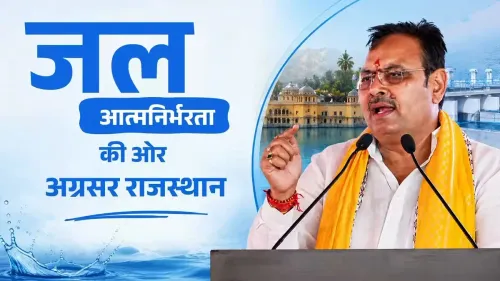
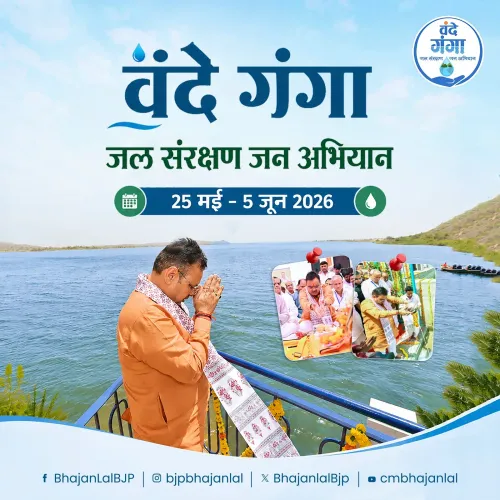
Rajasthan Chief Minister Bhajan Lal Sharma on 12 June 2026 pledged to fortify the state's dams, anicuts, ponds, and canals to harvest rainwater, recharge groundwater, and improve the livelihoods of farmers across the arid state.
Key Takeaways
Bhajan Lal Sharma announced on 12 June 2026 that the Rajasthan government is strengthening all dams, anicuts, ponds, and canals statewide.
The stated goal is to ensure rainwater harvesting, improve groundwater levels, and enhance farmer prosperity.
The government's slogan 'khет ka paani khet mein, gaon ka paani gaon mein' reflects a local-containment approach to water management.
The initiative aligns with the state's Mukhya Mantri Jal Swavalamban Abhiyan (launched 2016 ) and the national Jal Shakti Abhiyan (since 2019 ).
Rajasthan's predominantly arid geography makes groundwater recharge critical for agricultural stability and reducing rural migration.
Post-monsoon groundwater assessments will serve as key indicators of the programme's on-ground impact.
Rajasthan Chief Minister Bhajan Lal Sharma on Friday, 12 June 2026 reaffirmed his government's commitment to strengthening dams, anicuts, ponds, and canals across the state to ensure systematic rainwater harvesting and improve groundwater levels for farmers.
Context
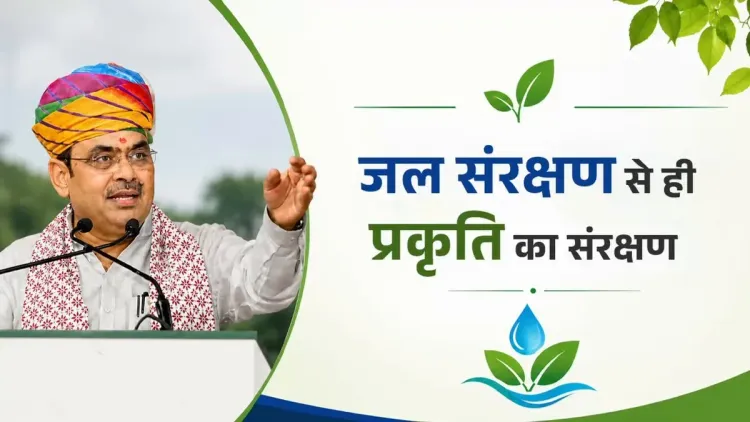
In the post, Sharma wrote in Hindi: 'खेत का पानी खेत में, गांव का पानी गांव में' ['farm water stays on the farm, village water stays in the village'] — a conservation slogan that frames the government's intent to arrest surface runoff at the point of origin. He stated the government is 'committed to improving groundwater levels and making our annadata [food providers, i.e. farmers] prosperous.' The post was accompanied by a video.
Rajasthan is India's largest state by area and is predominantly arid and semi-arid, making it chronically vulnerable to groundwater depletion and erratic monsoon patterns. Agriculture across the state's rural belt is heavily dependent on both surface water infrastructure and groundwater recharge cycles.
Policy Backdrop
The announcement builds on a policy lineage stretching back to 2016, when the state launched the Mukhya Mantri Jal Swavalamban Abhiyan — a community-led programme to restore traditional water bodies and create village-level water self-sufficiency. That scheme targeted thousands of villages and drew on indigenous structures such as johads and baoris alongside modern anicuts and check dams.
Since 2019, Rajasthan has also participated in the national Jal Shakti Abhiyan, which focuses on rainwater conservation and aquifer recharge at the district level. At the central level, the Pradhan Mantri Krishi Sinchayee Yojana, launched in 2015, has channelled funds into irrigation efficiency and water-body restoration in arid states including Rajasthan. Sharma's current push aligns squarely with both state and central frameworks.
The emphasis on local containment of runoff — keeping water within the catchment where it falls — continues an older tradition of community-driven water management in the Thar region, now reinforced by government-scale infrastructure spending.
Stakeholders and Impact
The primary beneficiaries are Rajasthan's farming communities, who depend on adequate groundwater for irrigation during lean monsoon periods. Strengthening dams, canals, and ponds also benefits rural households that rely on these structures for drinking water and livestock.
Declining groundwater tables in districts such as Barmer, Jodhpur, and Nagaur have historically driven seasonal migration. Infrastructure that recharges aquifers can reduce that pressure, stabilising rural livelihoods. Water-body restoration also supports soil moisture retention, which directly affects crop yields in the kharif season.
What's Next
District-level progress reports from the state water resources department and post-monsoon groundwater assessments will be the key indicators of whether the infrastructure drive translates into measurable aquifer recovery. The government's performance on this front is likely to be scrutinised ahead of each monsoon season as a barometer of rural welfare delivery.
With the 2026 monsoon approaching, the pace of repair and fortification of existing water structures will determine how effectively the state captures seasonal rainfall — and whether Sharma's pledge moves from political commitment to ground-level outcome.
Point of View
Framing water infrastructure as a welfare commitment rather than a technocratic exercise. The invocation of the 'farm water stays on the farm' slogan draws on a deeply resonant tradition of community water management in the Thar belt, lending the announcement cultural legitimacy beyond bureaucratic programme language. The move also positions the BJP state government as the continuator of both its own 2016 Jal Swavalamban legacy and the current central government's Jal Shakti architecture, reinforcing vertical alignment within the party ecosystem. Whether the pledge produces measurable groundwater recovery will determine its political durability as Rajasthan heads into successive monsoon cycles.
NationPress
26 Oct 2026
Frequently Asked Questions
What is Bhajan Lal Sharma's plan for water conservation in Rajasthan?
Chief Minister Bhajan Lal Sharma has announced that the Rajasthan government is strengthening all dams, anicuts, ponds, and canals across the state to harvest rainwater and improve groundwater levels for farmers.
What does 'khet ka paani khet mein' mean?
The Hindi phrase means 'farm water stays on the farm, village water stays in the village' — a conservation principle aimed at retaining rainwater at its point of origin to recharge local aquifers rather than letting it run off.
What is the Mukhya Mantri Jal Swavalamban Abhiyan?
It is a Rajasthan government scheme launched in 2016 to promote community-led rainwater harvesting and restoration of traditional water bodies such as johads, anicuts, and check dams across villages to achieve water self-sufficiency.
Why is water conservation especially important in Rajasthan?
Rajasthan is India's largest state by area and is predominantly arid and semi-arid, making it highly vulnerable to groundwater depletion, erratic monsoons, and agricultural water stress, particularly in districts like Barmer, Jodhpur, and Nagaur.
How does the Rajasthan water infrastructure drive connect to central government schemes?
The state's efforts align with the national Jal Shakti Abhiyan (since 2019) and the Pradhan Mantri Krishi Sinchayee Yojana (launched 2015), both of which fund rainwater conservation and irrigation infrastructure in arid states like Rajasthan.