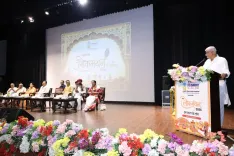
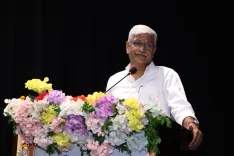
CM Bhajan Lal calls Rajasthan-Haryana Yamuna project historic
Synopsis
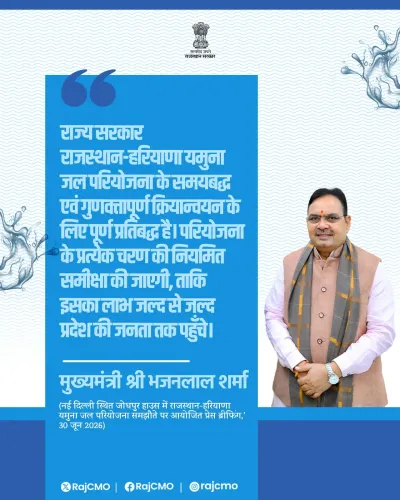
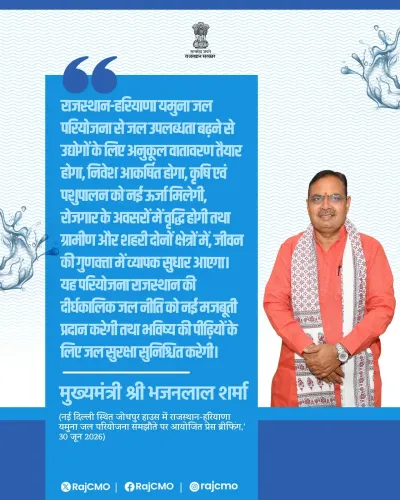
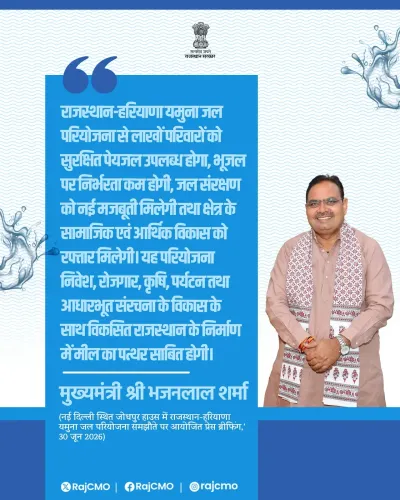
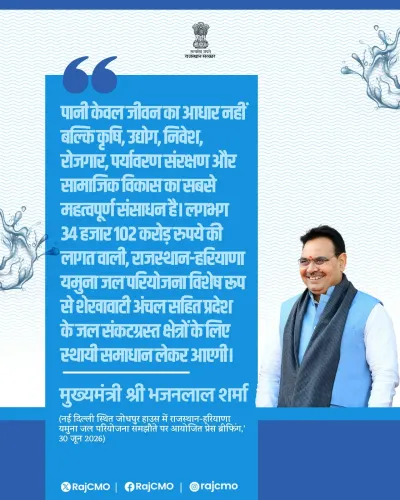
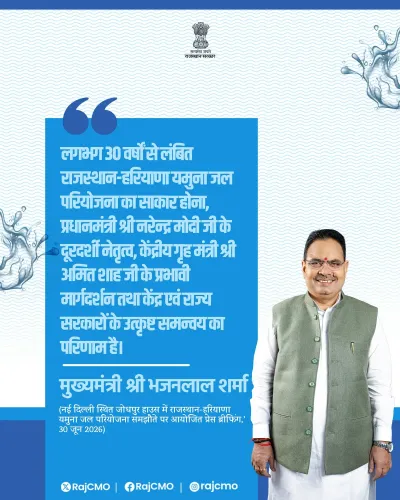
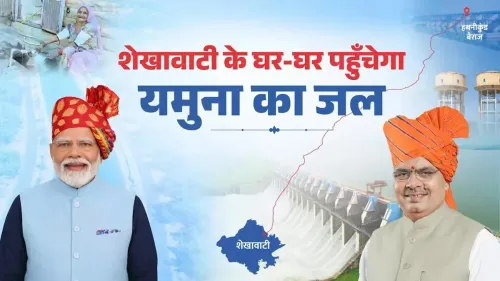
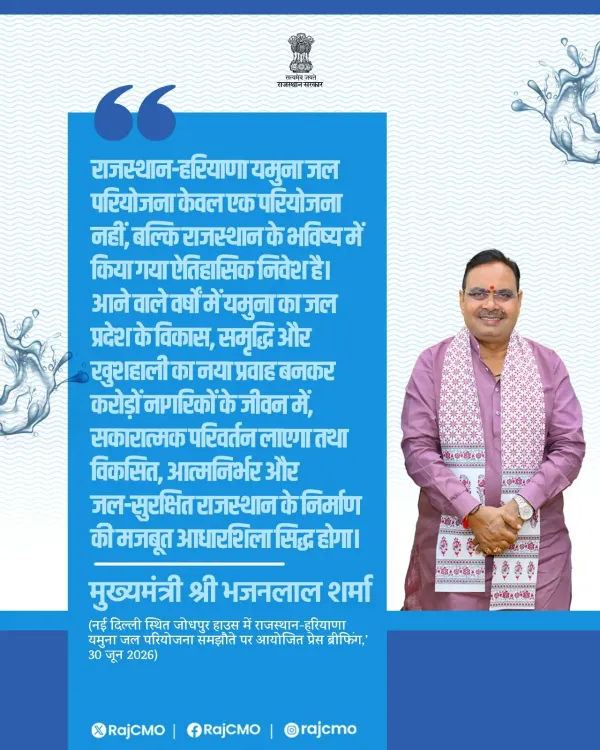
Chief Minister Bhajan Lal Sharma has described the Rajasthan-Haryana Yamuna Water Project as a historic investment in Rajasthan's future, with the CMO sharing his statement on 1 July 2026. The project aims to bring Yamuna river water to water-scarce eastern Rajasthan, building on a 1994 interstate MoU.
Key Takeaways
CM Bhajan Lal Sharma called the Rajasthan-Haryana Yamuna Water Project 'a historic investment in the future of Rajasthan' on 1 July 2026 .
The project is a bilateral initiative between Rajasthan and Haryana to channel Yamuna river water to the state.
A 1994 MoU had already allocated Yamuna waters to Rajasthan, but conveyance infrastructure has been lacking.
Primary beneficiaries include farmers in eastern Rajasthan and urban populations in water-stressed districts.
Detailed project timelines, funding, and canal infrastructure details are yet to be officially disclosed.
The announcement was made under the hashtag #आपणो_अग्रणी_राजस्थान , signalling it as a flagship governance priority for the Sharma administration.
The Chief Minister's Office of Rajasthan on Wednesday, 1 July 2026, shared a statement from Chief Minister Bhajan Lal Sharma describing the Rajasthan-Haryana Yamuna Water Project as a landmark investment in the state's future, framing it as far more than a routine infrastructure initiative.
Posting under the hashtag #आपणो_अग्रणी_राजस्थान ('Our Leading Rajasthan'), the CMO quoted Sharma as saying: 'The Rajasthan-Haryana Yamuna Water Project is not merely a project, but a historic investment made in the future of Rajasthan.'
Context
The Yamuna river, originating in Uttarakhand and flowing through Haryana, Delhi, and Uttar Pradesh, has long been governed by interstate water-sharing arrangements. A 1994 Memorandum of Understanding allocated Yamuna waters among Haryana, Uttar Pradesh, Rajasthan, Delhi, and Himachal Pradesh for irrigation and drinking purposes. Rajasthan's share under that agreement has historically been difficult to utilise fully due to the absence of adequate conveyance infrastructure.
Eastern Rajasthan, in particular, faces chronic water scarcity, with farmers and urban populations alike dependent on monsoon patterns and existing canal networks that have struggled to meet growing demand.
Policy Backdrop
Chief Minister Bhajan Lal Sharma, who took office in December 2023 following the BJP's victory in the Rajasthan assembly elections, has positioned water security as a central pillar of his administration's development agenda. The Rajasthan-Haryana Yamuna Water Project represents a bilateral arrangement between the two neighbouring states to operationalise Rajasthan's Yamuna allocation through new canal and lift infrastructure.
Rajasthan has historically supplemented its water resources through large-scale projects such as the Indira Gandhi Canal, which draws from the Sutlej-Beas system in the northwest. A Yamuna-linked corridor would open an additional eastern supply route, potentially benefiting districts that the existing western canal network does not adequately serve.
Interstate river-water projects in India are governed under the constitutional framework for water resources, which places rivers on the Concurrent List and requires negotiated allocations ratified by the central government. Any new infrastructure agreement between Rajasthan and Haryana would need to operate within the boundaries of the 1994 MoU and any subsequent central directives.
Stakeholders and Impact
The primary beneficiaries of a functional Yamuna water link would be farmers in eastern Rajasthan, where irrigation coverage remains significantly below the state average. Reliable surface water supply could reduce dependence on rapidly depleting groundwater aquifers, lowering input costs for agriculture and improving crop reliability.
Urban and peri-urban populations in water-stressed districts also stand to gain from improved drinking water availability, a persistent concern in the region. The project, if executed at scale, could reshape the agricultural and demographic trajectory of eastern Rajasthan over the coming decades.
What's Next
Detailed project parameters — including funding structure, canal alignment, lift irrigation components, and implementation timelines — are yet to be made public. Observers will watch for a formal bilateral agreement between the Rajasthan and Haryana governments, central approval of any revised water-sharing schedules, and budget allocations in forthcoming state financial plans.
The CMO's framing of the project as a 'historic investment' signals that the Sharma administration intends to place this initiative at the centre of its governance narrative ahead of future electoral cycles, making its progress a closely watched political as well as policy matter.
Point of View
Consistent with how BJP-governed states have sought to brand large-scale water and connectivity investments. The invocation of the hashtag 'Our Leading Rajasthan' ties the project to a broader state-branding exercise that the Sharma administration has pursued since taking office in December 2023. Water security in eastern Rajasthan is a genuine and long-standing policy gap, and any credible progress on Yamuna linkage would carry real electoral weight in agrarian constituencies. The absence of specific project details at this stage, however, means the announcement is better read as a political signal than a confirmed infrastructure milestone.
NationPress
1 Jul 2026
Frequently Asked Questions
What is the Rajasthan-Haryana Yamuna Water Project?
The Rajasthan-Haryana Yamuna Water Project is a bilateral initiative between the governments of Rajasthan and Haryana to channel Yamuna river water to Rajasthan, particularly benefiting water-scarce eastern districts through canal and lift irrigation infrastructure.
What did CM Bhajan Lal Sharma say about the Yamuna water project?
CM Bhajan Lal Sharma said the Rajasthan-Haryana Yamuna Water Project is 'not merely a project, but a historic investment made in the future of Rajasthan,' as shared by the Chief Minister's Office on 1 July 2026.
Does Rajasthan already have a share of Yamuna river water?
Yes. A 1994 Memorandum of Understanding allocated Yamuna river waters among Haryana, Uttar Pradesh, Rajasthan, Delhi, and Himachal Pradesh. Rajasthan's share has been difficult to fully utilise due to a lack of conveyance infrastructure.
Who benefits from the Rajasthan Yamuna water project?
The primary beneficiaries are farmers in eastern Rajasthan who depend on irrigation, as well as urban and peri-urban populations in water-stressed districts who face drinking water shortages.
What is the current status of the Rajasthan-Haryana Yamuna Water Project?
As of 1 July 2026, the project has been described as a flagship initiative by CM Bhajan Lal Sharma, but detailed parameters including funding, canal alignment, and timelines have not yet been made public by the government.