Rajasthan-Haryana Yamuna water deal: CM Sharma hails ₹34,102 crore pact
Synopsis
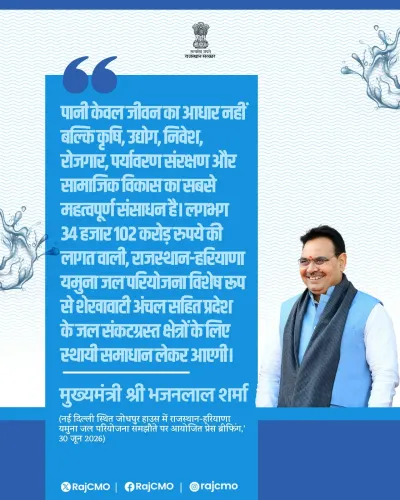
A water-sharing dispute left unresolved for nearly three decades finally has a deal — and a ₹34,102 crore price tag. Rajasthan CM Bhajanlal Sharma says the Yamuna Water Project Agreement with Haryana is the most consequential water governance move in the state's recent history, with the drought-prone Shekhawati belt set to be the biggest beneficiary.
Key Takeaways
Rajasthan and Haryana have signed the long-pending Yamuna Water Project Agreement , ending a deadlock of nearly three decades .
The project carries an outlay of ₹34,102 crore and targets safe drinking water for lakhs of families, with priority given to the water-scarce Shekhawati belt .
Chief Minister Bhajanlal Sharma credited the breakthrough to Prime Minister Narendra Modi , Home Minister Amit Shah , and Jal Shakti Minister C.R.
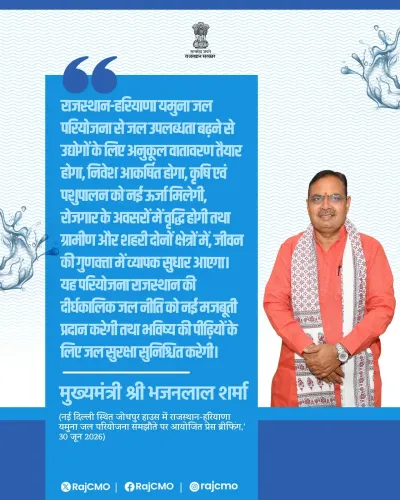
The project aims to reduce groundwater dependence, boost agriculture, attract investment, and generate employment across rural and urban Rajasthan.
Detailed implementation timelines and phased disbursement schedules are yet to be publicly announced.
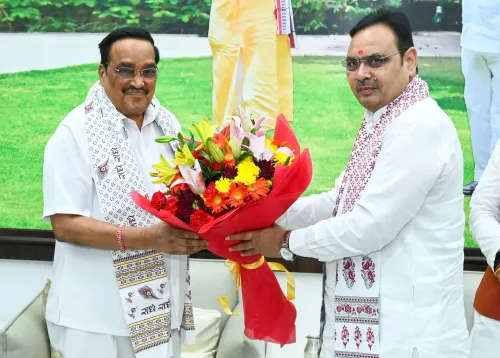
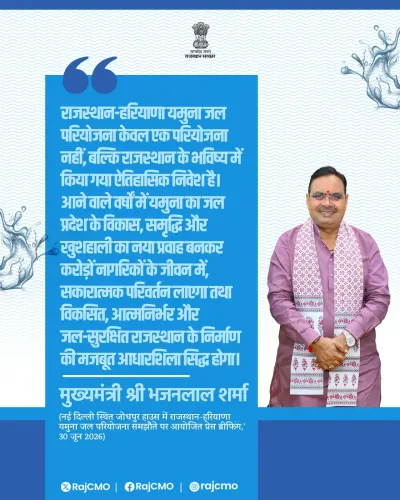
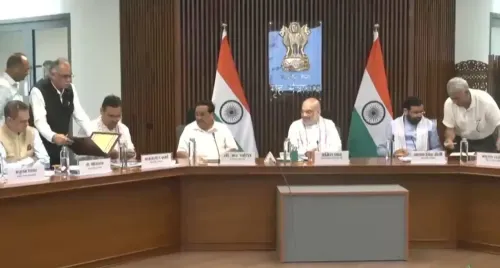
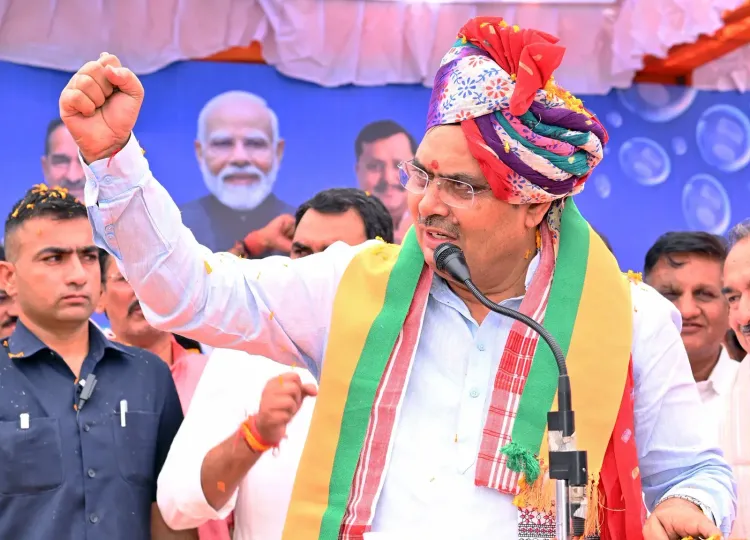
Rajasthan Chief Minister Bhajanlal Sharma on 30 June called the long-pending Yamuna Water Project Agreement between Rajasthan and Haryana a 'golden chapter' in the state's water management history, saying the ₹34,102 crore initiative lays a durable foundation for the water security and prosperity of crores of residents. Addressing a press briefing at Jodhpur House in New Delhi, Sharma said the agreement — stalled for nearly three decades — had finally been realised through collective political will and coordinated governance.
What the Agreement Covers
The ₹34,102 crore Yamuna Water Project is designed to deliver a permanent solution to Rajasthan's chronic water deficit, with particular focus on the water-scarce Shekhawati belt. The project will supply safe drinking water to lakhs of families, reduce over-dependence on groundwater, and reinforce the state's long-term water conservation strategy. Officials indicated the initiative will also support agriculture, animal husbandry, industrial growth, and tourism — sectors that have historically been constrained by water scarcity in the region.
What the Government Said
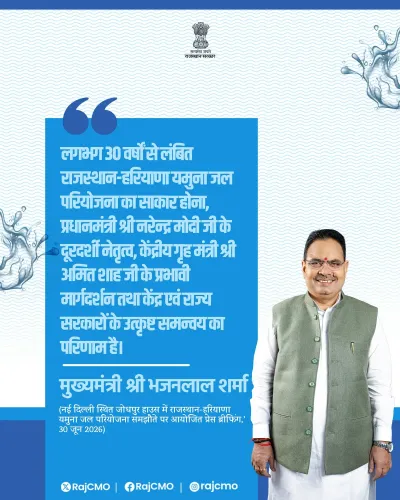
Chief Minister Sharma attributed the breakthrough to the 'visionary leadership' of Prime Minister Narendra Modi, the 'effective guidance' of Union Home and Cooperation Minister Amit Shah, and the technical and administrative support of Union Jal Shakti Minister C.R. Patil. He said Shah's proactive facilitation of dialogue between Rajasthan and Haryana was critical in arriving at a consensus on the complex inter-state water-sharing issue. Sharma framed the agreement as a demonstration of the 'double-engine government' model, arguing that Centre-state alignment had made it possible to resolve a dispute that had remained unresolved for three decades.
Why It Matters for Rajasthan
Water security sits at the centre of India's Viksit Bharat 2047 agenda, and Rajasthan — one of the country's most arid states — has long been among the most vulnerable. The Shekhawati region, in particular, has faced acute groundwater depletion and drinking water shortages for years. By securing a guaranteed Yamuna water allocation, the state aims to shift from crisis management to planned water governance. Sharma said improved water availability would create conditions for fresh industrial investment, revitalise farm output, and meaningfully raise living standards in both rural and urban pockets of the state.
Execution and Accountability
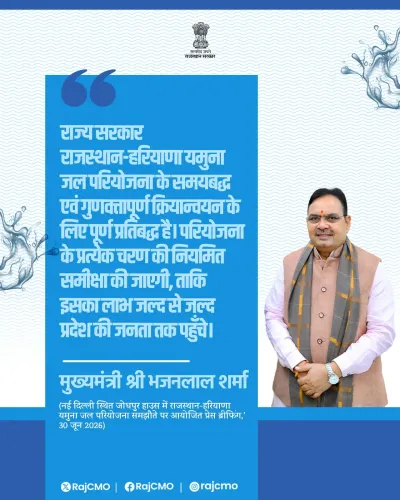
The Chief Minister reaffirmed the state government's commitment to the timely and quality execution of every phase of the project, stating that close monitoring mechanisms would be put in place to ensure benefits reach citizens at the earliest. He described the project as not merely an infrastructure initiative but a 'historic investment' in Rajasthan's future — one that would, in his words, usher in a new era of development, prosperity, and well-being for millions. Detailed implementation timelines and phased disbursement schedules are yet to be publicly released.
Point of View
And three decades of inaction underscores just how entrenched the deadlock had become. That said, the announcement is heavy on political attribution and light on implementation specifics: no phased timelines, no disbursement schedule, no independent monitoring framework has been detailed publicly. Rajasthan's water crisis — particularly in Shekhawati — is structural, driven by decades of groundwater over-extraction and erratic monsoons. A ₹34,102 crore agreement is necessary but not sufficient; the harder test will be whether execution keeps pace with the promise, or whether this joins the long list of inter-state water accords that looked transformative on paper and moved slowly on the ground.
NationPress
29 Sept 2026
Frequently Asked Questions
What is the Yamuna Water Project Agreement between Rajasthan and Haryana?
It is a long-pending inter-state water-sharing agreement, now formalised with a ₹34,102 crore outlay, aimed at supplying Yamuna water to water-scarce regions of Rajasthan, particularly the Shekhawati belt. The deal had remained unresolved for nearly three decades before being finalised.
How much will the Yamuna Water Project cost?
The project carries a total outlay of ₹34,102 crore. It is designed to provide a permanent solution to Rajasthan's water deficit by supplying safe drinking water to lakhs of families and reducing dependence on groundwater.
Which areas of Rajasthan will benefit most from the agreement?
The Shekhawati belt — one of Rajasthan's most water-scarce regions — is identified as a primary beneficiary. The project is also expected to support agriculture, animal husbandry, industrial investment, and tourism across the state's rural and urban areas.
Who facilitated the Rajasthan-Haryana Yamuna water deal?
Chief Minister Bhajanlal Sharma credited the breakthrough to Prime Minister Narendra Modi's leadership, Home Minister Amit Shah's facilitation of inter-state dialogue, and the technical support of Union Jal Shakti Minister C.R. Patil.
When will the Yamuna Water Project be implemented?
Detailed implementation timelines and phased disbursement schedules have not yet been publicly released. Chief Minister Sharma has said the state government will closely monitor every phase to ensure benefits reach citizens at the earliest.