Haryana-Rajasthan sign Yamuna water pact after 32 years, Shekhawati to benefit
Synopsis
After two failed starts in 1994 and 2001, Haryana and Rajasthan have finally signed a Yamuna Water Project MoU — brokered at the Centre's highest level by Home Minister Amit Shah. A dedicated pipeline from Hathnikund Barrage will channel monsoon surplus to Shekhawati's three parched districts. The 32-year wait may be over, but the real test is whether this pact moves off paper and into the ground.
Key Takeaways
Haryana and Rajasthan signed a Yamuna Water Project MoU on 29 June in New Delhi, ending a 32-year deadlock.
The agreement was signed under the chairmanship of Union Home Minister Amit Shah .
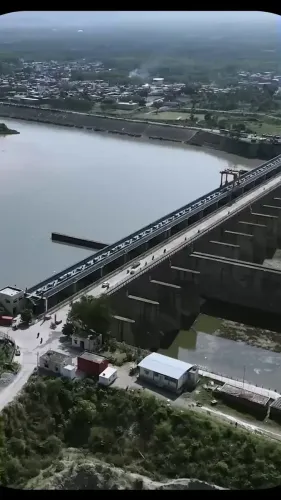
A dedicated pipeline from Hathnikund Barrage will supply surplus monsoon water (July–October) to Rajasthan for drinking purposes.
The pact primarily benefits three districts in Rajasthan's Shekhawati region, which have faced decades of water scarcity.
Earlier attempts to resolve the dispute were made in 1994 and 2001 , both of which failed to progress beyond paper.
The process was revived in 2024 before culminating in Monday's MoU.
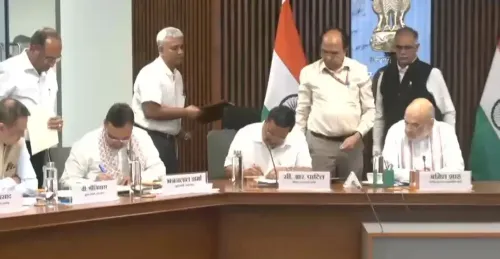
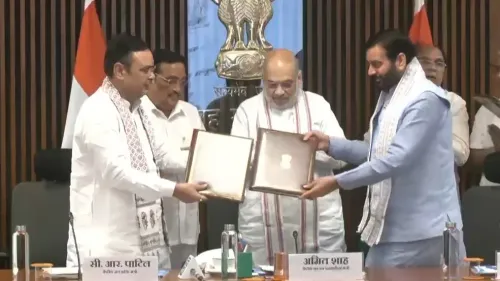
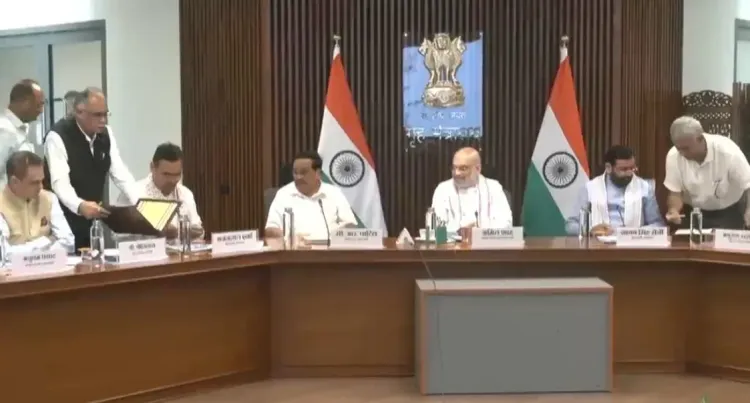
Haryana and Rajasthan on Monday, 29 June signed a landmark agreement on the long-stalled Yamuna Water Project, ending a deadlock that had persisted for over three decades. The memorandum of understanding (MoU) was formalised under the chairmanship of Union Home Minister Amit Shah in New Delhi, with both state governments committing to a pipeline-based framework to channel surplus monsoon water from Haryana to Rajasthan's water-scarce Shekhawati region.
What the Agreement Covers
Under the MoU, Rajasthan will utilise surplus rainwater available in Haryana during the July to October monsoon window, exclusively for drinking water purposes. A dedicated pipeline will be laid from the Hathnikund Barrage in Haryana to Rajasthan to facilitate the transfer. The agreement covers three districts in the Shekhawati region, which have faced acute drinking water shortages for decades.
Key Officials Present
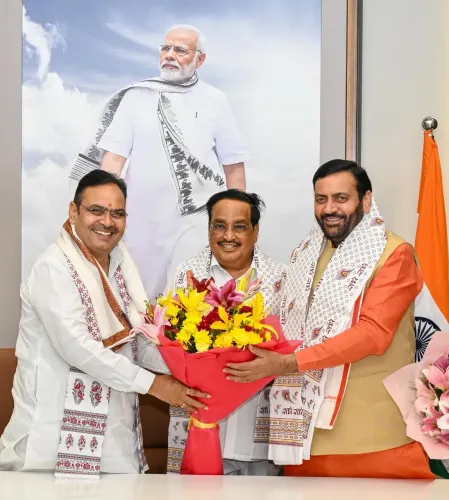
Union Jal Shakti Minister C.R. Patil, Haryana Chief Minister Nayab Singh Saini, and Rajasthan Chief Minister Bhajanlal Sharma were present at the signing. The agreement was finalised after extensive deliberations across multiple rounds of discussions held under the leadership of the Union Jal Shakti Minister.
What the Chief Ministers Said
CM Saini described the MoU as 'a significant step forward in the implementation of the project,' adding that 'ensuring the supply of water to those in need is a shared responsibility.' He assured full cooperation from Haryana and stated that no obstacle would be allowed to hinder the project's execution.
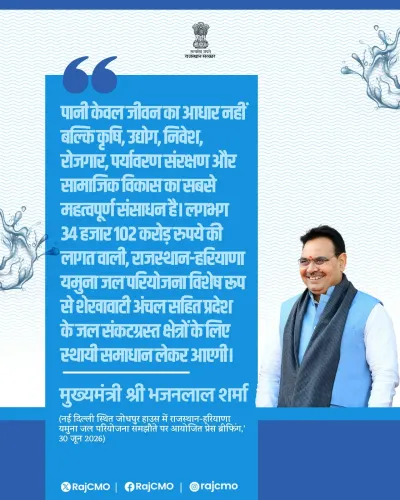
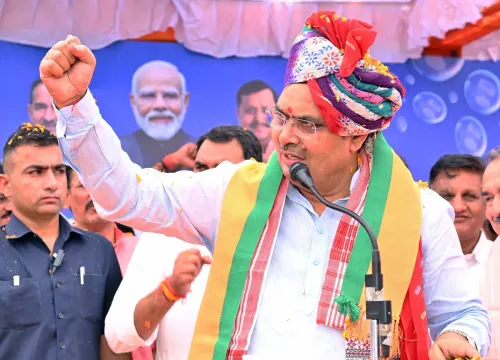
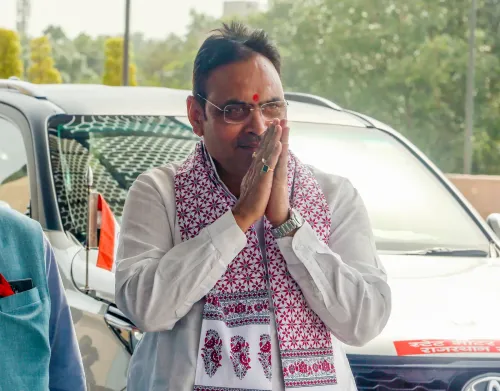
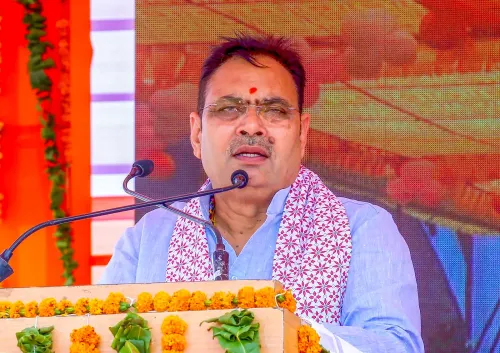
CM Bhajanlal Sharma called it 'a historic day,' saying the agreement 'marks a major step towards supplying the Yamuna water to the three districts of Shekhawati region and will end a wait of several decades.'
A History of Failed Starts
This is not the first time the two states have attempted to resolve the Yamuna water dispute. The original agreement to supply Yamuna water to Shekhawati was signed in 1994 — but remained unimplemented as the states failed to reach operational consensus. In 2001, a fresh decision was taken to supply water from Hathinikund Barrage, yet that effort too stalled without progress. The process was formally revived only in 2024, eventually culminating in Monday's MoU — making this the third attempt in 32 years to resolve the dispute.
What Happens Next
With the MoU now signed, the focus shifts to execution — pipeline laying, funding timelines, and inter-state coordination mechanisms. Both chief ministers have expressed political will, and the Centre's direct involvement through Home Minister Shah and Jal Shakti Minister Patil signals high-level commitment to seeing the project through. Whether this attempt avoids the fate of its 1994 and 2001 predecessors will depend on the pace of ground-level implementation.
Point of View
Which makes Monday's MoU historically familiar rather than historically conclusive. The Centre's direct involvement through both the Home Minister and the Jal Shakti Minister is a structural upgrade over past attempts, but political will at the signing table has never been the problem. The Shekhawati region's water crisis is decades deep; what it needs now is a funded, time-bound pipeline project with independent oversight — not another memorandum gathering dust. The real story will be written in the next 12 months, not on 29 June.
NationPress
28 Sept 2026
Frequently Asked Questions
What is the Haryana-Rajasthan Yamuna Water Project MoU signed on 29 June?
It is a memorandum of understanding signed between Haryana and Rajasthan on 29 June under Union Home Minister Amit Shah's chairmanship, committing to supply surplus Yamuna monsoon water from Hathnikund Barrage to Rajasthan's Shekhawati region via a dedicated pipeline for drinking water use.
Which areas in Rajasthan will benefit from the Yamuna water agreement?
The agreement is primarily aimed at supplying drinking water to the three districts of the Shekhawati region in Rajasthan, which have faced acute water scarcity for several decades.
Why did previous Yamuna water agreements between Haryana and Rajasthan fail?
An initial agreement was signed in 1994 but remained unimplemented as both states could not reach consensus on operational details. A second attempt in 2001 also stalled without progress. The process was revived in 2024, leading to Monday's MoU.
How will the water be transferred from Haryana to Rajasthan?
A dedicated pipeline will be laid from the Hathnikund Barrage in Haryana to Rajasthan. The arrangement covers the monsoon months of July to October, during which surplus rainwater will be channelled exclusively for drinking water purposes.
Who were the key officials present at the MoU signing?
Union Home Minister Amit Shah chaired the signing ceremony. Union Jal Shakti Minister C.R. Patil, Haryana Chief Minister Nayab Singh Saini, and Rajasthan Chief Minister Bhajanlal Sharma were also present.