CM Bhajan Lal Credits PM Modi for Rajasthan Water Deals
Synopsis
Rajasthan Chief Minister Bhajan Lal Sharma praised PM Narendra Modi for delivering what he called historic water agreements — covering the Narmada and Yamuna rivers — that he says are steering the desert state away from chronic water scarcity toward prosperity, with Shekhawati among the key beneficiary regions.
Key Takeaways
CM Bhajan Lal Sharma publicly credited PM Narendra Modi for resolving Rajasthan's long-standing water crisis on 4 July 2026 .
The statement references agreements involving both the Narmada and Yamuna rivers as sources of water for the state.
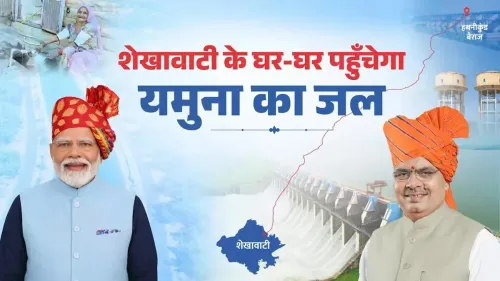
The semi-arid Shekhawati region — historically dependent on tankers — is specifically named as a beneficiary.
The Narmada Canal project saw accelerated funding and phase completions after 2014 under the NDA government .
The post aligns with the #PMModi4ViksitRajasthan campaign, connecting water infrastructure to the broader 'Viksit Bharat' development narrative.
Last-mile piped distribution infrastructure and state budget allocations remain the key indicators to watch.
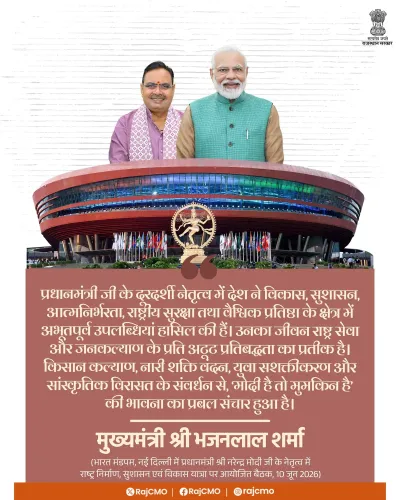
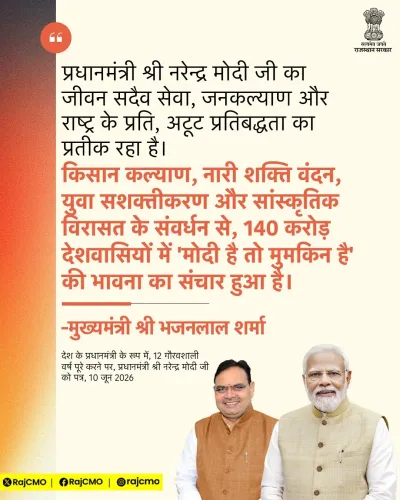
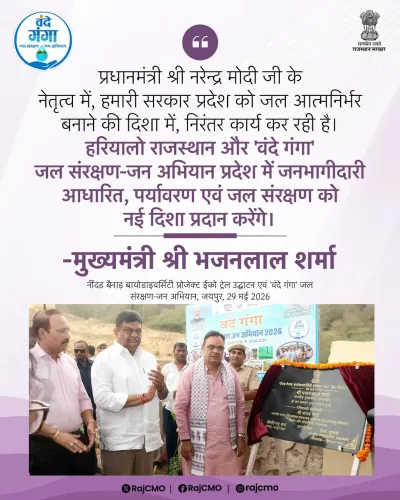
Rajasthan Chief Minister Bhajan Lal Sharma on Saturday, 4 July 2026, publicly credited Prime Minister Narendra Modi for steering the state out of a water crisis, citing agreements covering Narmada and Yamuna river waters as historic milestones for the desert state, including the long-parched Shekhawati region.
Context
Posting in Hindi on X, CM Sharma wrote: 'आदरणीय प्रधानमंत्री श्री Narendra Modi जी के कुशल नेतृत्व में आज राजस्थान जल संकट से उबर कर खुशहाली की ओर बढ़ रहा है' — 'Under the able leadership of respected Prime Minister Narendra Modi, Rajasthan today is moving from water crisis towards prosperity.' He added that Rajasthan would remain 'eternally grateful' for what he called 'historic gifts of water' flowing from the Narmada and Yamuna agreements to Shekhawati and the entire state.
The post was tagged #PMModi4ViksitRajasthan, aligning with the ruling party's 'Viksit Bharat' (Developed India) messaging framework ahead of the state's development calendar.
Policy Backdrop
Rajasthan is one of India's most water-stressed states, covering a large portion of the Thar Desert and relying heavily on groundwater that has been depleting for decades. The state has long depended on inter-basin transfers — principally the Indira Gandhi Canal from the Beas and Sutlej rivers — to supply its western and northern districts.
The Narmada Canal project, which carries water from Gujarat into southern Rajasthan, was conceptualised earlier but saw accelerated funding and phase completions after the NDA government came to power in 2014. The Interlinking of Rivers programme was also formally revived under the Modi government, with Rajasthan listed as a primary beneficiary state. Separately, revised water-sharing arrangements involving the Yamuna have been a point of negotiation between Rajasthan and upstream states for years.
The Shekhawati belt — comprising districts such as Sikar, Jhunjhunu, and Churu — is a semi-arid zone historically reliant on tanker supply and seasonal rainfall. Extending piped surface water to this region has been a stated policy priority of the state government.
Stakeholders and Impact
Farmers across Rajasthan's arid and semi-arid districts stand to benefit most directly from expanded surface-water availability, reducing their dependence on expensive borewells and tanker supply. Drinking-water security for rural households in Shekhawati — where groundwater is often saline or fluoride-contaminated — is a parallel priority.
Successive central governments have used inter-basin transfers and revised water-sharing pacts to address scarcity in western India, and Rajasthan has been a consistent recipient of such projects framed as both agricultural support and drinking-water security measures. The approach mirrors river-linking and agreement efforts underway in other drought-prone states, signalling a broader national pattern rather than a Rajasthan-specific intervention.
What's Next
Attention will now turn to physical progress on the distribution infrastructure needed to carry Narmada and Yamuna waters to the last mile — particularly in Shekhawati — and to state budget allocations earmarked for that purpose. How quickly piped water reaches individual households will determine whether the political goodwill expressed by CM Sharma translates into measurable relief for residents of Rajasthan's most water-stressed districts.
Point of View
The Chief Minister is framing water security as a central deliverable of central-state coordination under the NDA, rather than an incremental bureaucratic outcome. The Shekhawati reference is particularly pointed: it is a region with significant electoral weight and a history of water grievance, making it a natural showcase for the party's 'Viksit Rajasthan' pitch. The broader pattern — where BJP-governed states publicly attribute infrastructure gains to PM Modi's leadership — is a well-established template ahead of electoral cycles.
NationPress
4 Jul 2026
Frequently Asked Questions
What water agreements did PM Modi make for Rajasthan?
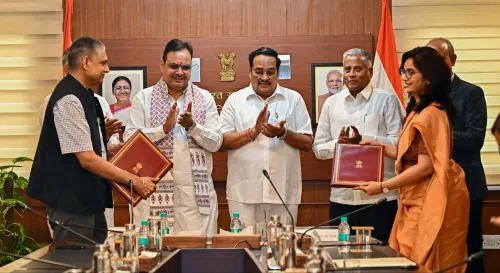
CM Bhajan Lal Sharma has cited agreements covering Narmada and Yamuna river waters as key interventions that are helping Rajasthan address its chronic water shortage, though specific treaty details of any new 2026 agreements have not been independently confirmed.
What is the Narmada Canal project in Rajasthan?
The Narmada Canal carries water from the Narmada river in Gujarat into southern Rajasthan. The project was conceptualised before 2014 but saw accelerated funding and phase completions under the NDA government after 2014.
Why is Shekhawati facing a water crisis?
Shekhawati — covering districts like Sikar, Jhunjhunu, and Churu in northern Rajasthan — is a semi-arid zone where groundwater is often saline or fluoride-contaminated, leaving residents historically dependent on tanker supply and seasonal rainfall.
Who is Bhajan Lal Sharma?
Bhajan Lal Sharma is the Chief Minister of Rajasthan and a senior BJP leader who took office after the BJP won the Rajasthan assembly elections in late 2023.
What is the Viksit Rajasthan initiative?
'Viksit Rajasthan' is a state-level development framework aligned with the central government's 'Viksit Bharat' (Developed India) vision, used by the BJP to communicate infrastructure and welfare achievements in Rajasthan.