CM Bhajan Lal Engages Rajasthan Youth via Suyog Programme
Synopsis
Rajasthan Chief Minister Bhajan Lal Sharma on 22 July 2026 highlighted the Mukhyamantri Yuva Suyog Karyakram, an outreach programme channelling youth toward skill development, digital literacy, sports, and employment under the Atmanirbhar Bharat framework.
Key Takeaways
CM Bhajan Lal Sharma shared moments from the Mukhyamantri Yuva Suyog Karyakram on 22 July 2026 , underscoring its role in youth empowerment.
The programme focuses on four pillars: skill development , digital literacy , sports , and employment .
Rajasthan's BJP government has prioritised youth welfare since taking office in December 2023 .
The initiative aligns with the national Skill India Mission and the broader Atmanirbhar Bharat framework.
The state's youth population across its 80 million-plus residents is the primary target beneficiary group.
Budget allocations and industry MoUs in 2026-27 will be closely watched as indicators of programme scale.
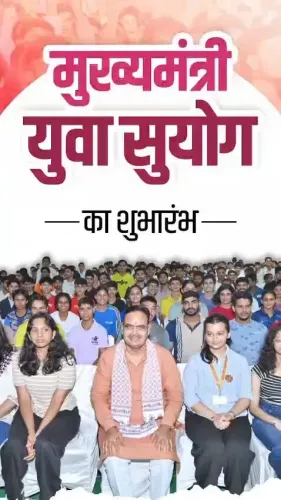
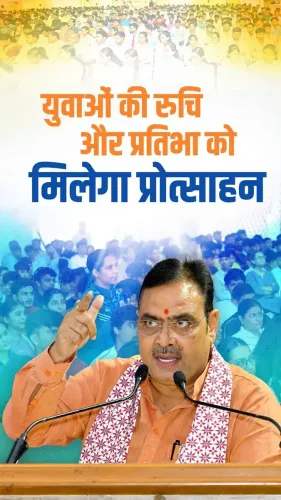
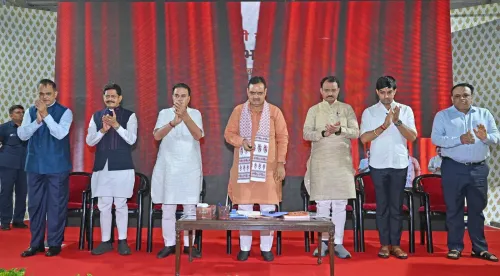
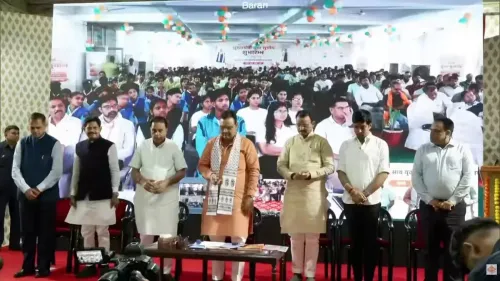
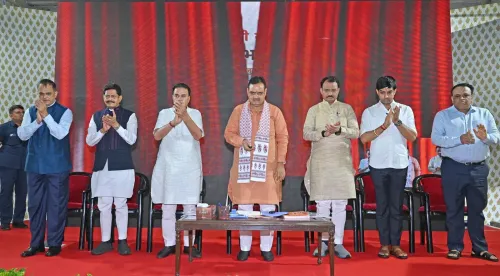
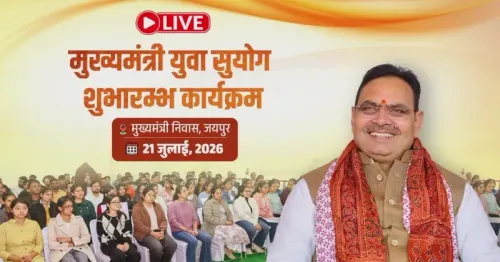
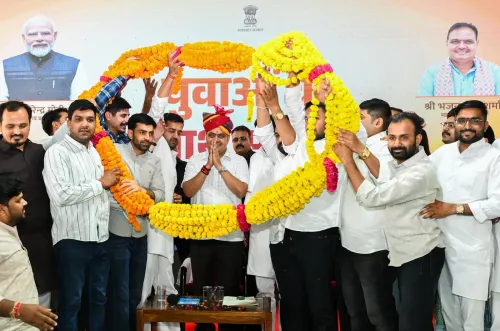
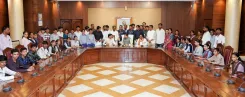
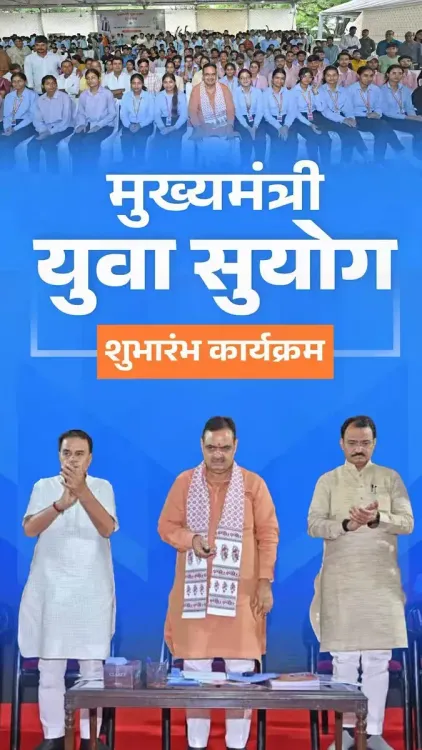
Rajasthan Chief Minister Bhajan Lal Sharma on Wednesday, 22 July 2026 shared warm moments from an interactive session held under the Mukhyamantri Yuva Suyog Karyakram, a state-run outreach initiative connecting the government directly with young people across the state. The Chief Minister said the programme is generating new opportunities in skill development, digital literacy, sports, and employment, with every youth being steered toward self-reliance.
Context
Posting on X, CM Sharma described the engagement as 'aatmiy pal' (heartfelt moments) with the state's young companions. He wrote that through the Mukhyamantri Yuva Suyog Karyakram, youth of the state are becoming self-reliant — 'har yuva aatmanirbhar ban raha hai' (every youth is becoming self-reliant) — via new avenues in skill development, digital literacy, sports, and employment. The post was accompanied by a video from the session, offering a glimpse of the dialogue between the Chief Minister and young participants.
Policy Backdrop
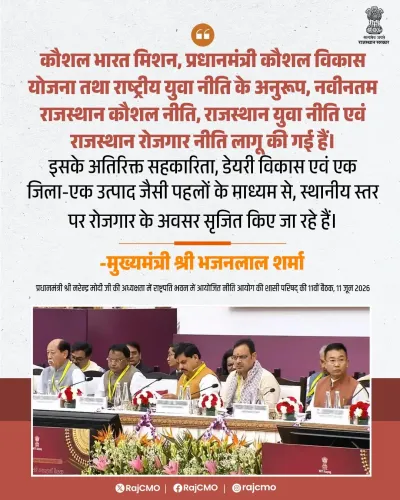
Rajasthan's BJP government, which came to power in December 2023 under Bhajan Lal Sharma, has placed youth employment and skill development at the centre of its governance agenda. The state's initiatives broadly align with the national Skill India Mission, launched in 2015, which aims to scale vocational training and apprenticeship programmes across India. The emphasis on digital literacy and sports as pillars alongside employment reflects a wider framework of youth empowerment pursued by BJP-governed states under the Atmanirbhar Bharat vision.
Interactive outreach formats such as the Mukhyamantri Yuva Suyog Karyakram allow state administrations to project accessibility while also gathering ground-level feedback on scheme delivery. Several BJP-ruled states have adopted similar dialogue-based models that combine direct engagement with announcements on training targets and industry partnerships.
Stakeholders and Impact
Rajasthan, home to over 80 million residents, has a large youth population that has historically faced challenges around employment and access to quality skill training. Job-seeking graduates and school leavers in both urban and rural pockets of the state stand to benefit if the programme's stated goals of digital literacy and certified vocational training are scaled effectively. The inclusion of sports as a specific pillar signals an intent to widen the definition of youth opportunity beyond conventional employment pathways.
Civil society observers and opposition parties in the state will likely track whether the outreach translates into measurable placement outcomes and whether scheme benefits reach youth in underserved districts.
What's Next
Attention will turn to the 2026-27 state budget allocations for youth and skill programmes to gauge the financial commitment behind the initiative. Any new memoranda of understanding with industry bodies for certified training and guaranteed placements would be a key indicator of the programme's depth. The Chief Minister's visible engagement with youth through such formats also signals continued political investment in this constituency ahead of future electoral cycles in Rajasthan.
Point of View
' CM Sharma is reinforcing an accessible, people-first image that has been central to the party's post-2023 communication in Rajasthan. The bundling of skill development, digital literacy, and sports under a single outreach umbrella reflects the Atmanirbhar Bharat playbook applied at the state level, where self-reliance rhetoric is paired with employment-linked programming. The real test will be whether the programme delivers verifiable outcomes in placements and certified training, or remains primarily a visibility exercise ahead of future elections.
NationPress
22 Jul 2026
Frequently Asked Questions
What is the Mukhyamantri Yuva Suyog Karyakram in Rajasthan?
The Mukhyamantri Yuva Suyog Karyakram is a Rajasthan government initiative that connects Chief Minister Bhajan Lal Sharma directly with young people in the state, focusing on skill development, digital literacy, sports, and employment opportunities to promote youth self-reliance.
What did CM Bhajan Lal Sharma say about Rajasthan youth on 22 July 2026?
CM Bhajan Lal Sharma said that through the Mukhyamantri Yuva Suyog Karyakram, every youth in the state is becoming self-reliant by accessing new opportunities in skill development, digital literacy, sports, and employment.
How does the Rajasthan youth programme connect to the national Skill India Mission?
Rajasthan's youth outreach efforts, including the Mukhyamantri Yuva Suyog Karyakram, align with the national Skill India Mission launched in 2015, which aims to scale vocational training and apprenticeships across India under the Atmanirbhar Bharat framework.
When did Bhajan Lal Sharma become Chief Minister of Rajasthan?
Bhajan Lal Sharma became Chief Minister of Rajasthan in December 2023 after the BJP won the state assembly elections.
What are the key focus areas of Rajasthan's youth employment policy under BJP?
Under the BJP government led by CM Bhajan Lal Sharma, Rajasthan's youth policy emphasises skill development, digital literacy, sports promotion, and employment generation, broadly in line with the Atmanirbhar Bharat national framework.