CM Mohan Yadav Meets Agar-Malwa Students at MP Vidhan Sabha
Synopsis
Madhya Pradesh Chief Minister Dr. Mohan Yadav held an intimate dialogue with meritorious students from Agar-Malwa district who visited the state Vidhan Sabha on 22 July 2026 to observe Assembly proceedings, as part of the state's ongoing civic-education outreach.
Key Takeaways
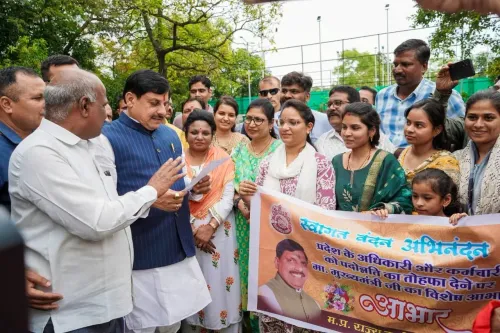
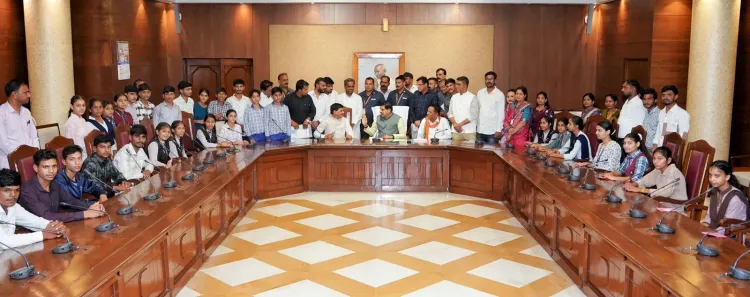
Mohan Yadav met meritorious students from Agar-Malwa district at the MP Vidhan Sabha committee room on 22 July 2026 .
The students visited the Assembly to observe the ongoing legislative session proceedings firsthand.
The interaction was described by the CM as an aatmiy samvaad — an intimate, personal dialogue with the young visitors.
Agar-Malwa is a district in western Madhya Pradesh, established in 2013 , with a primarily agrarian economy.
Madhya Pradesh has run structured student-visit programmes to the Vidhan Sabha since at least the early 2010s as part of civic-education efforts.
Such engagements aim to familiarise students from smaller districts with parliamentary procedures and democratic governance.
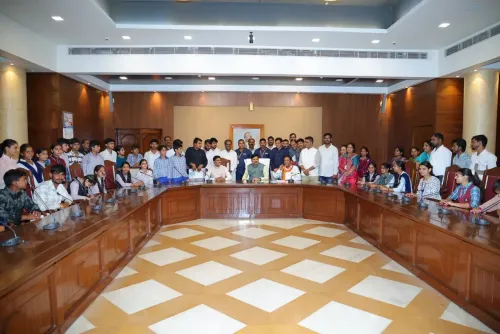
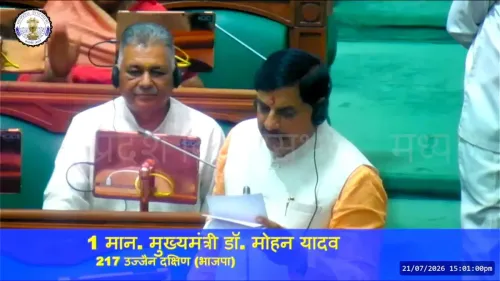
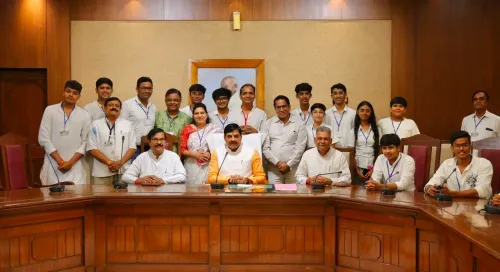
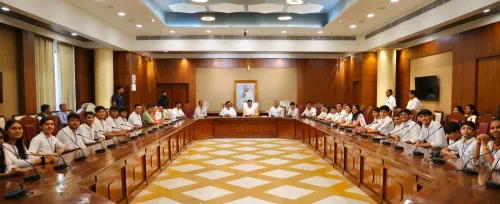
Madhya Pradesh Chief Minister Dr. Mohan Yadav held an interactive session with meritorious students from Agar-Malwa district at the committee room of the Madhya Pradesh Legislative Assembly in Bhopal on Wednesday, 22 July 2026. The students had visited the Vidhan Sabha to observe the ongoing Assembly session proceedings as part of a civic-education initiative.
Context
Chief Minister Dr. Mohan Yadav described the meeting as an 'aatmiy samvaad' — an 'intimate dialogue' — with the young visitors. The students, identified as academically distinguished from Agar-Malwa, a district in western Madhya Pradesh, were present at the Assembly to witness the legislature in session, giving them direct exposure to the functioning of democratic institutions.
The interaction took place inside a committee room of the Vidhan Sabha complex, a setting regularly used for such outreach engagements. Dr. Mohan Yadav, who assumed office as Chief Minister in December 2023, has consistently engaged with student groups as part of his administration's focus on youth outreach.
Policy Backdrop
Structured student visits to the Madhya Pradesh Vidhan Sabha have been a feature of the state's civic-education calendar since at least the early 2010s, cutting across successive administrations. These programmes are designed to familiarise school and college students with parliamentary procedures and the workings of elected government.
Agar-Malwa, carved out as a separate district in 2013, is primarily an agrarian region in western Madhya Pradesh. Bringing meritorious students from such districts to the state capital for legislative observation is part of a broader effort to extend civic awareness beyond urban centres.
Stakeholders and Impact
The primary beneficiaries of such visits are school-age students from districts like Agar-Malwa who may otherwise have limited access to first-hand exposure to state-level governance. Direct engagement with the Chief Minister adds a layer of mentorship to what is typically an observational exercise.
For the state government, these interactions serve a dual purpose: reinforcing the importance of democratic participation among young citizens and signalling the administration's commitment to recognising academic merit at the district level. Students selected for such visits are generally identified by the local education department on the basis of academic performance.
What's Next
Attention will now turn to whether the Madhya Pradesh education department formalises or expands district-level student-visit schemes to the Vidhan Sabha in the coming session calendar. The frequency and geographic spread of such programmes will indicate the administration's appetite for scaling civic-education outreach across the state's 55 districts.
Any announcement regarding the next Vidhan Sabha session schedule or a dedicated student-engagement policy from the state education ministry would signal the direction of this initiative going forward.
Point of View
The administration frames civic education as a state priority rather than a peripheral activity. The gesture also implicitly elevates Agar-Malwa — a relatively small, agrarian district — within the state's political attention map. Over time, the consistency and geographic spread of such programmes will be the real measure of institutional commitment versus ceremonial optics.
NationPress
22 Jul 2026
Frequently Asked Questions
Why did CM Mohan Yadav meet students at the Madhya Pradesh Vidhan Sabha?
Chief Minister Dr. Mohan Yadav held an interactive session with meritorious students from Agar-Malwa district who had come to the Vidhan Sabha in Bhopal to observe the Assembly session proceedings as part of a civic-education visit.
Which district do the students who visited the MP Vidhan Sabha belong to?
The students are from Agar-Malwa district, a western Madhya Pradesh district established in 2013, and were selected on the basis of academic merit.
What is the Madhya Pradesh Vidhan Sabha student visit programme?
Madhya Pradesh has run structured programmes since at least the early 2010s allowing school and college students to visit the state legislature and observe live proceedings, aimed at building awareness of democratic institutions.
Who is Dr. Mohan Yadav?
Dr. Mohan Yadav is the Chief Minister of Madhya Pradesh and a senior BJP leader who took office in December 2023, succeeding Shivraj Singh Chouhan.
Where is Agar-Malwa district located?
Agar-Malwa is a district in western Madhya Pradesh, carved out in 2013, with its headquarters at Agar. It is primarily an agrarian region.