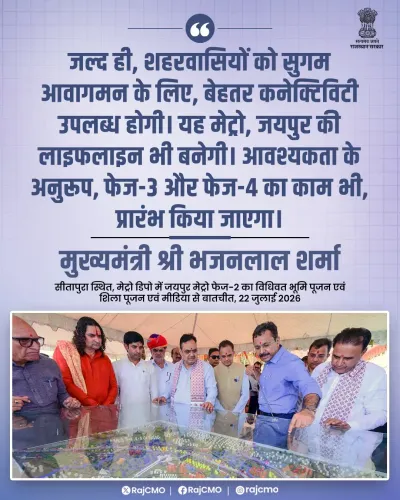
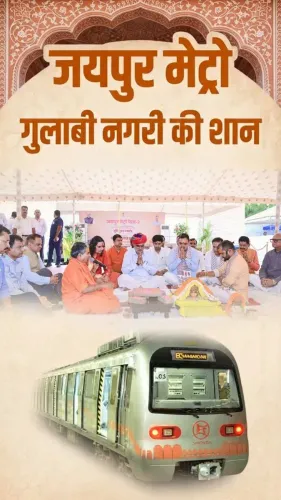
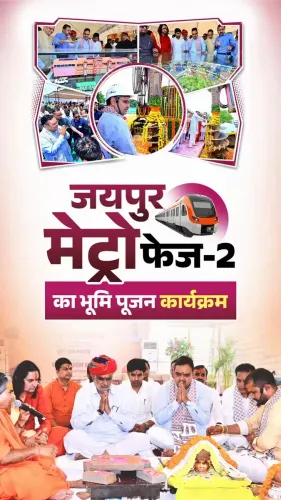
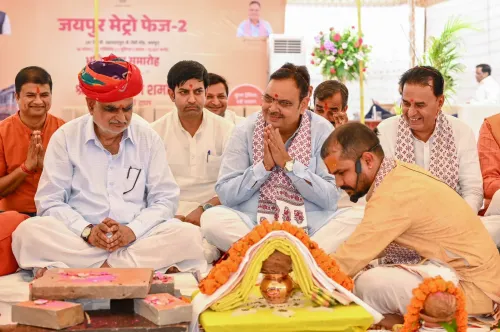
CM Bhajan Lal Inspects Jaipur Metro, Eyes Phase-2 Push
Synopsis
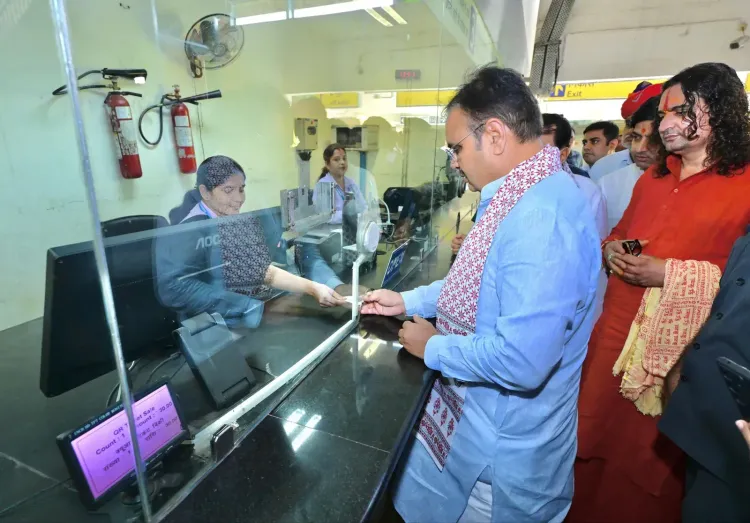
Rajasthan CM Bhajan Lal Sharma rode the Jaipur Metro on 22 July 2026, interacting with commuters and inspecting Phase-2 plans at the proposed Khasa Kothi interchange. He directed officials to prioritise safety, punctuality and cleanliness, reaffirming the government's commitment to expanding Jaipur's metro network.
Key Takeaways
CM Bhajan Lal Sharma personally rode the Jaipur Metro from Mansarovar to Chhoti Chaupar on 22 July 2026 .
He interacted with commuters to assess facilities and travel experience firsthand.
Officials were directed to make safety, punctuality and cleanliness the 'highest priority' at every station.
Sharma inspected the Chhoti Chaupar station art gallery and the proposed Khasa Kothi interchange for Metro Phase-2 .
The government reaffirmed commitment to expanding Jaipur's metro network and strengthening transport infrastructure across Rajasthan .
Jaipur Metro Phase-1 has been operational since June 2015 ; Phase-2 alignment and tendering decisions remain pending.
Rajasthan Chief Minister Bhajan Lal Sharma on Wednesday, 22 July 2026 rode the Jaipur Metro from Mansarovar to Chhoti Chaupar, interacting directly with commuters to assess service quality and directing officials to make safety, punctuality and passenger comfort the top priorities of metro operations.
Posting on X, the Chief Minister wrote: 'आज मानसरोवर से छोटी चौपड़ तक जयपुर मेट्रो में सफर कर यात्रियों से संवाद किया' — 'Today I travelled on the Jaipur Metro from Mansarovar to Chhoti Chaupar and interacted with passengers, gathering information about metro facilities and their travel experience.' During the ride, he also inspected the art gallery at Chhoti Chaupar Metro Station and reviewed the proposed Khasa Kothi intersection — a key node in the planned Metro Phase-2 corridor.
Context
Jaipur Metro Phase-1, spanning Mansarovar to Badi Chaupar, has been operational since June 2015, when commercial services commenced after the foundation stone was laid in 2010. The corridor passes through the heart of Jaipur's old city, with Chhoti Chaupar serving as one of its most visited stations owing to its proximity to the walled city's heritage zones. The station's on-site art gallery has been a civic amenity highlighting the city's cultural identity.
Sharma, who was sworn in as Chief Minister in December 2023, has flagged urban mobility as a priority for the BJP-led state government. Wednesday's unannounced inspection — where he boarded the metro as a regular passenger — underscores a hands-on governance approach aimed at gauging ground-level service delivery rather than relying solely on official briefings.
Policy Backdrop
The Rajasthan government reiterated its commitment to metro network expansion in Jaipur through announcements in 2023-24, framing it as a pillar of the state's urban mobility upgrade agenda. The Khasa Kothi intersection, observed by Sharma during the visit, is a proposed interchange point under the Metro Phase-2 planning exercise, though the detailed project report and tendering timelines are yet to be publicly finalised.
National guidelines from the Ministry of Housing and Urban Affairs mandate that metro rail corporations maintain defined benchmarks for safety audits, station cleanliness, and on-time performance. Sharma's directive to officials — that 'the highest standards of cleanliness, maintenance and service quality be ensured at every station' — aligns with these central norms and signals that the state intends closer monitoring of the Jaipur Metro Rail Corporation's compliance.
Stakeholders and Impact
Daily commuters on the Mansarovar–Chhoti Chaupar corridor stand to benefit most directly from any service improvements arising from the inspection. Urban residents in Jaipur's western and central zones rely on the metro as an alternative to road congestion, and consistent punctuality and cleanliness are recurring demands from the passenger community.
For the broader urban population, the Chief Minister's stated commitment — 'हमारी सरकार प्रदेशवासियों को आधुनिक, भरोसेमंद, सुरक्षित और सुविधाजनक सार्वजनिक परिवहन उपलब्ध कराने के लिए प्रतिबद्ध है' ('Our government is committed to providing the people of the state with modern, reliable, safe and convenient public transport') — signals that metro expansion is being positioned as a visible governance deliverable ahead of future electoral cycles.
What's Next
Attention will now turn to whether Wednesday's inspection translates into concrete operational directives from the Jaipur Metro Rail Corporation and, more significantly, whether the state cabinet clears the Metro Phase-2 detailed project report and initiates the tendering process. The proposed Khasa Kothi interchange, if approved, would expand the network's reach and potentially draw fresh ridership from currently underserved corridors. Progress on these decisions will be a key indicator of how swiftly the government's stated infrastructure commitments move from inspection to implementation.
Point of View
Ground-level administrator at a time when urban governance credibility matters electorally. The simultaneous review of the Khasa Kothi Phase-2 interchange suggests the government wants to signal forward momentum on a project that has been in planning for years without a finalised timeline. This fits a broader pattern across Indian states where metro expansions are used as tangible proof of developmental governance, particularly in state capitals. Whether the visit produces measurable service improvements or accelerates Phase-2 approvals will determine whether it is remembered as a policy catalyst or a well-photographed gesture.
NationPress
21 Oct 2026
Frequently Asked Questions
What is the current route of Jaipur Metro?
Jaipur Metro Phase-1 runs from Mansarovar in the west to Badi Chaupar in the old city, with commercial operations having started in June 2015 . Chhoti Chaupar is one of the stations on this corridor.
What is Jaipur Metro Phase-2?
Jaipur Metro Phase-2 is a planned extension of the existing network. The proposed Khasa Kothi intersection is one of the key interchange points under consideration, though the detailed project report and tendering timelines have not been publicly finalised.
Why did CM Bhajan Lal Sharma ride the Jaipur Metro?
CM Bhajan Lal Sharma rode the metro on 22 July 2026 to interact directly with commuters, inspect operational standards, and review Phase-2 planning — directing officials to prioritise safety, punctuality and cleanliness.
What is the art gallery at Chhoti Chaupar Metro Station?
Chhoti Chaupar Metro Station houses an on-site art gallery that showcases local culture and heritage, serving as a civic amenity for commuters and visitors to Jaipur's walled city area.
What did CM Bhajan Lal Sharma instruct metro officials?
He instructed officials that safety, punctuality and passenger convenience must be the top priorities, and that the highest standards of cleanliness, maintenance and service quality must be maintained at every station.