CM Bhajan Lal Launches Jaipur Metro Phase-2 Bhoomi Pujan
Synopsis
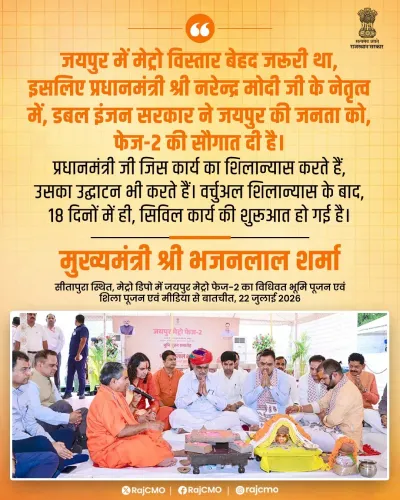
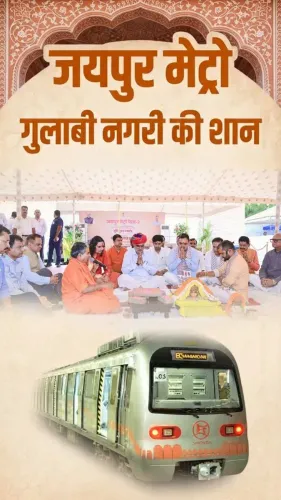
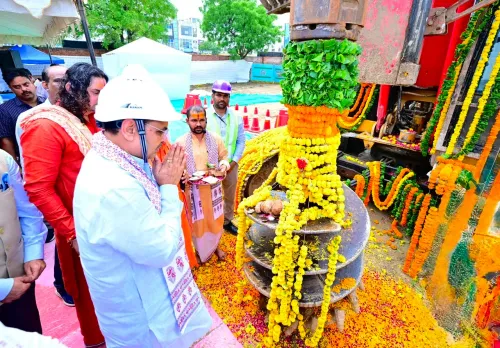
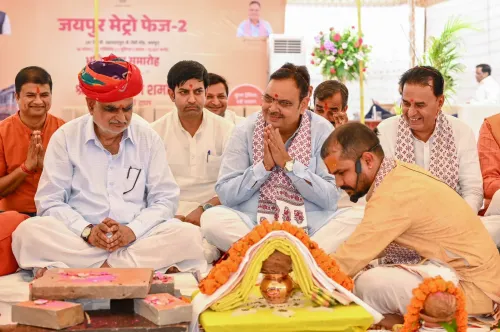
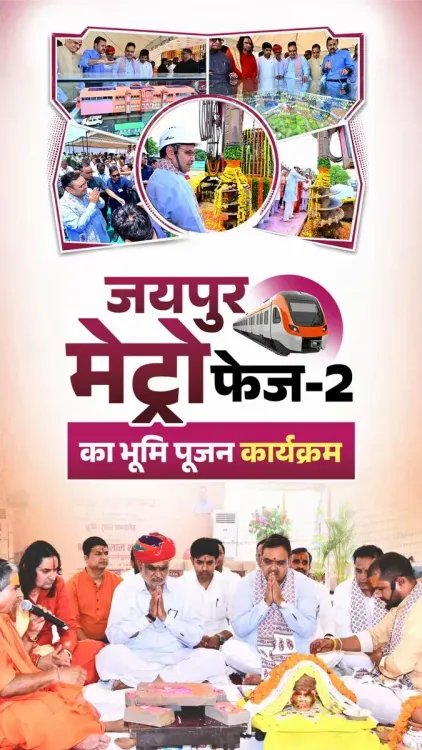
Rajasthan Chief Minister Bhajan Lal Sharma performed the bhoomi pujan for Jaipur Metro Phase-2 at the Sitapura depot site on 22 July 2026, formally launching expansion of the city's rapid transit network and riding the existing metro to review passenger experience.
Key Takeaways
Bhajan Lal Sharma performed the bhoomi pujan for Jaipur Metro Phase-2 at the Sitapura depot site on 22 July 2026 .
The ceremony marks the formal start of construction to extend Jaipur's metro network beyond the existing Phase-1 Pink Line .
Phase-1 (Mansarovar–Chandpole corridor) has been operational since 2015 and provides the ridership baseline for Phase-2 planning.
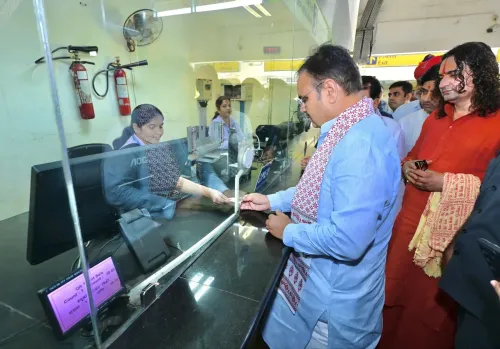
The CM rode the metro alongside commuters to personally assess travel experience and inspect operational arrangements.
The project aligns with central urban schemes such as AMRUT and mirrors Phase-2 expansions in cities like Ahmedabad and Lucknow .
Key next steps include land acquisition progress, funding releases, and trial-run timelines for new Phase-2 sections.
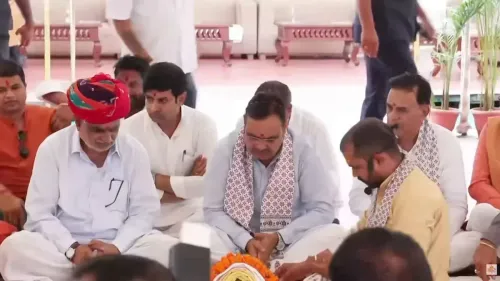
Rajasthan Chief Minister Bhajan Lal Sharma on Wednesday, 22 July 2026 performed the bhoomi pujan (ground-breaking ceremony) for Jaipur Metro Phase-2 at the metro depot site in Sitapura, marking the formal start of construction work to extend the capital's rapid transit network. The Chief Minister also rode the existing metro alongside passengers to assess their travel experience and inspect operational arrangements.
Posting on X, Sharma wrote: 'सीतापुरा स्थित मेट्रो डिपो साइट पर जयपुर मेट्रो फेज-2 के भूमि पूजन के साथ राजधानी के आधुनिक परिवहन नेटवर्क के विस्तार कार्यों का शुभारंभ किया।' ('At the metro depot site in Sitapura, the expansion works of the capital's modern transport network were inaugurated with the bhoomi pujan of Jaipur Metro Phase-2.') He added that the government 'is continuously striving to provide modern, safe and reliable public transport to the people of the state.'
Context
Jaipur Metro Phase-1, the Pink Line connecting Mansarovar to Chandpole, was inaugurated in 2015 as Rajasthan's first metro project and has since become a key commuter artery in the city. Phase-2 is designed to extend coverage beyond the existing corridor, with Sitapura — an industrial and institutional zone in southern Jaipur — hosting the new depot site that anchors the expanded network.
The Detailed Project Report for Phase-2 corridors received state approval and subsequent central clearances building on the operational track record of Phase-1. The bhoomi pujan signals that the project has cleared the pre-construction milestones required to begin physical works.
Policy Backdrop
India's urban metro push has been driven partly by central schemes such as AMRUT (Atal Mission for Rejuvenation and Urban Transformation) and the Smart Cities Mission, which incentivise states to invest in sustainable, congestion-reducing transit. Rajasthan's Phase-2 effort mirrors similar second-phase expansions in cities such as Ahmedabad and Lucknow, where initial metro lines proved ridership viability before networks were widened.
The Jaipur Metro Rail Corporation (JMRC) operates Phase-1 under the Rajasthan government, and the same institutional framework is expected to oversee Phase-2 construction and eventual operations. Funding for such projects typically flows from a combination of state budget allocations, central grants, and multilateral loans.
Stakeholders and Impact
The primary beneficiaries are Jaipur's daily commuters and urban residents, particularly those in southern and peripheral zones currently underserved by the existing metro corridor. Expanding the network is expected to reduce road congestion, cut travel times, and offer a cleaner alternative to private vehicles in a city that sees heavy tourist and commercial traffic.
Industrial workers and businesses in the Sitapura industrial belt stand to gain direct connectivity benefits once Phase-2 sections become operational. Broader economic activity — construction employment, real-estate development along new corridors — is a secondary impact commonly observed in metro expansion projects across Indian cities.
What's Next
Key milestones to watch include progress on land acquisition along new corridors, releases of state and central government funding tranches, and announcements of timelines for trial runs or partial section openings. The Chief Minister's on-ground inspection of existing metro services signals that political oversight of delivery timelines will remain active.
With the bhoomi pujan complete, attention shifts to the pace of civil construction and whether the Phase-2 project can maintain momentum through the engineering and procurement phases that typically determine final commissioning dates.
Point of View
Sharma adopted a style of on-ground oversight that serves both administrative and political signalling functions. The move fits a broader national pattern in which state governments use metro expansions — backed by central scheme funding — as flagship proof-points of modernisation ahead of electoral cycles. Progress on the harder phases of land acquisition and funding disbursement will determine whether the project sustains momentum or joins the long list of Indian metro expansions that face mid-course delays.
NationPress
21 Oct 2026
Frequently Asked Questions
What is Jaipur Metro Phase-2?
Jaipur Metro Phase-2 is the planned expansion of Jaipur's existing metro network to new corridors beyond the Phase-1 Pink Line (Mansarovar–Chandpole), with a depot site located at Sitapura in southern Jaipur.
When was the bhoomi pujan for Jaipur Metro Phase-2 held?
The bhoomi pujan was performed by Rajasthan Chief Minister Bhajan Lal Sharma on 22 July 2026 at the Sitapura metro depot site.
What is the current status of Jaipur Metro Phase-1?
Jaipur Metro Phase-1, the Pink Line connecting Mansarovar to Chandpole, has been operational since 2015 and is run by the Jaipur Metro Rail Corporation (JMRC) under the Rajasthan government.
How does Jaipur Metro Phase-2 fit into India's urban transport policy?
Phase-2 aligns with central schemes such as AMRUT and the Smart Cities Mission, which support metro and urban rail expansion in tier-2 cities to reduce congestion and promote sustainable mobility.
What are the key things to watch in Jaipur Metro Phase-2 progress?
Analysts and commuters should watch land acquisition timelines, state and central funding releases, and announcements of trial-run or partial-opening dates for new Phase-2 sections.