CM Majhi Marks Two Years of Urban Growth in Odisha
Synopsis
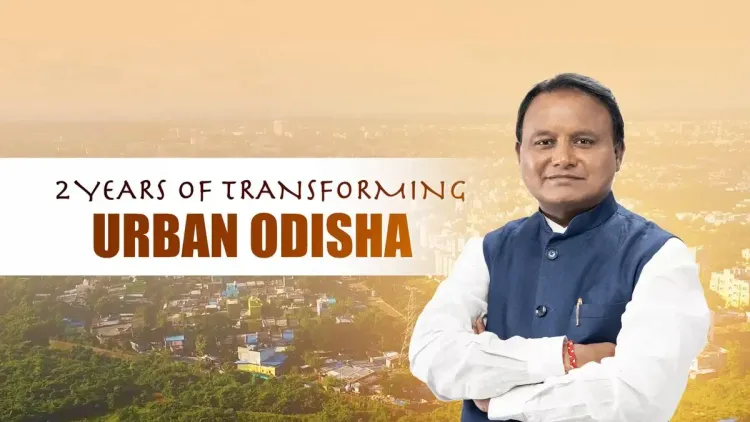
Odisha Chief Minister Mohan Charan Majhi has reviewed two years of urban development under the Samruddha Odisha vision, highlighting progress in drinking water, affordable housing, sustainable mobility and digital public services as the state pushes toward future-ready cities.
Key Takeaways
CM Mohan Charan Majhi reviewed his government's two-year urban development record on 22 July 2026 .
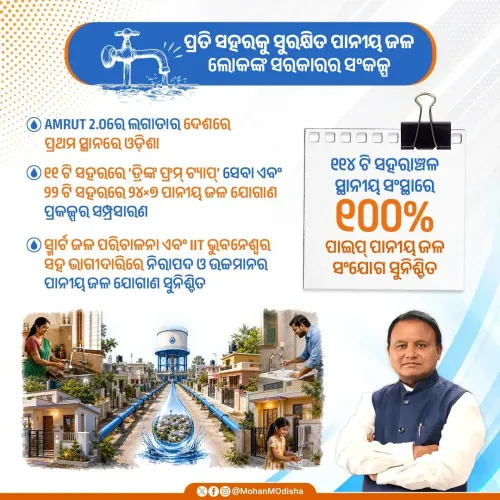
The post cited progress in planned urban expansion, safe drinking water, sustainable mobility, affordable housing and digital public services.
All initiatives are framed under the Samruddha Odisha vision for prosperous, future-ready cities.
The state's urban agenda aligns with central schemes including AMRUT , Pradhan Mantri Awas Yojana-Urban and the Smart Cities Mission , all launched in 2015 .
Municipal bodies and urban residents are the primary stakeholders; next budget allocations will be a key indicator of delivery pace.
Odisha Chief Minister Mohan Charan Majhi on Wednesday, 22 July 2026 outlined his government's two-year record on urban development, citing advances in infrastructure, smart governance and citizen services across the state's cities.
Context
In a post on X, CM Majhi said his government has 'accelerated the transformation of Urban Odisha through modern infrastructure, smart governance and citizen-centric development.' He pointed to progress across planned urban expansion, safe drinking water, sustainable mobility, affordable housing and digital public services as evidence of a broader shift toward 'cleaner, greener and more liveable cities.'
The statement frames these efforts under the state's guiding vision of Samruddha Odisha — a blueprint for building prosperous, future-ready urban centres that improve quality of life and empower citizens.
Policy Backdrop
Odisha's urban push sits within a wider national framework. The Government of India launched the Atal Mission for Rejuvenation and Urban Transformation (AMRUT) in 2015 to fund city-level water supply, sewerage and mobility upgrades, with Odisha among the participating states. The Pradhan Mantri Awas Yojana-Urban, also initiated in 2015, extended affordable housing and slum rehabilitation to urban areas across the country, including in Odisha.
The Smart Cities Mission, launched alongside AMRUT, pushed Indian municipalities toward digital public services and data-driven governance — themes that CM Majhi's post echoes directly. BJP-governed states have increasingly anchored these central-scheme deliveries within state-specific prosperity narratives, and Samruddha Odisha follows that pattern.
Stakeholders and Impact
The primary beneficiaries of the urban agenda are Odisha's city and town residents, who stand to gain from improved drinking water access, expanded housing stock and upgraded public transport options. Municipal bodies across the state are the implementing agencies and will face scrutiny on delivery timelines and fund utilisation.
Sustainable mobility and digital public services also carry implications for the state's growing urban workforce, particularly in secondary cities where infrastructure gaps remain wide. Affordable housing initiatives directly affect lower-income groups and residents of informal settlements.
What's Next
Attention will now turn to the Odisha government's next budget cycle, where allocations for urban projects will indicate whether the pace of spending matches the ambition outlined by CM Majhi. Any announcement of new phases under sustainable mobility or housing schemes will be a concrete measure of follow-through on the two-year review.
The Samruddha Odisha vision will also be tested by independent assessments of urban liveability, water coverage and housing completion rates — metrics that will ultimately determine whether the state's cities are on track to meet the 'future-ready' standard the Chief Minister has set.
Point of View
The government is building a narrative distinct from the previous administration while remaining aligned with central BJP schemes. The emphasis on liveability, sustainability and digital services tracks a broader shift in how Indian state governments communicate urban policy — moving from project lists to quality-of-life framing. Whether the claims hold up to independent scrutiny on water coverage and housing completions will be the real test of this two-year report card.
NationPress
22 Jul 2026
Frequently Asked Questions
What is Samruddha Odisha?
Samruddha Odisha is the Odisha government's state vision for building prosperous, future-ready urban centres, emphasising liveability, citizen services and sustainable development.
What urban schemes is the Odisha government implementing?
The state is working within national frameworks including AMRUT for water and mobility, Pradhan Mantri Awas Yojana-Urban for affordable housing, and the Smart Cities Mission for digital governance.
When did Mohan Charan Majhi become Chief Minister of Odisha?
Mohan Charan Majhi became Chief Minister of Odisha in June 2024 after the BJP won the state assembly election.
What did CM Majhi say about Odisha's urban development?
CM Majhi said his government has 'accelerated the transformation of Urban Odisha through modern infrastructure, smart governance and citizen-centric development,' citing gains in drinking water, housing, mobility and digital services.
What should we watch for next in Odisha's urban policy?
The next Odisha state budget's urban allocations and any new phases of sustainable mobility or housing schemes will be key indicators of whether the government's stated pace of development is being maintained.