CM Bhajan Lal Extends Daytime Farm Power to 28 Districts
Synopsis
Rajasthan CM Bhajan Lal Sharma announced two-block daytime electricity for farmers in Khairthal-Tijara, bringing the state's daytime agricultural power coverage to 28 districts — fulfilling a 2023 BJP manifesto promise, with remaining districts to follow.
Key Takeaways
Khairthal-Tijara in Alwar district has begun receiving electricity in two daytime blocks for agricultural use.
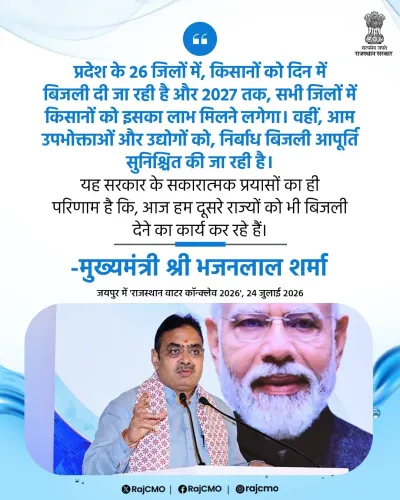
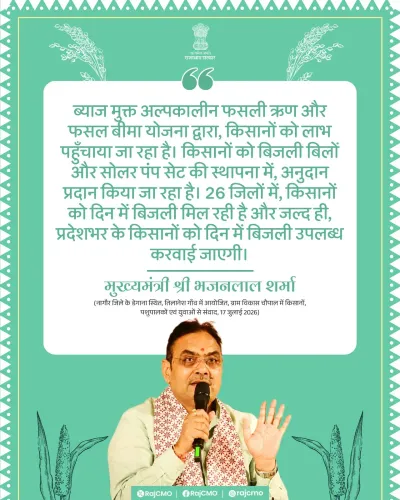
Rajasthan now provides daytime power to farmers in 28 districts , up from the rollout's earlier coverage.
The initiative fulfils a commitment made in the BJP's 2023 Sankalp Patra (election manifesto).
CM Bhajan Lal Sharma credited DISCOM officers and staff for executing the rollout on the ground.
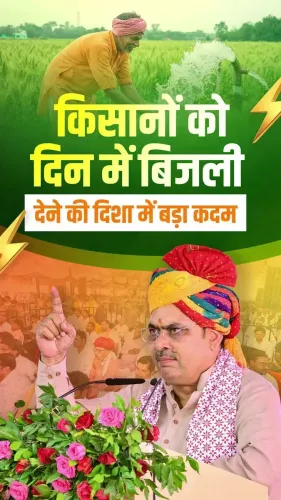
Work is ongoing to extend daytime supply to the remaining districts of Rajasthan 'at the earliest.' The reform addresses a decades-old problem of nighttime-only farm power, improving irrigation safety and crop management.
Rajasthan's farmers have spent decades waking at odd hours to run their pumps under the cover of night — but that calculus is shifting. Rajasthan Chief Minister Bhajan Lal Sharma announced on Thursday, 12 November 2026 that farmers in the Khairthal-Tijara region of Alwar district have begun receiving electricity in two daytime blocks, bringing the total number of districts covered under the state's daytime agricultural power initiative to 28.
Khairthal-Tijara joins the daytime grid
In his post, CM Sharma expressed satisfaction — 'यह बताते हुए प्रसन्नता हो रही है' ('I am pleased to share') — that the two-block daytime power supply for irrigation purposes has been activated in the Khairthal-Tijara constituency. The move, he said, will give farmers 'significant relief in irrigation work and ease agricultural activities.' The region falls within Alwar district, one of Rajasthan's agriculturally active belts in the northeast of the state.
A manifesto promise, district by district
The daytime electricity commitment traces directly to the BJP's 2023 Rajasthan election Sankalp Patra — the party's manifesto that placed agricultural power supply at the centre of its rural outreach. When Bhajan Lal Sharma took office in December 2023, Rajasthan's farmers were still largely dependent on nighttime supply for running irrigation pumps, a long-standing structural problem that disrupted farming schedules and increased accident risk in fields.
The state's power distribution companies — DISCOMs — have since been tasked with rerouting agricultural feeders to daytime slots, a technically demanding exercise involving load management and grid upgrades. The Chief Minister specifically congratulated DISCOM officers and staff for the Khairthal-Tijara rollout, acknowledging the operational complexity on the ground.
28 districts covered, the rest in progress
With Khairthal-Tijara's inclusion, farmers across 28 of Rajasthan's districts now have access to daytime electricity for agriculture. CM Sharma stated that work is 'continuously underway' to extend the same facility to the remaining districts 'at the earliest.' Rajasthan has 50 districts as of its latest administrative reorganisation, meaning the rollout still has considerable ground to cover.
The push fits a broader national pattern: several Indian states have launched targeted rural power reforms — separating agricultural feeders from domestic supply lines — to improve irrigation efficiency and reduce farmer distress. Rajasthan's scale of geography and its diverse agro-climatic zones make the logistics particularly demanding, which is why the district-by-district rollout has been the chosen approach.
What it means for Rajasthan's fields
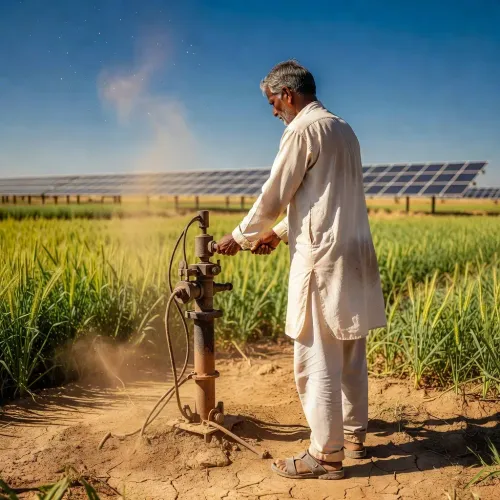
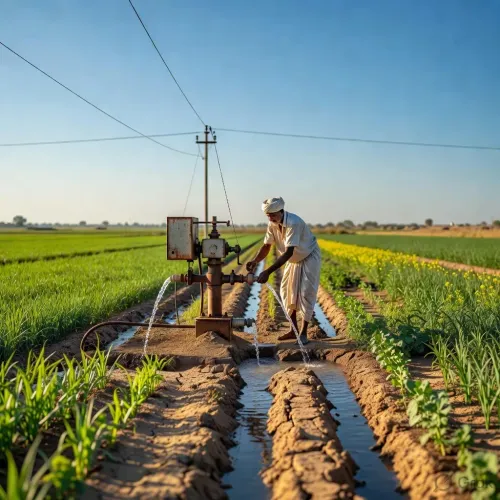
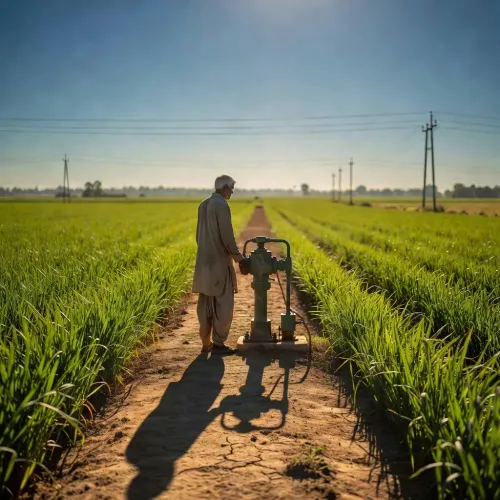
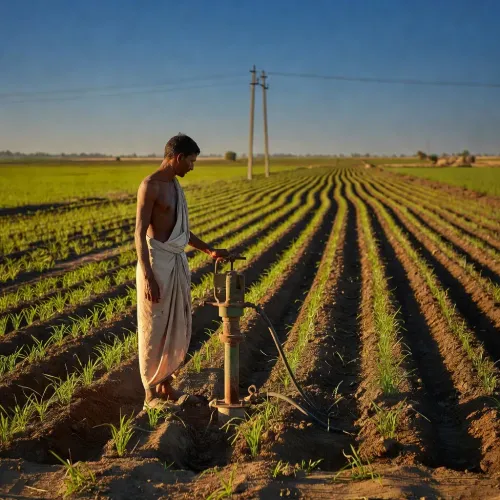
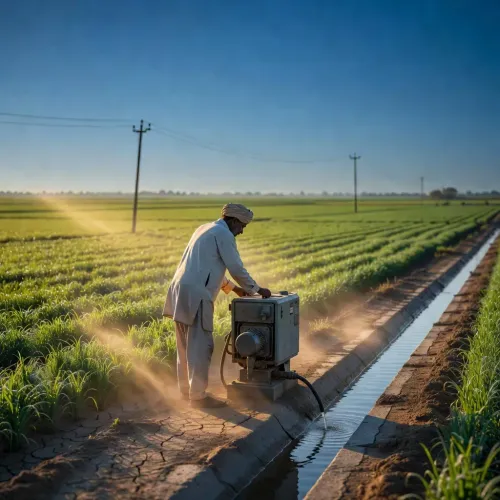
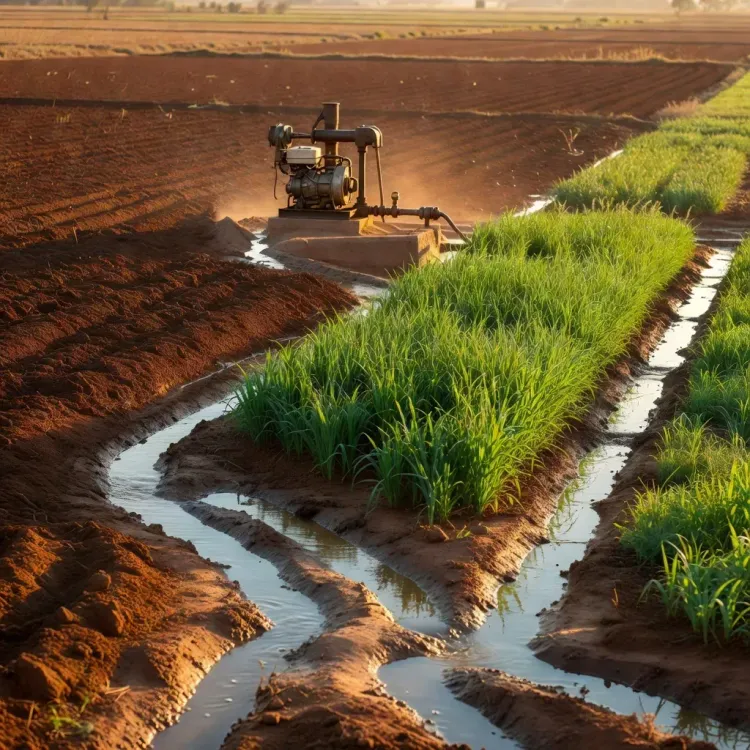
Daytime power for irrigation is not simply a convenience. When farmers can run pumps during daylight hours, they can directly monitor water flow, reduce crop loss from over- or under-irrigation, and avoid the physical hazards of operating equipment in darkness. For the semi-arid stretches of districts like Alwar, dependable irrigation windows can directly influence rabi (winter crop) sowing decisions and yields.
The government's self-set benchmark — completing the statewide rollout — now becomes the number to watch. Each new district added is both an administrative milestone and a political proof-point ahead of ongoing rural sentiment surveys in the state.
Rajasthan's farmers were promised light during the day. With 28 districts now lit, the remaining districts are waiting to see whether the grid catches up before the next sowing season does.
Point of View
Trackable, and directly felt at the farm level. By anchoring each announcement to the 2023 Sankalp Patra, the BJP administration is converting an electoral promise into a governance ledger entry, a strategy that keeps manifesto accountability in the public frame. The pace of remaining district coverage will be closely read as a signal of DISCOM capacity and state fiscal health, particularly given Rajasthan's historically strained power finances. If the full rollout completes before the next state election cycle, it hands the government a durable rural credential; delays, however, could become an opposition talking point in a state where farmer sentiment swings elections.
NationPress
12 Nov 2026
Frequently Asked Questions
What is the daytime electricity scheme for farmers in Rajasthan?
Rajasthan's daytime electricity scheme provides agricultural power to farmers during daylight hours in two blocks, replacing the earlier practice of nighttime-only supply. It is a commitment from the BJP's 2023 election manifesto and is being rolled out district by district by state DISCOMs.
How many districts in Rajasthan now have daytime power for farmers?
As of CM Bhajan Lal Sharma's announcement on 12 November 2026, 28 districts in Rajasthan are covered under the daytime agricultural power supply initiative, with Khairthal-Tijara being the latest addition.
What is Khairthal-Tijara and where is it located?
Khairthal-Tijara is an assembly constituency and administrative region in Alwar district in northeastern Rajasthan. It is an agriculturally active area where daytime electricity for irrigation has now been activated.
What was promised in the BJP's Sankalp Patra regarding farm electricity?
The BJP's 2023 Rajasthan election Sankalp Patra (manifesto) included a commitment to provide daytime electricity to farmers across the state to support irrigation, replacing the disruptive nighttime-only supply model.
When will all Rajasthan districts get daytime power for farmers?
CM Bhajan Lal Sharma stated on 12 November 2026 that work is 'continuously underway' to extend daytime supply to the remaining districts 'at the earliest,' though no specific deadline was announced.