CM Bhajan Lal Hails Cabinet's ₹53,428 Cr NSAP Extension
Synopsis
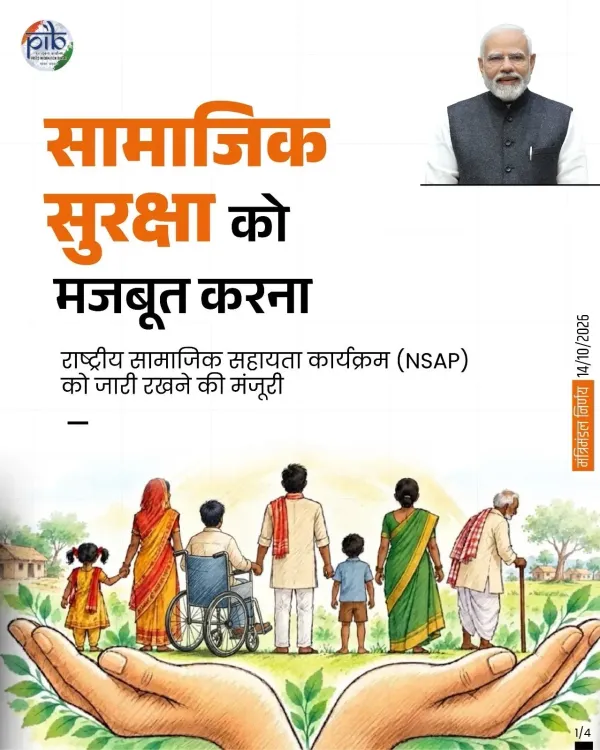
The Union Cabinet approved ₹53,428 crore to extend the National Social Assistance Programme to 2030-31 and eased Divyangjan pension norms. Rajasthan CM Bhajan Lal Sharma praised the decision as advancing 'Sabka Saath, Sabka Vikas' for India's most vulnerable citizens.
Key Takeaways
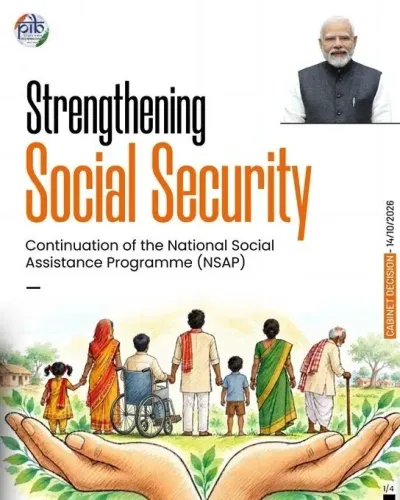
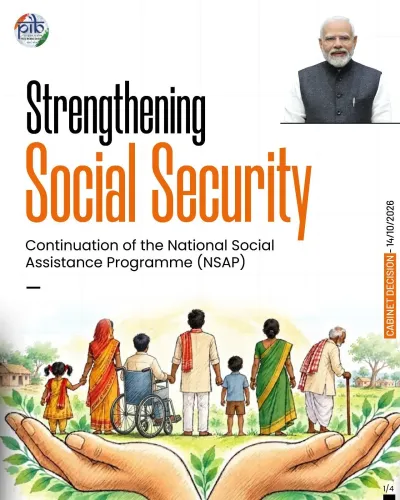
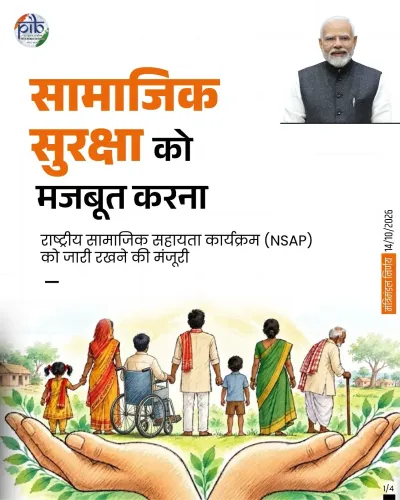
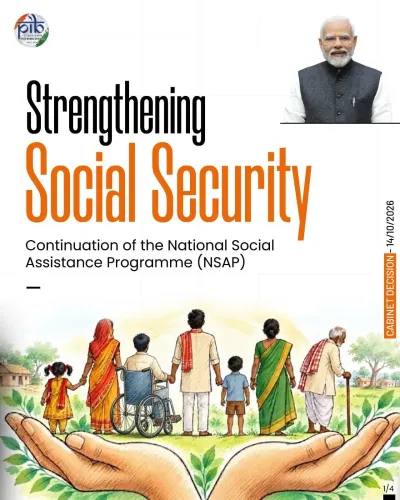
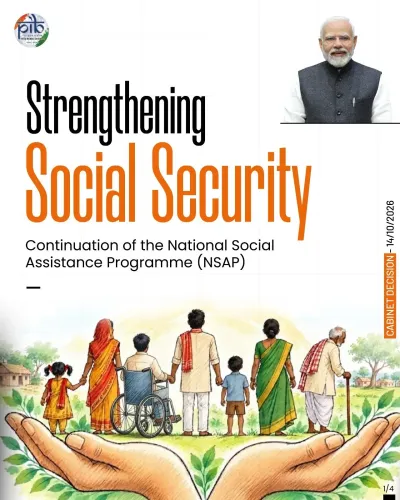
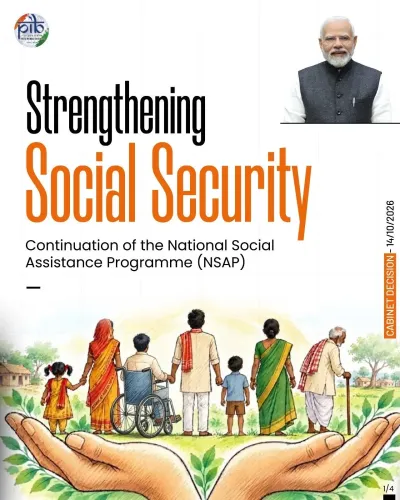
The Union Cabinet, chaired by PM Narendra Modi , approved the extension of NSAP through 2030-31 with an outlay of ₹53,428 crore .
NSAP is a non-contributory pension scheme launched in 1995 serving elderly, widowed, and disabled individuals from BPL households .
The cabinet also approved relaxed eligibility rules for Divyangjan (persons with disabilities) under the pension framework.
Direct Benefit Transfer (DBT) integration ensures funds reach beneficiaries without intermediaries.
Rajasthan CM Bhajan Lal Sharma welcomed the decision, framing it as fulfilling the government's 'Sabka Saath, Sabka Vikas' commitment.
State-level implementation orders and a gazette notification detailing Divyangjan rule changes are the key next steps to watch.
A pension programme that has quietly sustained millions of India's poorest citizens for three decades just got a runway to the end of the decade — and a promise of easier terms for persons with disabilities. Rajasthan Chief Minister Bhajan Lal Sharma on Wednesday, 14 October 2026 welcomed the Union Cabinet's decision to extend the National Social Assistance Programme (NSAP) up to 2030-31, backed by an outlay of ₹53,428 crore, and to ease pension eligibility rules for Divyangjan (persons with disabilities).
What the NSAP extension means for India's poorest households
Launched in August 1995, the NSAP is one of India's oldest non-contributory social security nets — delivering monthly pensions directly to elderly, widowed, and disabled individuals from Below Poverty Line (BPL) households. It requires no premium, no employer, no contribution history. For millions who have none of those things, it is the only structured income they receive. Wednesday's cabinet approval, chaired by Prime Minister Narendra Modi, locks in that support through 2030-31, removing the uncertainty of annual or short-cycle renewals that can disrupt beneficiary enrolments at the state level.
The scheme has been updated over the years — pension amounts were revised in 2011-12 and further enhanced through subsequent cabinet cycles, with Direct Benefit Transfer (DBT) integration ensuring funds land in beneficiaries' accounts without intermediaries. The latest extension continues that trajectory while adding a specific relief for Divyangjan — the precise nature of the rule relaxation is expected to be detailed in a gazette notification, but the intent is to reduce barriers that have historically kept some eligible disabled persons off the rolls.
CM Sharma's endorsement and the 'Sabka Saath' frame
Posting in Hindi, Sharma described the Union Cabinet decisions as fulfilling the government's pledge to ensure 'upliftment and dignified lives for the person standing on the last rung of society.' He explicitly invoked the BJP's governance motto — 'Sabka Saath, Sabka Vikas' ('Together for all, development for all') — framing the extension as a step toward 'economic support and self-reliance' for those in need. Sharma, who has led Rajasthan since December 2023, routinely amplifies central welfare announcements, given that state governments are key implementation partners for centrally sponsored schemes like NSAP.
What Rajasthan and other states must do next
The real test of any welfare extension is disbursement speed. Watch for state-level implementation orders from Rajasthan and other large NSAP states on fund-flow timelines, as well as the gazette notification detailing the relaxed Divyangjan pension norms — those specifics will determine how quickly newly eligible beneficiaries can be enrolled. For a scheme that has served elderly, widows, and disabled BPL households for over thirty years, the extension to 2030-31 is less a reinvention than a reaffirmation — but the scale of the financial commitment signals that the Centre is treating this safety net as a structural fixture, not a transitional measure.
Millions of India's most vulnerable citizens won't read a cabinet communiqué. But in the months ahead, the arrival of a pension credit in a simple bank account will tell them everything they need to know.
Point of View
Institutionalised social security commitments — a pattern that has been building across central schemes since 2014. By locking in a multi-year, five-figure-crore outlay, the Modi government signals that direct cash transfers to the poorest are now treated as a structural budget fixture rather than a discretionary annual line. The Divyangjan norm relaxation, while details remain pending, follows a broader trend of removing bureaucratic gatekeeping from welfare access. For BJP state leaders like CM Sharma, amplifying such announcements serves a dual purpose: reinforcing the party's pro-poor credentials while subtly reminding beneficiaries that the welfare pipeline flows from the Centre.
NationPress
14 Oct 2026
Frequently Asked Questions
What is the National Social Assistance Programme (NSAP)?
NSAP is a centrally sponsored, non-contributory pension scheme launched by the Indian government in August 1995. It provides monthly pensions to elderly, widowed, and disabled individuals from Below Poverty Line (BPL) households, with funds transferred directly to beneficiaries' bank accounts through DBT.
How much has the cabinet approved for NSAP and until when?
The Union Cabinet approved an outlay of ₹53,428 crore to continue the NSAP through 2030-31, as announced following the cabinet meeting chaired by PM Narendra Modi on 14 October 2026.
What changes have been made to Divyangjan pension rules?
The cabinet approved a relaxation in pension eligibility rules for Divyangjan (persons with disabilities) under NSAP. The precise details of the relaxation are expected to be notified through an official gazette notification.
Why did Rajasthan CM Bhajan Lal Sharma comment on a central government decision?
State governments are key implementation partners for centrally sponsored schemes like NSAP, making the decision directly relevant to Rajasthan. CM Sharma also frequently highlights central welfare decisions as part of BJP's broader political communication.
Who benefits from the NSAP pension scheme?
NSAP benefits three main vulnerable groups from BPL households: elderly persons, widows, and persons with disabilities. It is one of India's largest social safety nets and does not require any prior contribution from beneficiaries.