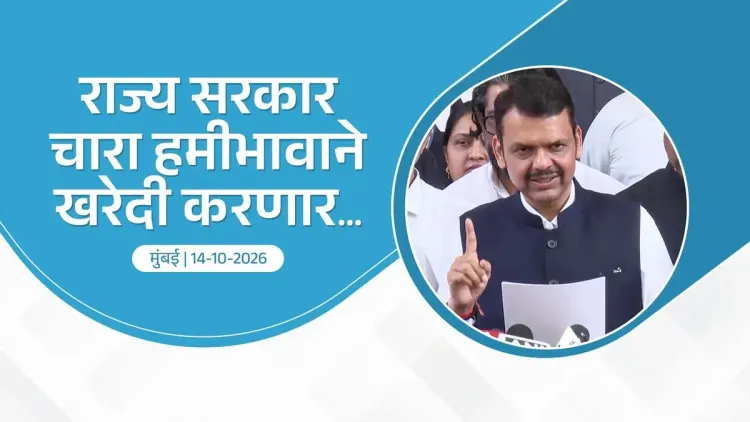
CM Fadnavis: Maharashtra to buy all fodder crops at guaranteed price
Synopsis
Maharashtra Chief Minister Devendra Fadnavis announced on 14 October 2026 that the state government will buy all fodder cultivated by farmers at a guaranteed minimum price, extending assured-price procurement logic to animal husbandry inputs and offering a stable income floor to livestock farmers statewide.
Key Takeaways
Maharashtra CM Devendra Fadnavis announced on 14 October 2026 that the state will purchase all fodder crops at a guaranteed minimum price.
The commitment covers the entire output of fodder cultivation — eliminating market-price risk for farmers who grow animal feed.
Maharashtra's livestock and dairy sector faces periodic fodder shortages driven by monsoon variability, with past drought crises recorded around 2018–2020 .
The policy extends minimum-support-price-style procurement logic beyond food grains to cover an animal husbandry input for the first time under this framework.
Key details — the exact guaranteed price per quintal , the procuring agency, and budget provisions — are yet to be announced publicly.
Fodder cultivators and livestock farmers across Maharashtra are the primary beneficiaries if procurement infrastructure is operationalised.
A guaranteed floor for fodder farmers — that is the commitment Maharashtra Chief Minister Devendra Fadnavis placed on record on Wednesday, 14 October 2026, announcing that the state government will purchase the entire output of fodder cultivation at an assured minimum price. For livestock farmers across Maharashtra who have long faced the twin squeeze of unpredictable monsoons and volatile feed markets, the pledge carries real weight.
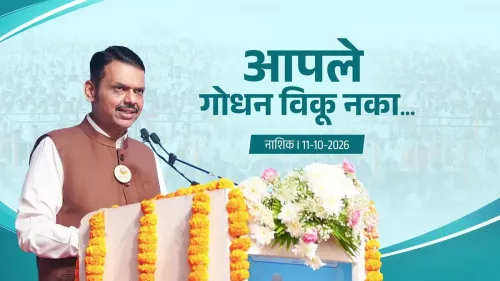
In his post on X, Fadnavis stated in Marathi: 'चाऱ्याची लागवड केल्यास राज्य सरकार सर्व चारा हमीभावाने खरेदी करणार' — ('If fodder is cultivated, the state government will purchase all of it at a guaranteed price'). The Hindi translation accompanying the post confirmed the message: any farmer who grows animal feed can sell every kilogram back to the government at a secured rate, eliminating market-price risk entirely.
Why fodder security matters in Maharashtra
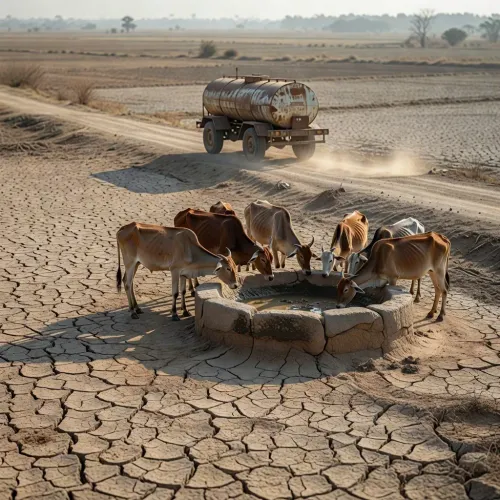
Maharashtra runs one of India's larger livestock and dairy sectors, but it is also a state that periodically buckles under drought. Fodder shortages in lean monsoon years force cattle owners to sell animals at distress prices or spend heavily on purchased feed — a cycle that hollows out rural incomes well beyond the farms that grow crops. Previous state administrations tackled acute crises with emergency fodder camps and relief procurement, particularly during the drought years around 2018–2020. What Fadnavis is now signalling is a shift from reactive relief to a standing procurement guarantee — closer in design to how the state handles wheat and rice than to emergency drought management.
Extending MSP logic to animal husbandry inputs
The policy fits a broader national pattern: several Indian states have experimented with extending minimum support price-style mechanisms beyond food grains to cover inputs that sustain animal husbandry. The logic is integrated — stable fodder supply keeps dairy and meat production predictable, which protects rural household income from multiple angles at once. Maharashtra's dairy cooperatives and small livestock holders stand to benefit most directly if the procurement infrastructure materialises. The critical unknowns — the exact guaranteed price per quintal, the agency responsible for procurement, and the budget provision — have not yet been specified publicly and will determine whether the commitment translates into durable change on the ground.
Fodder procurement at scale demands cold-chain logistics, storage, and a distribution network that reaches taluka level. Whether existing agricultural procurement machinery can be reoriented quickly, or whether a fresh institutional framework is required, will define the policy's reach in its first season.
Maharashtra's livestock farmers now have a promise. The government's next move is to put a price, a process, and a budget line behind it.
Point of View
It aligns with a BJP-led state government's ongoing effort to address rural distress through supply-side income guarantees rather than post-facto relief. The real test will come in implementation: a universal procurement pledge requires storage, logistics, and a transparent pricing mechanism, and without those, the guarantee risks remaining rhetorical. If executed well, however, it could serve as a replicable model for livestock-dependent states across peninsular India.
NationPress
14 Oct 2026
Frequently Asked Questions
What did CM Fadnavis announce about fodder in Maharashtra?
On 14 October 2026, Maharashtra Chief Minister Devendra Fadnavis announced that the state government will purchase all cultivated fodder at a guaranteed minimum price, removing market-price risk for farmers who grow animal feed.
Who benefits from Maharashtra's fodder guaranteed price scheme?
Fodder cultivators and livestock farmers across Maharashtra are the primary beneficiaries, as the scheme gives them a secured buyer — the state government — for their entire fodder output.
What is the guaranteed price for fodder in Maharashtra?
The exact guaranteed price per quintal has not yet been publicly announced. CM Fadnavis confirmed the principle of assured-price procurement; specific rates, the procuring agency, and budget provisions are expected to follow in subsequent government statements.
Why is fodder security important for Maharashtra farmers?
Maharashtra's livestock and dairy sector faces recurring fodder shortages during poor monsoon years. Without stable fodder availability, cattle owners are forced to sell animals at distress prices or purchase feed at high market rates, deepening rural financial stress.
Has Maharashtra run fodder procurement schemes before?
Yes. During drought periods, particularly around 2018–2020, the Maharashtra government ran emergency fodder camps and relief procurement measures. The new announcement aims to institutionalise such support as a standing guaranteed-price mechanism rather than a crisis response.