CM Bhajan Lal Slams Congress on ERCP, Yamuna Water Pact
Synopsis
Rajasthan Chief Minister Bhajan Lal Sharma accused Congress of decades of political inaction on the Eastern Rajasthan Canal Project and the Yamuna water agreement on 31 May 2026, asserting that his BJP government is actively working to ensure water availability for the state's water-scarce districts.
Key Takeaways
Bhajan Lal Sharma accused Congress of spending decades politicising the Eastern Rajasthan Canal Project (ERCP) and the Yamuna water agreement .
The ERCP is designed to bring water from the Chambal basin to 13 water-scarce districts in eastern Rajasthan.
Rajasthan's demand for a larger Yamuna water share traces back to a 1994 tripartite agreement among basin states.
The ERCP was first formally announced and surveyed during the BJP's 2017–18 tenure under Vasundhara Raje .
Sharma became Chief Minister in December 2023 after BJP defeated Congress in the state assembly election.
Progress on ERCP tendering and fresh Yamuna allocation talks remain key benchmarks to watch in the 2025–26 budget cycle .
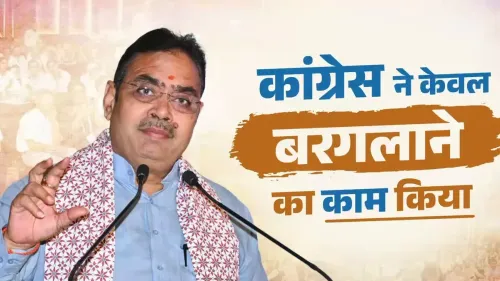
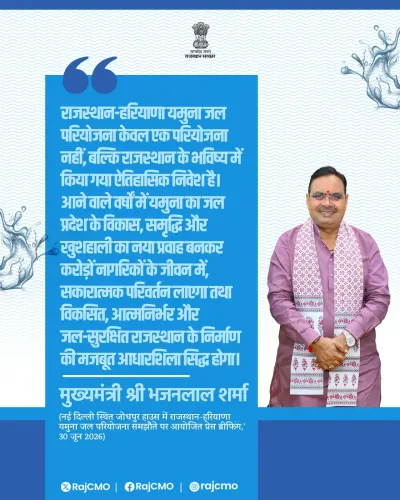
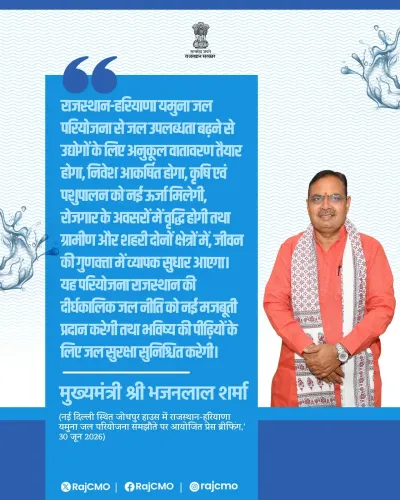
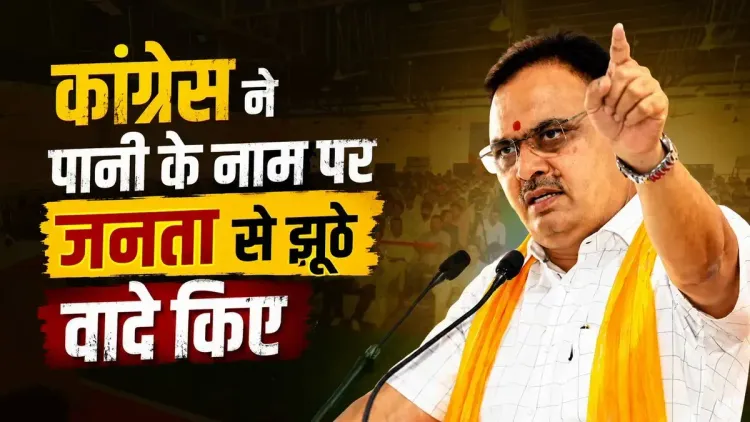
Rajasthan Chief Minister Bhajan Lal Sharma on Sunday, 31 May 2026 accused the Congress of spending decades playing politics over the Eastern Rajasthan Canal Project (ERCP) and the Yamuna water agreement, asserting that his government is actively working to secure water availability for the state.
In a post on X, Sharma wrote: 'ईआरसीपी और यमुना जल समझौते पर कांग्रेस दशकों तक राजनीति करती रही, जबकि हमारी सरकार राजस्थान के लिए पानी की उपलब्धता सुनिश्चित करने में जुटी है।' [Translation: 'While Congress kept playing politics over ERCP and the Yamuna water agreement for decades, our government is engaged in ensuring water availability for Rajasthan.']
Context
The Eastern Rajasthan Canal Project is a large-scale irrigation and drinking water scheme designed to divert surplus water from the Chambal basin to 13 water-scarce districts in eastern Rajasthan. The project was formally announced and surveyed during the Vasundhara Raje-led BJP government in 2017–18, and has since remained a politically contested infrastructure promise.
The Yamuna water agreement refers to an inter-state arrangement governing allocation of Yamuna river flows among Rajasthan, Haryana, Delhi and Uttar Pradesh. Rajasthan's demand for a larger share of Yamuna waters dates back to a 1994 tripartite agreement among basin states, and has been a recurring subject of renegotiation demands.
Policy Backdrop
Sharma became Chief Minister of Rajasthan in December 2023 after the BJP's assembly election victory, ending the Congress government's five-year tenure from 2018 to 2023. Inter-state river disputes and intra-basin canal projects have remained recurring flashpoints in Rajasthan politics for decades, with each ruling party accusing its predecessor of delay.
Rajasthan is an arid north-western Indian state chronically dependent on inter-basin water transfers and upstream river sharing agreements. The competitive political dynamic over water security mirrors national patterns seen in disputes over rivers such as the Cauvery and the Krishna.
Stakeholders and Impact
The primary beneficiaries of a fully operational ERCP would be farmers and residents across 13 eastern Rajasthan districts, where water scarcity has historically constrained both agriculture and drinking water supply. Progress on the project directly affects livelihoods in one of the state's most densely populated agricultural belts.
A revised Yamuna water allocation would similarly benefit downstream communities and urban centres in eastern Rajasthan that depend on surface water transfers. Both issues carry significant electoral weight in the region.
What's Next
Observers will watch for progress reports on ERCP tendering and land acquisition in the 2025–26 state budget cycle, as well as any fresh tripartite talks on Yamuna allocations under the central government's river-linking initiative. The BJP's ability to demonstrate tangible movement on both fronts will be critical to its narrative ahead of future electoral cycles in Rajasthan.
The post continues an established BJP–Congress narrative battle over credit for water infrastructure, and signals that water security will remain a central political flashpoint in the state.
Point of View
The Chief Minister is setting a political baseline against which his own government's delivery will eventually be measured. The post arrives at a moment when river-linking and inter-state water sharing are gaining renewed salience at the national level, giving Rajasthan's water politics a wider resonance. If tangible progress on ERCP tendering or Yamuna talks does not follow, the accusation risks becoming a double-edged sword.
NationPress
24 Sept 2026
Frequently Asked Questions
What is the Eastern Rajasthan Canal Project (ERCP)?
The Eastern Rajasthan Canal Project is a major irrigation and drinking water scheme that aims to divert surplus water from the Chambal basin to 13 water-scarce districts in eastern Rajasthan. It was formally announced and surveyed during the BJP government in 2017–18.
What is the Yamuna water agreement related to Rajasthan?
The Yamuna water agreement is an inter-state arrangement governing the allocation of Yamuna river flows among Rajasthan, Haryana, Delhi and Uttar Pradesh. Rajasthan's demand for a larger share dates back to a 1994 tripartite agreement and has been a recurring political issue.
Why is Bhajan Lal Sharma criticising Congress over ERCP?
Sharma accused Congress of spending decades playing politics over ERCP and the Yamuna water agreement instead of resolving them, contrasting this with his government's stated focus on securing water availability for Rajasthan.
Who is Bhajan Lal Sharma?
Bhajan Lal Sharma is the Chief Minister of Rajasthan and a BJP leader who assumed office in December 2023 after the party won the state assembly election, ending Congress's five-year tenure.
Which districts in Rajasthan will benefit from ERCP?
The Eastern Rajasthan Canal Project is designed to benefit 13 water-scarce districts in eastern Rajasthan by diverting surplus water from the Chambal river basin for irrigation and drinking water use.