CM Bhajan Lal inspects urban service camp in Sanganer
Synopsis
Rajasthan Chief Minister Bhajan Lal Sharma visited a Shahri Seva Shivir in Sanganer on 15 June 2026, distributing land titles and welfare cheques to beneficiaries while directing officials to resolve public grievances in a time-bound and sensitive manner.
Key Takeaways
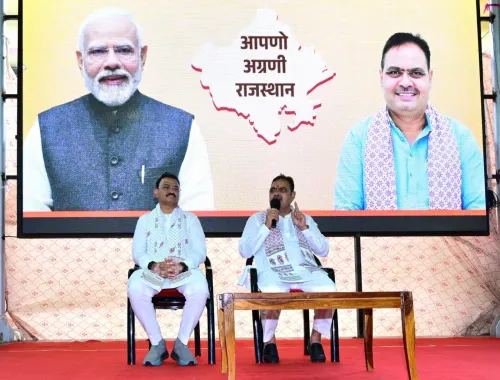
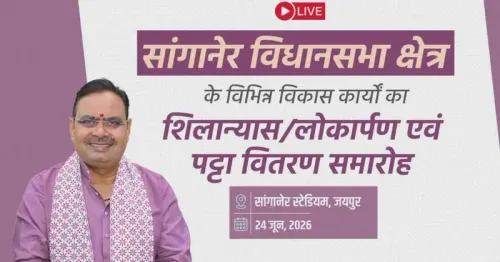
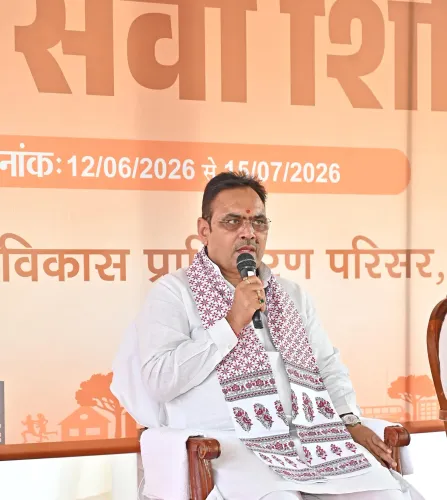
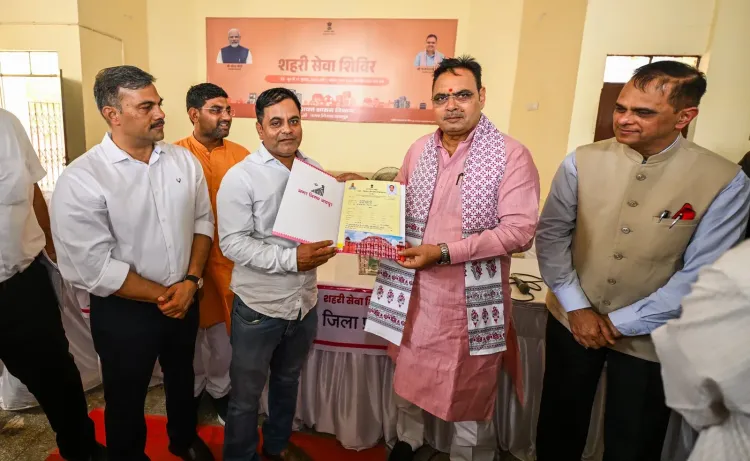
CM Bhajan Lal Sharma personally inspected the urban service camp ( Shahri Seva Shivir ) in Sanganer, Jaipur on 15 June 2026 .
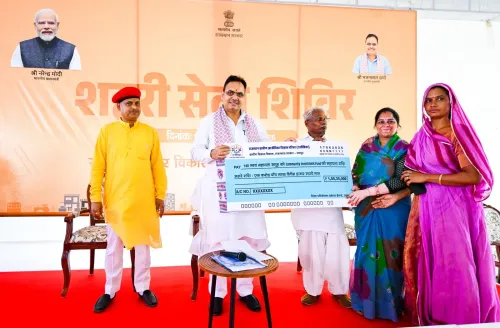
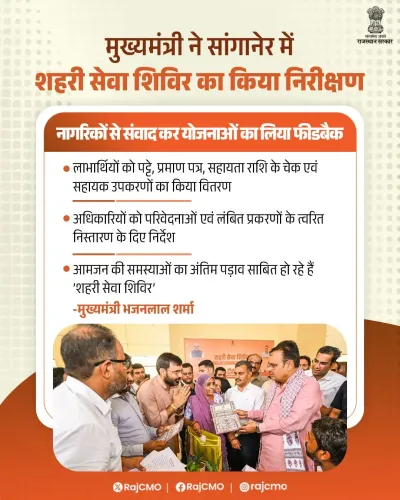
Eligible beneficiaries received land title deeds ( patte ) and cheques under various state welfare schemes.
The Chief Minister collected direct feedback from residents on the implementation of state programmes across Rajasthan .
Officials were directed to ensure time-bound, quality-driven, and sensitive resolution of every public grievance.
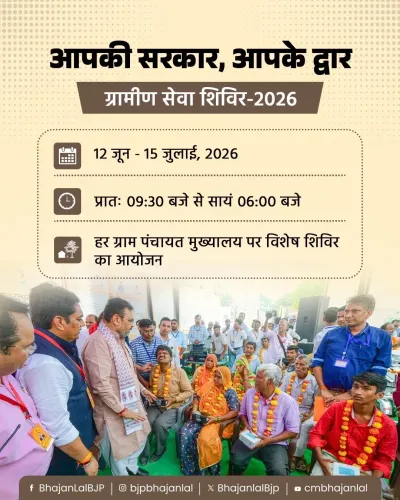
The camp is part of an ongoing series of urban service shivirs initiated by the BJP government since December 2023 .
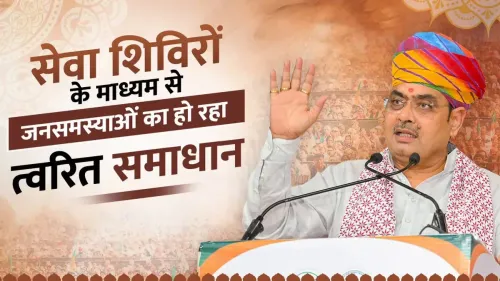
Swift grievance resolution was reiterated as the 'foundation of good governance' by the Chief Minister.
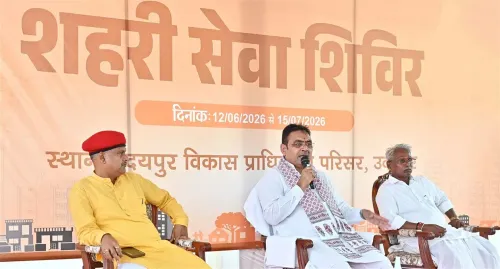
Rajasthan Chief Minister Bhajan Lal Sharma on Monday, 15 June 2026 visited an urban service camp (Shahri Seva Shivir) held in Sanganer, Jaipur, where he interacted directly with residents, collected feedback on state welfare schemes, and distributed land title deeds (patte) and cheques to eligible beneficiaries.
Context
Addressing the gathering, Sharma directed officials to ensure that every public grievance is resolved in a 'time-bound, quality-driven, and sensitive manner.' In his post on X, the Chief Minister stated: 'Jansamasyaon ka tvrit samadhan hi sushasan ka mul aadhar hai' — 'Swift resolution of public problems is the very foundation of good governance' — adding that his government operates with commitment, accountability, and a spirit of public service.
The camp at Sanganer — a densely populated urban constituency within Jaipur district — brought together residents, welfare beneficiaries, and district-level officials under one roof to streamline the delivery of state benefits and address pending complaints.
Policy Backdrop
Since assuming office in December 2023 following the Rajasthan assembly elections, the BJP government led by Sharma has institutionalised urban and rural service camps as a primary mechanism for direct benefit delivery and citizen feedback. Land title distribution — particularly patte for regularisation of residential plots — has been a recurring feature of these camps, targeting lower-income urban households who lack formal documentation of occupancy.
The emphasis on grievance redressal through field-level camps mirrors governance practices adopted across several BJP-administered states, where public-facing events serve both an administrative and a political communication function — demonstrating that elected governments remain accessible beyond election cycles.
Stakeholders and Impact
The immediate beneficiaries of the Sanganer camp include urban residents who received patte securing their tenure over residential land, as well as those who received cheques under various state welfare programmes. Broader stakeholders include local government officials now under directive to resolve complaints within defined timelines, and the wider urban population of Rajasthan whose grievances feed into the state's administrative pipeline.
Feedback collected at such camps is intended to inform the state government's assessment of scheme implementation gaps at the ground level — a stated priority of the Sharma administration since 2023.
What's Next
The Rajasthan government is expected to continue rolling out Shahri Seva Shivirs across other urban constituencies in the months ahead, with attention likely to focus on whether the grievance resolution timelines directed by the Chief Minister translate into measurable outcomes. The pace of land title distribution and the volume of complaints resolved will serve as key indicators of how effectively the camp model is delivering on its governance promise.
Point of View
The Chief Minister reinforces a narrative of accessible leadership, particularly important in urban Rajasthan where infrastructure and welfare delivery gaps remain politically sensitive. The directive on time-bound grievance resolution, however, will be judged by follow-through: without transparent tracking mechanisms, such instructions risk remaining symbolic. The broader arc here is the BJP's attempt to embed a 'government at your doorstep' model as a durable governance identity in Rajasthan ahead of future electoral cycles.
NationPress
24 Sept 2026
Frequently Asked Questions
What is a Shahri Seva Shivir in Rajasthan?
A Shahri Seva Shivir is an urban service camp organised by the Rajasthan government where officials deliver welfare benefits — such as land titles and scheme cheques — directly to eligible residents and collect feedback on state programmes.
What did CM Bhajan Lal Sharma do at the Sanganer camp on 15 June 2026?
He inspected the camp, interacted with residents, gathered feedback on welfare schemes running across Rajasthan, and distributed land title deeds and cheques to eligible beneficiaries.
What are patte distributed at Rajasthan welfare camps?
Patte are land title deeds issued by the Rajasthan government to regularise the residential plot holdings of lower-income urban households who previously lacked formal documentation of occupancy.
When did Bhajan Lal Sharma become Chief Minister of Rajasthan?
Bhajan Lal Sharma was sworn in as Chief Minister of Rajasthan in December 2023 after the BJP won the state assembly elections.
What did CM Bhajan Lal Sharma instruct officials at the Sanganer camp?
He directed officials to ensure that every public grievance is resolved in a time-bound, quality-driven, and sensitive manner, stating that swift resolution of public problems is the foundation of good governance.