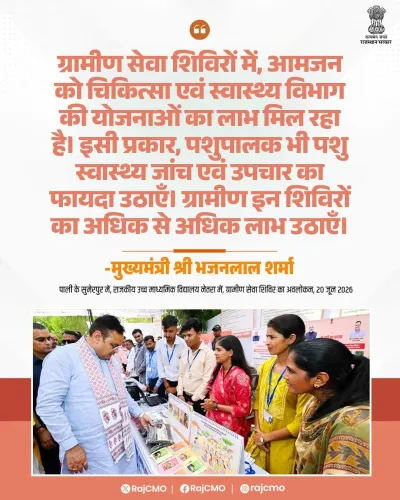
CM Bhajan Lal launches Grameen Seva Shivir 2026 in Rajasthan
Synopsis
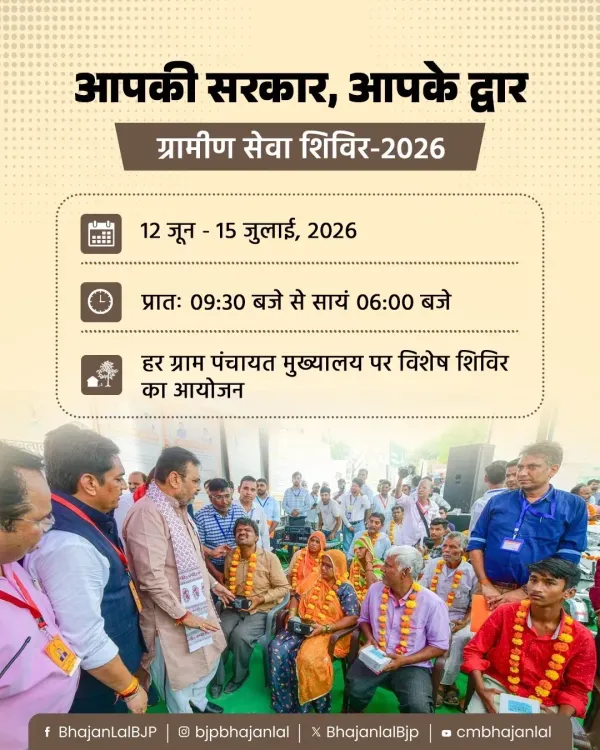
Rajasthan Chief Minister Bhajan Lal Sharma launched Grameen Seva Shivir-2026 on 12 June, deploying camps at all Gram Panchayat headquarters through 15 July 2026. Services from 22 departments will be available, with a same-day resolution target for every citizen visiting the camps.
Key Takeaways
Grameen Seva Shivir-2026 was formally launched by CM Bhajan Lal Sharma on 12 June 2026 .
Camps will be held at every Gram Panchayat headquarters in Rajasthan until 15 July 2026 .
Services from 22 state government departments , including Revenue, will be available at each camp.
The government has set a target of same-day disposal of every citizen's application or grievance.
Rajasthan has over 11,000 Gram Panchayats , making this one of the largest rural outreach drives in the state's recent history.
Outcomes and participation data are expected to be reviewed after the campaign closes in July 2026 .
Rajasthan Chief Minister Bhajan Lal Sharma on Friday, 12 June 2026 announced the formal launch of 'Grameen Seva Shivir-2026', a state-wide rural service camp drive aimed at delivering government welfare schemes and resolving citizen grievances at the village level. The camps will run across every Gram Panchayat headquarters in the state from 12 June to 15 July 2026, with services from 22 departments available on-site and a stated goal of same-day resolution for every applicant.
Context
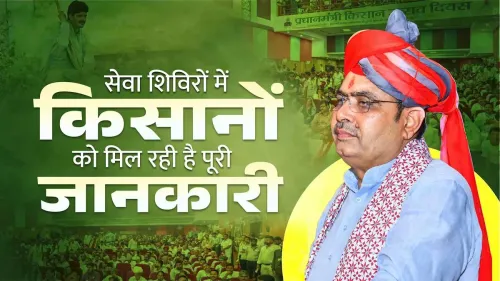
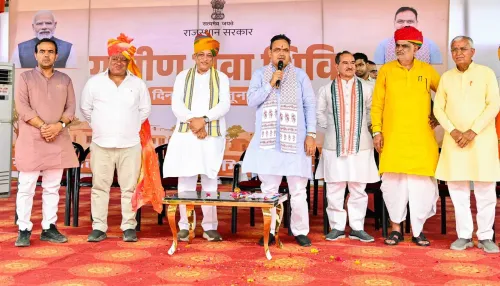
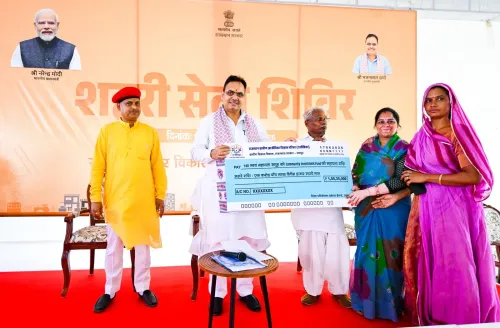
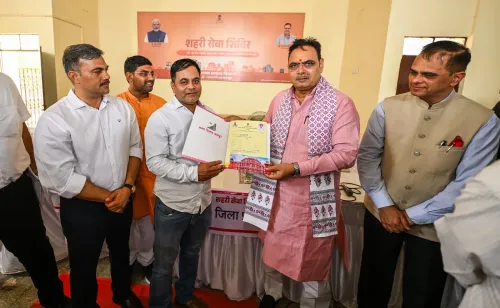
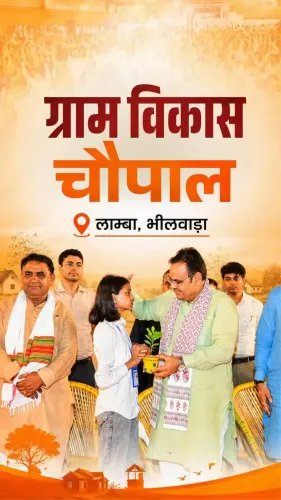
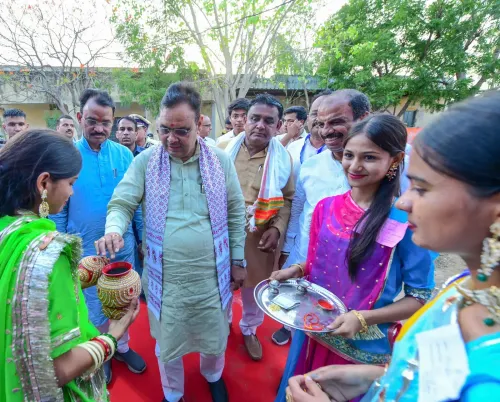
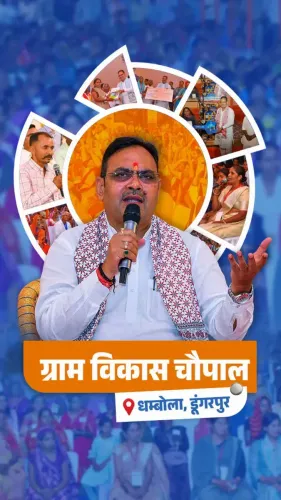
Posting on X in Hindi, Sharma declared: 'ग्रामीण सेवा शिविर-2026 का शुभारंभ हो चुका है' ('Grameen Seva Shivir-2026 has been launched'), framing the initiative as a 'mahabhiyan' — a grand campaign — for sushasan, or good governance. He urged citizens to join the effort, describing it as a direct channel to deliver welfare scheme benefits and resolve problems 'swiftly' (tvrit samadhan). The post was accompanied by four images documenting the launch.
The camps are designed to bring government services to the doorstep of rural Rajasthan, eliminating the need for villagers to travel to district or block headquarters for routine administrative tasks. The Revenue Department — which handles land records, mutations, and certificates among the most frequently accessed rural services — is among the participating agencies.
Policy Backdrop
The shivir model builds on a longer arc of citizen-service reform in Rajasthan. The state enacted the Rajasthan Right to Public Services Act in 2011, guaranteeing time-bound delivery of notified services, and expanded its e-Mitra single-window kiosk network from 2005 onward to improve last-mile access. The Jan Soochna Portal, launched in 2019, further enabled proactive disclosure of scheme-related information.
Rajasthan has more than 11,000 Gram Panchayats, making the logistical scale of the shivir significant. Indian state governments have periodically deployed such temporary rural camps to reduce delays and cut out intermediaries; the approach aligns with national-level emphasis on ease-of-living indices that reward efficient grievance redressal. BJP-governed states have frequently used the shivir format to demonstrate administrative outreach at scale.
Stakeholders and Impact
The primary beneficiaries are rural citizens — particularly those seeking land record corrections, welfare scheme enrolments, caste and income certificates, and other revenue-related documents that typically require multiple visits to government offices. The participation of 22 departments means a single camp visit could, in principle, resolve a range of pending matters simultaneously.
For the state administration, the shivir also functions as a grievance audit: same-day disposal targets create measurable performance benchmarks for individual departments and district officials. Civil society observers and opposition parties are likely to scrutinise participation figures and actual resolution rates when the camps conclude in July 2026.
What's Next
The camps are scheduled to continue daily at Gram Panchayat headquarters through 15 July 2026. Official data on footfall, same-day disposal rates, and department-wise performance are expected to be compiled after the campaign closes. These figures could surface in the Rajasthan Assembly monsoon session, where the government is likely to present the initiative as evidence of its governance record. The scale and outcomes of the 2026 edition will set a benchmark for future rural outreach drives under the Sharma administration.
Point of View
Measurable service delivery at the village level to demonstrate administrative responsiveness ahead of political cycles. By anchoring the campaign to 22 departments and a same-day resolution target, the Sharma government is setting quantifiable benchmarks that will be difficult to walk back if scrutinised in the Assembly. The shivir model is not new to Rajasthan or to BJP-governed states, but its success depends entirely on ground-level execution and independent verification of disposal figures. If the data holds up, it strengthens the administration's ease-of-living narrative; if it does not, it hands the opposition a ready-made accountability issue for the monsoon session.
NationPress
22 Sept 2026
Frequently Asked Questions
What is Grameen Seva Shivir 2026 in Rajasthan?
Grameen Seva Shivir-2026 is a state government initiative launched by Chief Minister Bhajan Lal Sharma on 12 June 2026, under which camps are held at every Gram Panchayat headquarters in Rajasthan to deliver welfare scheme benefits and resolve citizen grievances on the spot, with services from 22 departments available through 15 July 2026.
How long will Grameen Seva Shivir 2026 run?
The camps are scheduled to run from 12 June to 15 July 2026 , covering every Gram Panchayat headquarters across Rajasthan.
Which departments are participating in Grameen Seva Shivir 2026?
A total of 22 state government departments are participating, including the Revenue Department, which handles land records, mutations, and certificates most commonly needed by rural citizens.
What is the same-day disposal target in the Rajasthan shivir?
The Rajasthan government has set a target that every citizen who visits a Grameen Seva Shivir camp will have their application or grievance resolved on the same day, reducing the need for repeat visits.
How many Gram Panchayats are covered under this scheme?
Rajasthan has more than 11,000 Gram Panchayats , all of which are expected to host shivir camps, making this one of the largest rural outreach drives in the state in recent years.