CM Bhajan Lal Huddles With Jodhpur Workers on Panchayat Polls
Synopsis
Rajasthan CM Bhajan Lal Sharma held an organisational meeting with BJP workers in Jodhpur to prepare for upcoming Gram Panchayat elections, reaffirming commitment to Panchayati Raj and rural welfare delivery. Union Minister Gajendra Singh Shekhawat also attended.
Key Takeaways
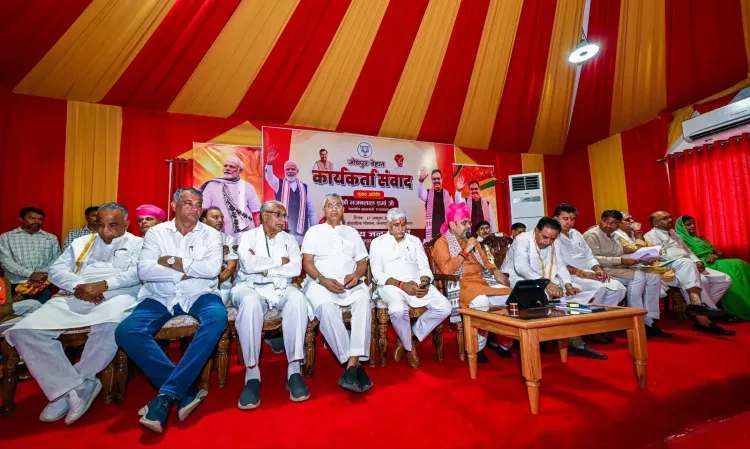
Rajasthan CM Bhajan Lal Sharma met BJP workers in Jodhpur district to discuss preparations for the upcoming Gram Panchayat elections .
Union Minister of Culture and Tourism Gajendra Singh Shekhawat , Jodhpur's senior BJP leader, was present at the meeting alongside party office-bearers and elected representatives.
Sharma renewed the pledge to strengthen Panchayati Raj institutions and ensure welfare schemes reach the last person in every village and hamlet.
The meeting reflects standard BJP pre-election organisational activation ahead of local body polls in Rajasthan.
Gram Panchayat elections are governed by powers devolved under the 73rd Constitutional Amendment of 1992 , making them a critical tier for rural governance and political consolidation.
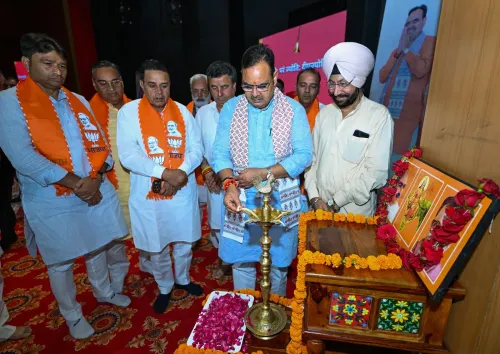
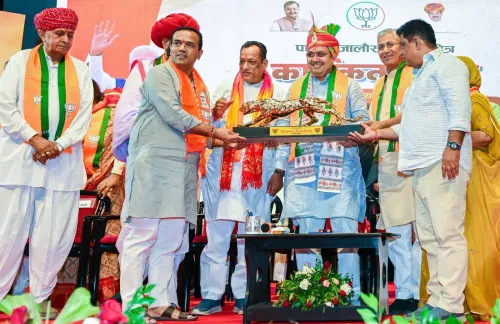
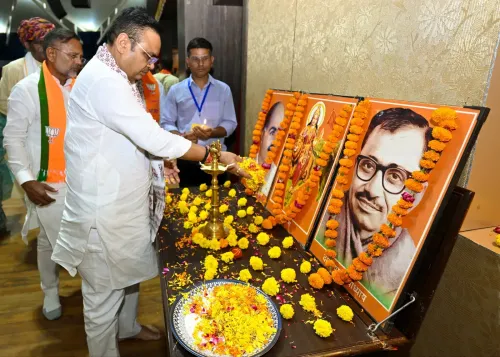
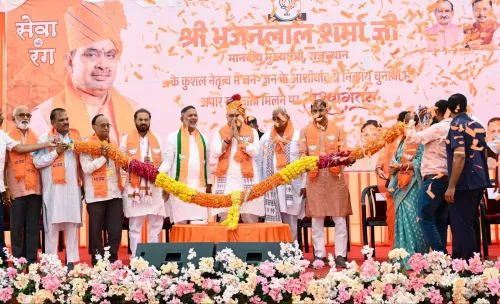
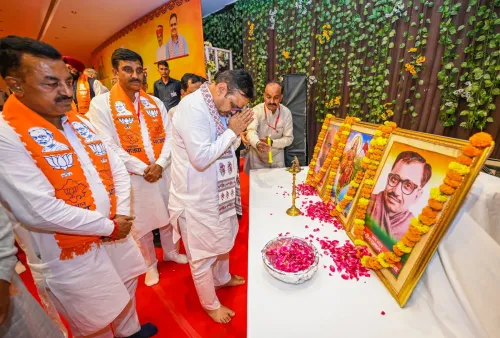
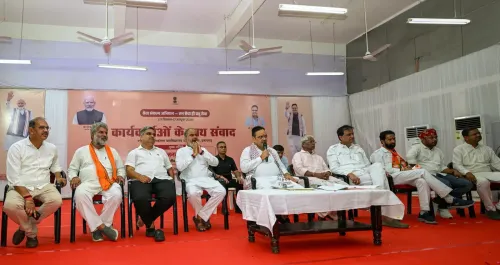
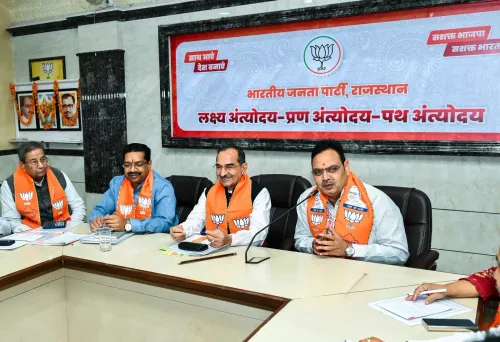
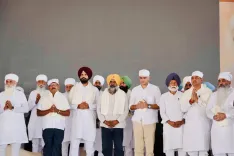
With Rajasthan's next round of Gram Panchayat elections on the horizon, Rajasthan Chief Minister Bhajan Lal Sharma sat down with party workers in Jodhpur on Saturday for a closed-door organisational meeting — sharpening the BJP's ground game before the village-level polls arrive.
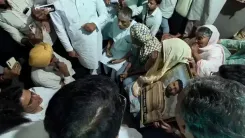
Sharma described the gathering as an 'aatmiya samvad' — an intimate dialogue — with dedicated and hardworking workers of Jodhpur district, focused on election preparedness and internal organisational matters. He renewed a public pledge to strengthen the Panchayati Raj system and ensure that welfare schemes reach 'gaon-dhani ke antim vyakti tak' — the last person in every village and hamlet.
Shekhawat on the Floor, BJP's Western Rajasthan Muscle on Display
The meeting carried extra political weight with the presence of Union Minister of Culture and Tourism Gajendra Singh Shekhawat, the BJP's most prominent face in Jodhpur and a senior figure in the party's western Rajasthan structure. Party office-bearers and elected representatives also attended, signalling that this was not a routine check-in but a coordinated mobilisation exercise.
Jodhpur has long been a stronghold for the BJP, and Shekhawat's participation underlines the party's intent to convert that assembly-level dominance into panchayat-level penetration — the tier of governance closest to rural voters.
Why Gram Panchayat Elections Matter for the BJP's Rural Blueprint
Gram Panchayat polls are fought on a far more granular battlefield than state or Lok Sabha elections. The 73rd Constitutional Amendment of 1992 devolved real administrative powers — from rural infrastructure to local welfare delivery — to these village bodies, making them the last mile of governance for crores of rural Rajasthanis.
For a party that swept to power in Rajasthan in December 2023, consolidating that mandate at the panchayat level is both a political imperative and a governance necessity. Sharma's emphasis on welfare-scheme delivery reaching remote dhanis — the scattered hamlets of western Rajasthan — reflects an awareness that rural credibility is built block by block, not just in state capitals.
Worker Energy as Organisational Capital
Sharma specifically called out the enthusiasm, dedication, and commitment to public service shown by workers as 'the strength of the organisation' — a framing that positions grassroots mobilisation as both a political asset and a governing tool. Such language, directed at booth-level workers ahead of local body polls, is a standard BJP pre-election activation signal.
The notification and schedule for the next Gram Panchayat election cycle in Rajasthan has not yet been officially announced, but internal meetings of this kind typically precede formal poll dates by several weeks.
When the ballots are finally cast in Rajasthan's villages, Saturday's meeting in Jodhpur may well be remembered as the moment the BJP started counting its booth-level arithmetic.
Point of View
The BJP under Sharma now needs to translate assembly-level dominance into panchayat-level entrenchment, which is where rural vote banks are actually built and maintained. Shekhawat's presence signals that the party's central leadership is invested in this local-body cycle, not leaving it to state machinery alone. If the BJP consolidates Gram Panchayat seats in strongholds like Jodhpur, it builds a durable organisational infrastructure that pays dividends well beyond the next state election.
NationPress
17 Oct 2026
Frequently Asked Questions
Why did CM Bhajan Lal Sharma visit Jodhpur?
CM Bhajan Lal Sharma visited Jodhpur to hold an organisational meeting with BJP workers focused on preparing for the upcoming Gram Panchayat elections and discussing welfare scheme delivery in rural areas.
Who is Gajendra Singh Shekhawat?
Gajendra Singh Shekhawat is the Union Minister of Culture and Tourism and a senior BJP leader who represents Jodhpur. He attended the organisational meeting with CM Sharma.
When are the Gram Panchayat elections in Rajasthan?
The official schedule for the next round of Gram Panchayat elections in Rajasthan has not yet been announced, though BJP organisational meetings suggest the party is actively preparing for polls.
What is Panchayati Raj and why does it matter?
Panchayati Raj is a decentralised rural governance framework established by the 73rd Constitutional Amendment of 1992. It devolves administrative powers to village-level bodies, making them the primary channel for welfare scheme delivery to rural citizens.
What did CM Bhajan Lal Sharma say about welfare schemes?
Sharma reiterated the commitment to ensure that government welfare schemes reach the last person in every village and hamlet, framing Panchayati Raj institutions as the key vehicle for that delivery.