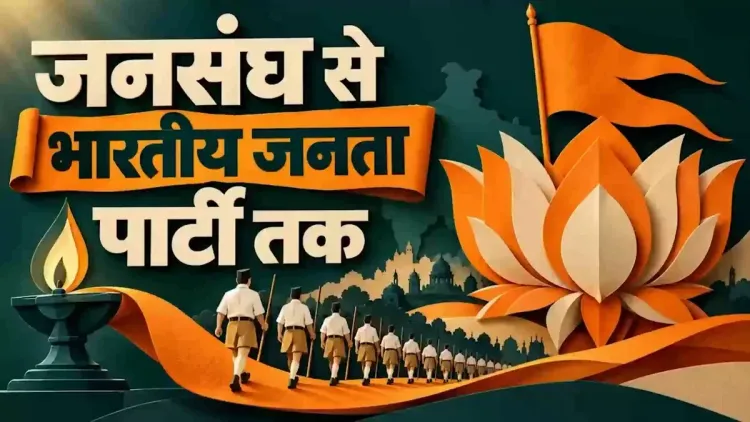
CM Bhajan Lal marks 75 years of Jana Sangh's founding
Synopsis
On the 75th anniversary of the Bharatiya Jana Sangh's founding, Rajasthan CM Bhajan Lal Sharma traced the BJP's ideological lineage from Dr. Shyama Prasad Mukherjee's 1951 nationalism through Deendayal Upadhyay's philosophy to Modi's Viksit Bharat mission.
Key Takeaways
The Bharatiya Jana Sangh was founded on 21 October 1951 by Dr.
Shyama Prasad Mukherjee as a nationalist alternative to the Congress.
Pandit Deendayal Upadhyay's Integral Humanism and Antyodaya philosophy form the BJP's core ideological framework.
The Emergency period of 1975–77 is cited as a key test that strengthened the organisation's democratic resolve.
The Bharatiya Janata Party was established in 1980 , inheriting the Jana Sangh's cadre base and ideology.
The abrogation of Article 370 in 2019 is highlighted as a concrete milestone of the founding nationalist agenda.
CM Sharma identifies crores of grassroots workers as the BJP's defining source of strength across 75 years.
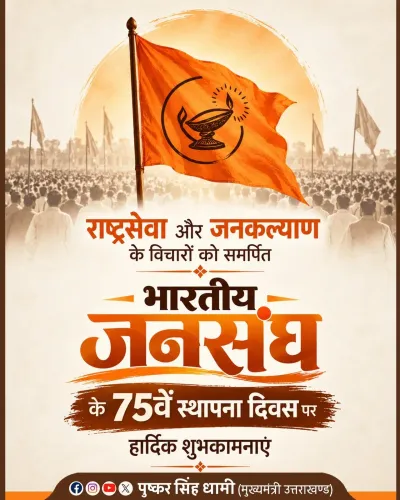
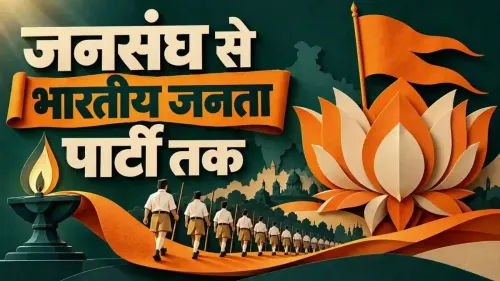
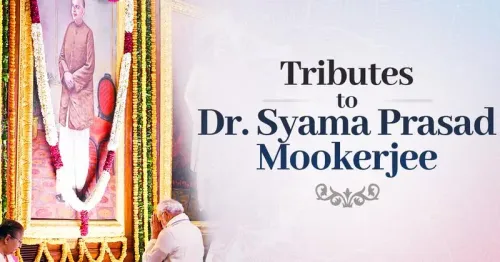
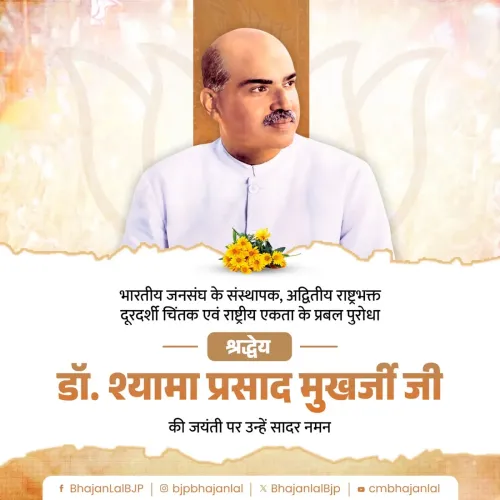
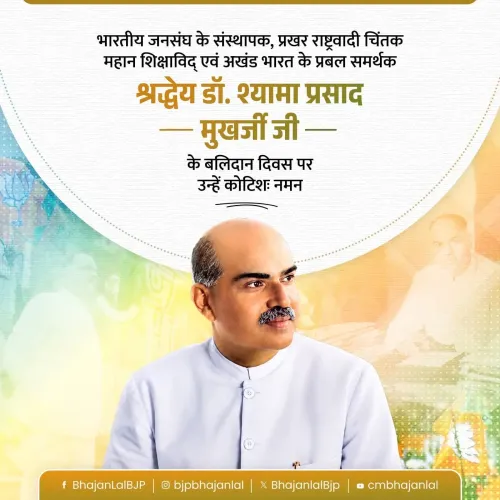
Seventy-five years after Dr. Shyama Prasad Mukherjee convened a small gathering of nationalists and declared the birth of a new political force, Rajasthan Chief Minister Bhajan Lal Sharma on Wednesday, 21 October 2026 invoked that founding moment as a living continuum — tracing an unbroken ideological thread from the Bharatiya Jana Sangh of 1951 to the Bharatiya Janata Party of today.
From a single idea in 1951 to a national force
Posting on X, CM Sharma wrote — 'एक विचार, एक संकल्प और राष्ट्रसेवा की अटूट प्रतिबद्धता' ['One idea, one resolve, and an unbreakable commitment to national service'] — framing the BJP's origin story not as a political accident but as a deliberate philosophical project. The Bharatiya Jana Sangh was founded on 21 October 1951 under Dr. Mukherjee as an explicitly nationalist alternative to a Congress-dominated political landscape. Its early years were marked by limited electoral success but a coherent ideological discipline that would prove durable.
That durability was tested and deepened through the Emergency period of 1975–77, when Jana Sangh elements were among the most vocal resisters of what Sharma called the 'struggle to protect democracy'. The crucible of the Emergency forged a generation of cadres whose organisational loyalty became the party's structural backbone.
Deendayal Upadhyay's philosophy and the 1980 rebirth
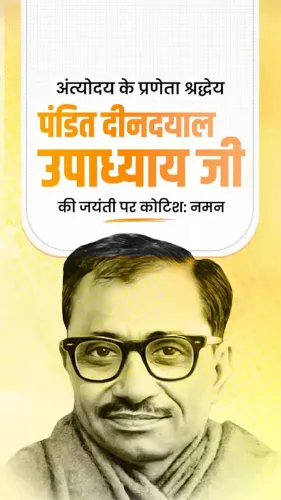
Pandit Deendayal Upadhyay's twin concepts — Ekatma Manavavad (Integral Humanism) and Antyodaya (uplift of the last person in the queue) — are cited by Sharma as the intellectual mortar that held the movement together across its many forms. These ideas supplied the party with a distinctly Indian welfare framework that was neither Western socialism nor laissez-faire liberalism. When the Bharatiya Janata Party was formally established in 1980, it inherited both the Jana Sangh's organisational network and Upadhyay's philosophical legacy.
The early BJP's reach was limited. It was the patient, decade-spanning work of Atal Bihari Vajpayee — whose 'visionary leadership' Sharma specifically salutes — that carried the party from the margins to the mainstream, culminating in Vajpayee's own stints as Prime Minister.
Article 370, Viksit Bharat, and Modi's place in the lineage
Sharma anchors the contemporary chapter of this story in Prime Minister Narendra Modi's tenure, listing the abrogation of Article 370 in 2019, poverty alleviation, Aatmanirbhar Bharat (self-reliance), good governance, and national security as the practical expressions of the founding ideology. Each item on that list is framed not as a new policy direction but as a fulfilment of promises implicit in the party's DNA since 1951.
The Viksit Bharat ('Developed India') mission, the overarching government programme targeting a developed-nation benchmark by 2047, is positioned as the latest chapter in a story that began with Mukherjee's nationalism and was philosophised by Upadhyay.
Crores of workers as the party's real power source
Sharma closes with a tribute to the millions of dedicated party workers — calling their labour and loyalty the party's 'real strength'. Foundation-day messages of this kind serve a twin purpose: they reinforce ideological coherence for a cadre spread across every district in the country, and they remind the rank and file that the party's scale was built bottom-up, one booth at a time.
Seventy-five years on, the Jana Sangh's founding idea has become the governing ideology of the world's most populous democracy. Whether the next chapter deepens or tests that inheritance is the question the party's own anniversary rhetoric implicitly raises.
Point of View
But the framing here is notably ambitious — threading Mukherjee's 1951 founding, Upadhyay's philosophy, the Emergency resistance, and the Modi government's policy record into a single unbroken narrative. This serves an organisational purpose: it positions every present-day policy win as the culmination of seven decades of sacrifice, making ideological continuity itself an electoral asset. For a party that now governs several states and holds a decisive parliamentary majority, anniversary messaging also functions as cadre management — reaffirming loyalty to an idea rather than merely to an incumbent leader. The emphasis on Antyodaya alongside Article 370 is deliberate: it signals that nationalist identity and welfare delivery are presented as complementary, not competing, pillars of the BJP's claim to govern.
NationPress
21 Oct 2026
Frequently Asked Questions
When was the Bharatiya Jana Sangh founded?
The Bharatiya Jana Sangh was founded on 21 October 1951 by Dr. Shyama Prasad Mukherjee as a nationalist political party in India.
What is the connection between the Jana Sangh and the BJP?
The Bharatiya Janata Party, founded in 1980 , directly inherited the organisational base, cadre network, and nationalist ideology of the Bharatiya Jana Sangh, which had merged into the Janata Party in the late 1970s.
What is Deendayal Upadhyay's Antyodaya philosophy?
Antyodaya — meaning 'rise of the last person' — is the welfare principle articulated by Pandit Deendayal Upadhyay that prioritises uplifting the most marginalised sections of society, and remains a core stated value of the BJP.
Why is Bhajan Lal Sharma posting about the Jana Sangh anniversary?
As Rajasthan Chief Minister and a BJP leader , Sharma posted to mark the 75th founding anniversary of the Bharatiya Jana Sangh on 21 October 2026, tracing the party's ideological journey to the present day.
What did the BJP government do about Article 370?
The Modi government abrogated Article 370 in August 2019 , revoking the special autonomous status of Jammu and Kashmir — an action consistently cited by BJP leaders as a fulfilment of the party's founding nationalist agenda.