CM Bhajan Lal Sharma on Honest, Sensitive Governance

Synopsis
The Chief Minister's Office of Rajasthan, citing CM Bhajan Lal Sharma, declared on 30 October 2026 that honesty, sensitivity, and impartiality are the strongest foundations of public trust — a compact governance charter aimed at the state's administrative machinery.
Key Takeaways
Chief Minister Bhajan Lal Sharma of Rajasthan, in power since December 2023 , personally attributed a three-principle governance charter to himself via the CMO's official X account.
The three pillars named are honesty (ईमानदारी), sensitivity (संवेदनशीलता), and impartiality (निष्पक्षता) — framed as the core of public trust in administration.
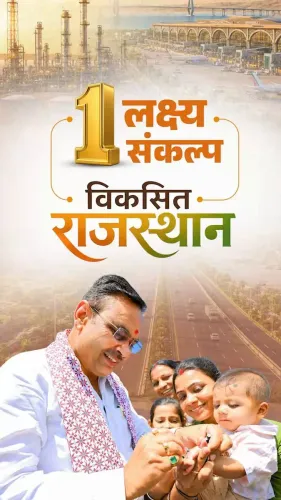
The post was shared under the hashtag #आपणो_अग्रणी_राजस्थान ('Our Leading Rajasthan'), linking governance values to a broader state-branding effort.
Rajasthan is India's largest state by area , making administrative consistency across diverse districts a significant operational challenge.
No specific triggering event or new policy order accompanied the post; it forms part of the BJP government's ongoing public communication on administrative conduct.
Three words — honesty, sensitivity, impartiality — and a pointed reminder that public trust in any government is only as strong as the conduct of its administrators. The Chief Minister's Office of Rajasthan posted that message on X on Friday, 30 October 2026, attributing the sentiment directly to Chief Minister Bhajan Lal Sharma.
The post, shared under the hashtag #आपणो_अग्रणी_राजस्थान ('Our Leading Rajasthan'), reads: 'Honesty, sensitivity, and impartiality in administration are the strongest foundations of public trust.' Short, unambiguous, and aimed squarely at the officials who run the state's vast machinery.
Bhajan Lal Sharma's governance pitch since December 2023
Bhajan Lal Sharma took charge as Chief Minister of Rajasthan in December 2023 after the Bharatiya Janata Party won the state assembly elections. His government has consistently framed administrative reform and clean governance as central planks of its public communication. Statements like Friday's are part of a recurring effort to set expectations for bureaucratic conduct — signalling to citizens that the administration is listening and to officials that shortcuts are unwelcome.
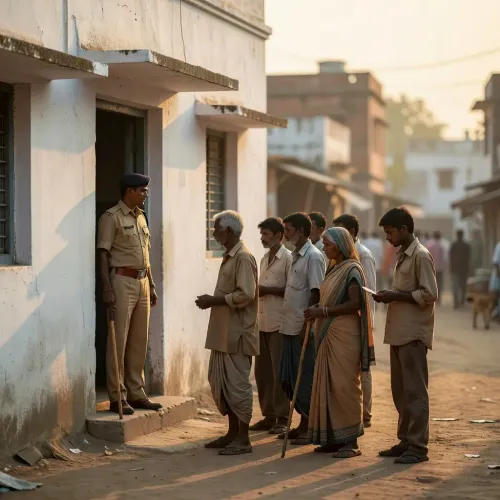
The three qualities named — ईमानदारी (honesty), संवेदनशीलता (sensitivity), and निष्पक्षता (impartiality) — form a compact charter for the kind of district-level, on-the-ground governance that directly shapes how ordinary Rajasthanis experience the state. Sensitivity, in particular, is a word that carries weight in a state with large rural, tribal, and economically vulnerable populations where administrative indifference can mean delayed benefits, ignored grievances, or unresolved land disputes.
Why the message lands beyond a routine post
In Indian state politics, the Chief Minister's Office using the CM's personal handle alongside the official account is a deliberate act of ownership — Sharma is not just endorsing a bureaucratic circular but personally staking his reputation on these values. The pairing with the campaign-flavoured hashtag 'Our Leading Rajasthan' also signals that good governance is being positioned as an electoral and reputational asset, not merely an administrative directive.
Rajasthan, India's largest state by area, runs one of the country's more complex administrative structures — spanning desert districts, tribal belts, and fast-urbanising cities like Jaipur and Jodhpur. Keeping that machine honest and citizen-facing is a governance challenge that has tripped up administrations of every stripe in the state's post-Independence history.
The real test, as always, will come not in the post but in what follows it — whether specific orders, accountability mechanisms, or public grievance redressal initiatives back the words up. Watch for subsequent circulars from the state's General Administration Department or any announced review of district-level performance metrics.
Point of View
Such statements serve a dual purpose: reassuring citizens ahead of local-body or panchayat cycles, and signalling to the cadre that the CM is watching. The real analytical question is whether Sharma's administration backs the rhetoric with measurable accountability tools — grievance redressal data, officer performance reviews, or anti-corruption drive numbers — or whether Friday's post remains inspirational wallpaper. India's state governance history suggests the former is the harder and rarer path.
NationPress
30 Oct 2026
Frequently Asked Questions
What did Rajasthan CM Bhajan Lal Sharma say about governance on 30 October 2026?
CM Bhajan Lal Sharma stated that honesty, sensitivity, and impartiality in administration are the strongest foundations of public trust, in a post shared by the Chief Minister's Office of Rajasthan on X.
Who is Bhajan Lal Sharma and when did he become Chief Minister of Rajasthan?
Bhajan Lal Sharma is a Bharatiya Janata Party leader who became Chief Minister of Rajasthan in December 2023 after the BJP won the state assembly elections.
What does 'Aapno Agrani Rajasthan' mean?
'Aapno Agrani Rajasthan' (आपणो अग्रणी राजस्थान) translates to 'Our Leading Rajasthan' — a hashtag used by the Rajasthan BJP government as a state-branding and governance-outreach theme.
Why is administrative sensitivity important in Rajasthan?
Rajasthan is India's largest state by area and has large rural, tribal, and economically vulnerable populations. Administrative sensitivity directly affects delivery of government benefits, grievance resolution, and public welfare in these communities.
Is there a new policy or order behind the CM's governance statement?
No specific new policy order or triggering event has been confirmed alongside this post. It forms part of the BJP-led Rajasthan government's ongoing public communication on administrative values and conduct.