CM Bhajan Lal launches Rajasthan Water Conclave 2026 in Jaipur
Synopsis
Rajasthan CM Bhajan Lal Sharma inaugurated the Rajasthan Water Conclave 2026 in Jaipur on 25 July, spotlighting the Ram Jal Setu Link Project, Yamuna Water Agreement, and Narmada Award Agreement as cornerstones of the state's push for water security and universal household tap water access.
Key Takeaways
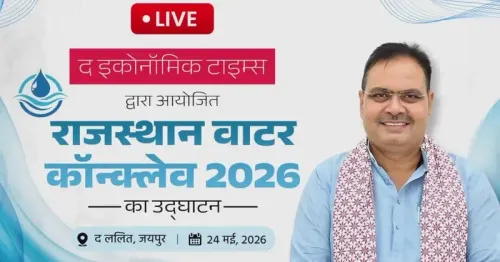
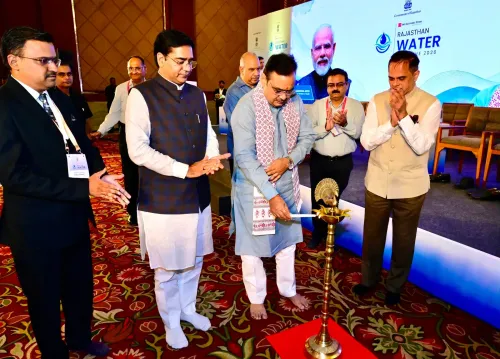
CM Bhajan Lal Sharma inaugurated the Rajasthan Water Conclave 2026 in Jaipur on 25 July 2026 .
He cited three central initiatives — Ram Jal Setu Link Project , Yamuna Water Agreement , and Narmada Award Agreement — as marking a new era of water security for the state.
Water Resources Minister Suresh Rawat was present alongside elected representatives and dignitaries.
The state's stated top priority is saving 'every drop of water' through modern technology and delivering tap water to every household, aligned with the Jal Jeevan Mission .
The Narmada Water Disputes Tribunal final award of 1979 underpins Rajasthan's long-standing claim to Narmada waters, now being actively pursued under central frameworks.
The conclave is expected to generate technology partnership recommendations and project implementation roadmaps for Rajasthan's water infrastructure.
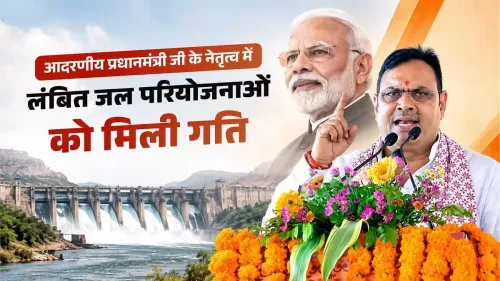
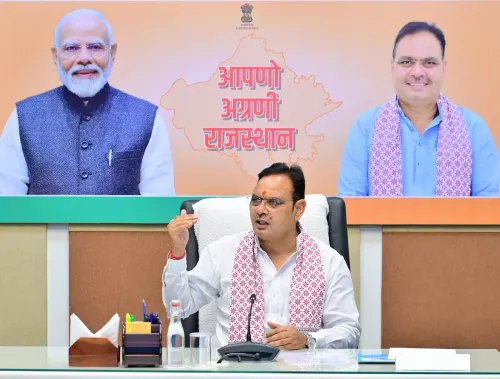
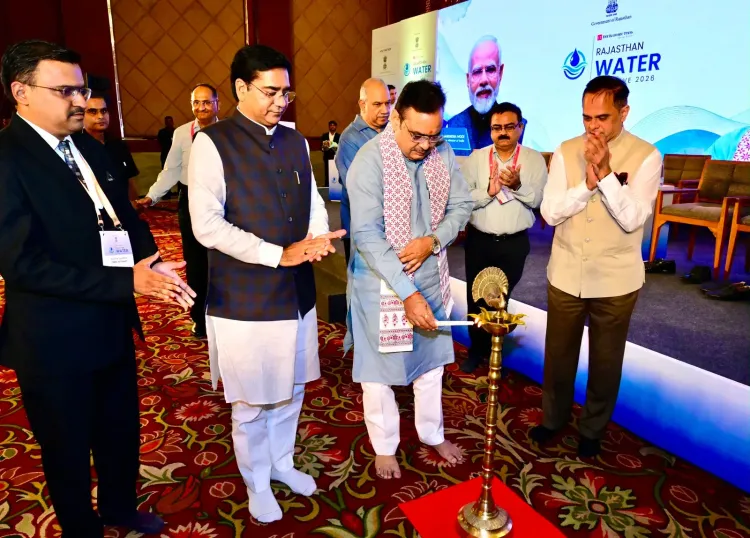
Rajasthan Chief Minister Bhajan Lal Sharma inaugurated the Rajasthan Water Conclave 2026 in Jaipur on Friday, 25 July 2026, addressing an audience of policymakers, experts, and public representatives on the state's water security priorities. Sharma credited Prime Minister Narendra Modi's leadership for three landmark water agreements that he described as opening a new era of water security for Rajasthan.
Context
Speaking at the conclave, CM Sharma highlighted three central government-backed initiatives as transformative for Rajasthan: the Ram Jal Setu Link Project, the Yamuna Water Agreement, and the Narmada Award Agreement. In his post, he stated — 'राम जल सेतु लिंक परियोजना, ऐतिहासिक यमुना जल समझौते एवं नर्मदा अवार्ड समझौते ने प्रदेश में जल सुरक्षा के नए युग की शुरुआत की है' — translated: 'The Ram Jal Setu Link Project, the historic Yamuna Water Agreement, and the Narmada Award Agreement have begun a new era of water security in the state.' Water Resources Minister Suresh Rawat was also present at the event alongside elected representatives and dignitaries.
Policy Backdrop
Rajasthan's water challenges are structural: it is India's largest state by area but among the most arid, making inter-basin water transfer and conservation central to its development agenda. The Narmada Water Disputes Tribunal, which issued its final award in 1979, allocated a share of Narmada waters to Rajasthan alongside Gujarat, Madhya Pradesh, and Maharashtra — a framework whose implementation has been a long-standing state priority. The Yamuna Water Agreement addresses Rajasthan's entitlement from another major river system, while the Ram Jal Setu Link Project is an inter-basin transfer initiative advanced under central leadership to augment supply in water-deficit regions.
The Union government's Jal Jeevan Mission, launched in 2019, provides the broader programmatic framework under which states like Rajasthan are working to deliver functional tap water connections to every rural household. CM Sharma explicitly echoed this goal, stating that 'saving every drop of water through the latest technologies, modern water management, and delivering water to every household' is the state's top priority.
Stakeholders and Impact
The primary beneficiaries of these water initiatives are Rajasthan's rural households and farming communities, who face acute seasonal scarcity across the Thar Desert belt and other arid districts. Inter-state water transfer projects, when operationalised, are expected to expand irrigated acreage and improve drinking water reliability for millions of residents. The conclave format — bringing together technical experts and policymakers — signals an intent to accelerate implementation through institutional coordination and technology adoption.
The presence of Water Resources Minister Suresh Rawat alongside the Chief Minister underscores that water security is being treated as a cabinet-level, cross-departmental priority rather than a departmental matter alone.
What's Next
The Rajasthan Water Conclave 2026 is expected to produce actionable recommendations on technology partnerships and project timelines, particularly for the Ram Jal Setu Link Project. Milestones on this inter-basin initiative will be closely watched as a test of how quickly central water transfer ambitions translate into ground-level delivery. CM Sharma's call to collectively build a 'water-prosperous and self-reliant Rajasthan' sets the political benchmark against which the state government's water record will be measured ahead of future electoral cycles.
Point of View
CM Sharma is weaving central government achievements into the state BJP's governance narrative ahead of future elections. Rajasthan's chronic water scarcity makes water delivery a high-visibility issue where credit-claiming and execution accountability intersect sharply. The emphasis on technology and the 'self-reliant Rajasthan' framing mirrors the broader BJP vocabulary of Atmanirbhar Bharat, applied here to resource security. How quickly the Ram Jal Setu Link Project moves from announcement to implementation will determine whether this conclave is remembered as a turning point or a talking point.
NationPress
23 Oct 2026
Frequently Asked Questions
What is the Rajasthan Water Conclave 2026?
The Rajasthan Water Conclave 2026 is a policy and technology forum held in Jaipur on 25 July 2026, inaugurated by Chief Minister Bhajan Lal Sharma, focused on water security, modern water management, and universal household water access in Rajasthan.
What is the Ram Jal Setu Link Project?
The Ram Jal Setu Link Project is an inter-basin water transfer initiative referenced in the Rajasthan context to augment water supply under central government leadership, aimed at addressing the state's structural water scarcity.
What is the Narmada Award Agreement for Rajasthan?
The Narmada Award Agreement refers to the implementation of the Narmada Water Disputes Tribunal's final award of 1979, which allocated a share of Narmada river waters to Rajasthan alongside Gujarat, Madhya Pradesh, and Maharashtra.
What is the Yamuna Water Agreement involving Rajasthan?
The Yamuna Water Agreement is an inter-state pact addressing Rajasthan's entitlement to Yamuna river waters, cited by CM Bhajan Lal Sharma as a key milestone in the state's water security progress.
Who is Suresh Rawat in Rajasthan government?
Suresh Rawat is Rajasthan's Water Resources Minister, responsible for state-level execution of central water projects and policies, and was present at the Rajasthan Water Conclave 2026 in Jaipur.