CM Bhajan Lal plants green pledge at Udaipur Van Mahotsav
Synopsis
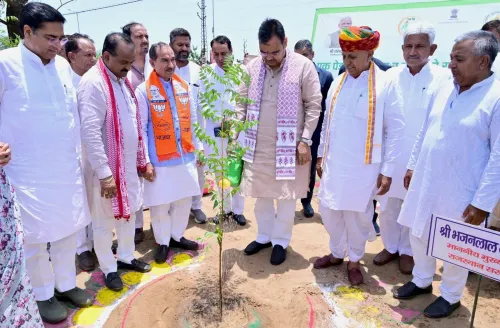
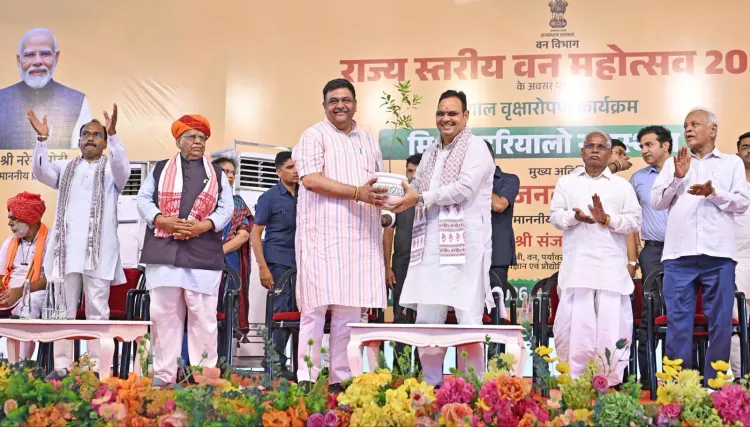
Rajasthan CM Bhajan Lal Sharma chaired the state-level Van Mahotsav at Udaipur's Dudh Talai forest on 1 August 2026, distributed ₹6 crore to self-help group women, and called on citizens to join the 'Ek Ped Maa Ke Naam' and 'Hariyalo Rajasthan' plantation drives.
Key Takeaways
Rajya Stareey Van Mahotsav was held at Dudh Talai Van Kshetra, Pichola, Udaipur on 1 August 2026 .
CM Bhajan Lal Sharma distributed incentive cheques worth ₹6 crore to Self-Help Group women at the event.
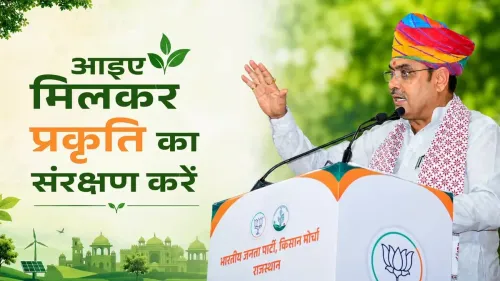
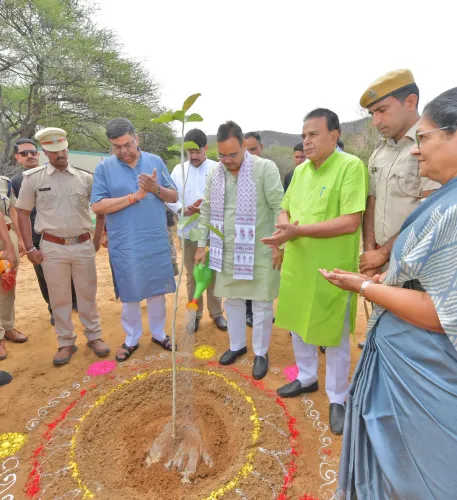
Sharma urged Rajasthan residents to plant and nurture as many saplings as possible during the monsoon season.
The event was linked to PM Narendra Modi's 'Ek Ped Maa Ke Naam' national tree-plantation campaign and the state's own 'Hariyalo Rajasthan' initiative.
Rajasthan's model ties afforestation targets to rural women's livelihoods through SHG incentives, aiming to improve sapling survival rates.
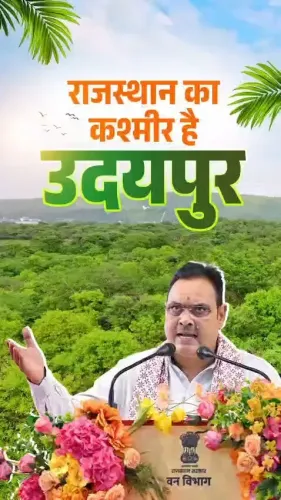
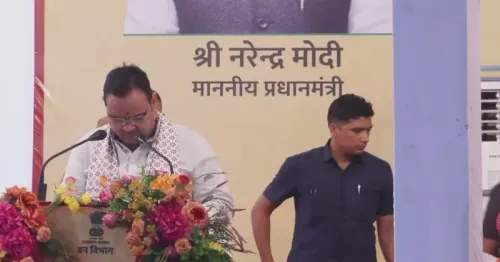
Under the shade of the Dudh Talai forest beside Pichola lake, Rajasthan Chief Minister Bhajan Lal Sharma turned a state-level tree-plantation festival into a dual promise — to the earth and to the women who tend it. At the Rajya Stareey Van Mahotsav in Udaipur on 1 August 2026, Sharma addressed a public gathering and handed over incentive cheques worth ₹6 crore to women from self-help groups, weaving rural livelihoods directly into the state's green agenda.
A forest festival on the banks of Pichola
The venue itself carried symbolic weight. The Dudh Talai Van Kshetra, nestled along the iconic Pichola lake in Udaipur, is one of Rajasthan's rare pockets of urban green — an apt stage for a state that battles some of India's most acute arid-zone deforestation pressures. Sharma called on residents across the state to plant as many saplings as possible and to commit to nurturing them — a pledge that targets not just numbers but survival rates, the perennial weak link in mass plantation drives.
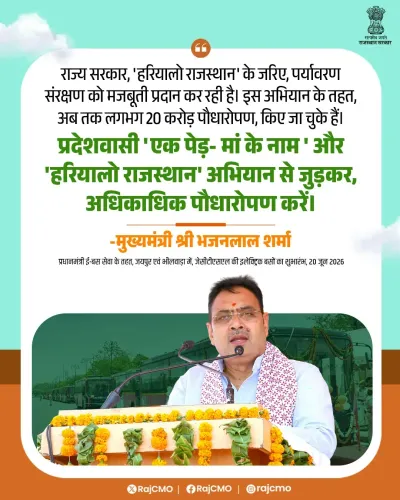
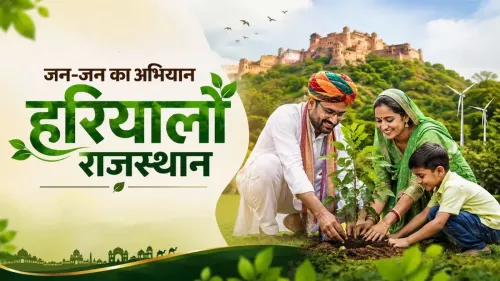
In his address, the Chief Minister invoked Prime Minister Narendra Modi's 'Ek Ped Maa Ke Naam' ('One Tree in Mother's Name') national campaign, urging citizens to join both that initiative and the state's own 'Hariyalo Rajasthan' programme. 'Let us all come together and make our land green, lush, and prosperous,' he said, framing conservation as collective civic duty rather than government directive.
₹6 crore to SHG women — where conservation meets livelihood
The distribution of ₹6 crore in incentive cheques to Self-Help Group members was the event's sharpest policy signal. Rajasthan has increasingly tied afforestation targets to rural women's economic participation — SHGs plant, protect, and in some cases commercially manage saplings, earning state-linked payouts in return. The model converts a conservation mandate into a livelihood pipeline, giving women a financial stake in whether trees actually survive.
Self-help groups across India have long been vehicles for microfinance and skill development; deploying them as frontline forest guardians is a newer, and arguably more durable, model for greening arid landscapes where volunteer momentum alone tends to fade after the monsoon photo-op.
Van Mahotsav's long arc and Rajasthan's forest deficit
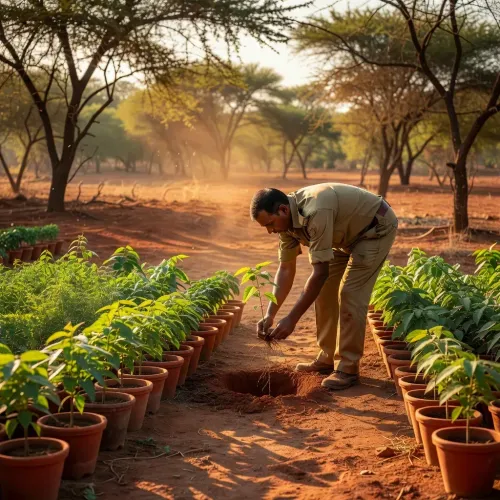
Van Mahotsav — the national tree-planting festival — has been observed across India since 1950, making it one of the country's oldest environmental traditions. For Rajasthan, the urgency behind the ritual is sharper than most: the state's forest cover remains well below the national average, squeezed by desert geography, agricultural expansion, and livestock pressure. Annual Van Mahotsav events, integrated with Modi's Ek Ped Maa Ke Naam campaign, are the state's bid to convert ceremonial momentum into measurable canopy gains.
The real test, as conservationists have noted for decades, is what happens after the monsoon ends — whether planted saplings are watered, fenced, and counted as survivors rather than statistics. Sharma's explicit call for sanvardan (nurturing) alongside planting suggests the administration is at least naming that gap.
Rajasthan is betting that tying green targets to women's incomes is the accountability mechanism that past plantation drives lacked. The monsoon will plant the question; the next dry season will answer it.
Point of View
Sharma is positioning the BJP state government as an active partner in Modi's environmental agenda — a politically useful alignment ahead of any future electoral cycle. The ₹6 crore SHG payout is more than optics: it reflects a broader BJP-governed-state pattern of routing welfare and conservation spending through women's groups to build grassroots goodwill. The harder policy question — whether Rajasthan's arid-zone plantation drives achieve meaningful survival rates — remains unanswered, and the state's persistently low forest cover means the gap between ceremony and canopy will continue to draw scrutiny.
NationPress
1 Aug 2026
Frequently Asked Questions
What is the 'Hariyalo Rajasthan' scheme?
'Hariyalo Rajasthan' is a Rajasthan state government initiative aimed at expanding green cover through large-scale afforestation drives and public participation, often aligned with national campaigns like 'Ek Ped Maa Ke Naam'.
What is the 'Ek Ped Maa Ke Naam' campaign?
'Ek Ped Maa Ke Naam' — meaning 'One Tree in Mother's Name' — is a nationwide tree-plantation campaign launched by Prime Minister Narendra Modi encouraging every citizen to plant a tree as a tribute to their mother.
Why did CM Bhajan Lal Sharma give money to self-help groups at a forest event?
Rajasthan links afforestation targets to women's self-help groups, who plant and maintain saplings in exchange for state incentives. The ₹6 crore distribution at Van Mahotsav 2026 is part of this model that ties conservation to rural women's livelihoods.
Where was the Rajasthan Van Mahotsav 2026 held?
The Rajya Stareey Van Mahotsav 2026 was held at the Dudh Talai Van Kshetra near Pichola lake in Udaipur, Rajasthan, on 1 August 2026.
What is Van Mahotsav and when did it start?
Van Mahotsav is India's annual tree-plantation festival, observed since 1950, held typically during the monsoon season to promote afforestation across the country.