CM Bhajan Lal: Rajasthan Rising as Top Mineral State
Synopsis
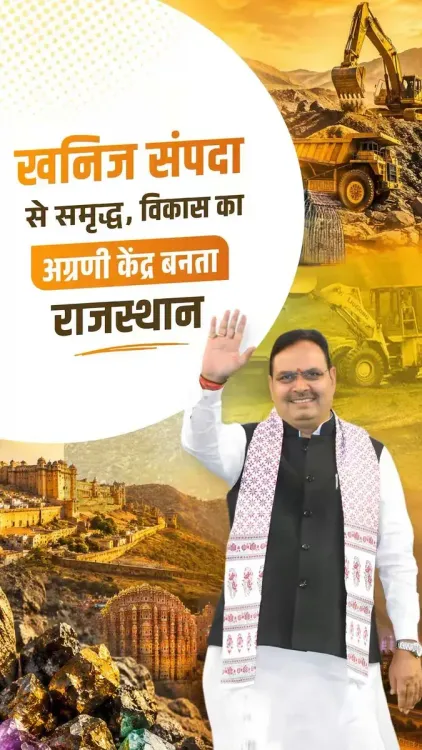
Chief Minister Bhajan Lal Sharma has declared Rajasthan a rising leader in mineral development and investment, attributing the progress to his government's transparency, effective policies, and a focus on creating employment for youth through sustainable mining management.
Key Takeaways
CM Bhajan Lal Sharma posted on 22 June 2026 claiming Rajasthan is emerging among India's top states in mineral development and investment.
The government attributes progress to transparency and effective policies , including alignment with the MMDR Act e-auction framework introduced in 2015 .
Rajasthan holds major reserves of zinc, lead, silver, marble, and sandstone, making it a strategically significant mineral state.
The Chief Minister specifically linked mineral-sector growth to new employment opportunities for youth , framing it as a social and economic priority.
Rajasthan competes with resource-rich states such as Odisha and Chhattisgarh for private mining investment under the national ease-of-doing-business agenda.
Upcoming mineral-block auction results and state employment data will be key indicators of the government's claims.
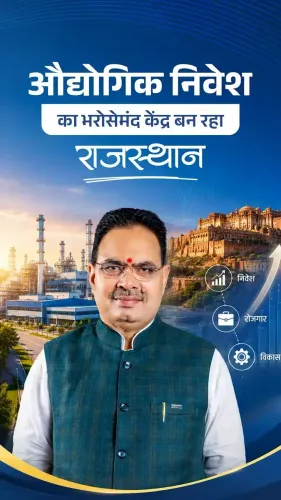
Rajasthan Chief Minister Bhajan Lal Sharma on Monday, 22 June 2026 asserted that the state is emerging as one of India's leading destinations for mineral development, investment, and sustainable resource management, crediting his government's transparency and effective policy framework for the gains.
In a post on X, the Chief Minister stated: 'हमारी सरकार की पारदर्शिता और प्रभावी नीतियों के बल पर राजस्थान आज खनिज विकास, निवेश एवं सतत प्रबंधन के क्षेत्र में देश के अग्रणी राज्यों में सशक्त रूप से उभर रहा है' — ('On the strength of our government's transparency and effective policies, Rajasthan is today powerfully emerging among the country's leading states in mineral development, investment, and sustainable management'). He added that these efforts are stimulating investment, strengthening economic activity, and creating new employment opportunities for the youth.
Context
Rajasthan is one of India's most mineral-rich states, holding significant reserves of zinc, lead, silver, marble, and sandstone, among other resources. The state's mineral sector has historically been a major contributor to national output, making governance and investment policy in the sector a recurring political priority. Bhajan Lal Sharma took charge as Chief Minister in December 2023 following the BJP's victory in the state assembly elections.
The Chief Minister's remarks come amid an ongoing national push by states to attract private capital into the mining sector. The assertion of transparency is particularly pointed, as mineral allocation has been a subject of scrutiny across Indian states for decades.
Policy Backdrop
The current investment climate in India's mining sector was substantially reshaped by amendments to the Mines and Minerals (Development and Regulation) Act in 2015 and 2021, which replaced discretionary lease grants with a mandatory e-auction system. This shift was designed to bring transparency and competitive pricing to mineral block allocation nationwide.
Rajasthan has aligned its state-level framework with these central reforms, implementing e-auctions for mineral leases and positioning its mineral-rich districts within the national ease-of-doing-business agenda. The emphasis on sustainable management also reflects a broader regulatory direction from the central government, which has sought to couple mineral extraction with environmental accountability since 2014.
Stakeholders and Impact
The primary beneficiaries of a buoyant mineral investment climate in Rajasthan are mining investors — both domestic and international — as well as workers in the mineral extraction and downstream processing industries. The Chief Minister's specific mention of youth employment signals that the government is framing mineral-sector growth as a social dividend, not merely a revenue story.
States such as Odisha and Chhattisgarh, which are also resource-rich, have pursued similar strategies of linking mineral revenues to local employment generation. Rajasthan's positioning places it in direct competition with these states for investment commitments in the sector.
What's Next
Attention will now turn to the results of upcoming mineral-block auctions in Rajasthan and any fresh investment pledges that may be announced at state-level industry summits. Employment data from the mining and downstream sectors, when released by state authorities, will be a key measure of whether the government's claims of job creation translate into verifiable figures.
The Chief Minister's public framing of mineral policy as a pillar of youth employment and economic activity suggests that the sector is likely to feature prominently in the BJP government's narrative ahead of future electoral cycles in the state.
Point of View
The government is attempting to convert a traditionally elite-sector story into a mass-appeal one, which is a well-worn but effective strategy in resource-rich states. The invocation of transparency is also calculated: it implicitly contrasts the current administration with past practices of discretionary lease allocation that dogged earlier governments. Whether the claims hold up will depend on verifiable auction outcomes and employment data, which will be closely watched by both investors and the political opposition.
NationPress
22 Jun 2026
Frequently Asked Questions
What did Rajasthan CM Bhajan Lal Sharma say about the state's mineral sector?
CM Bhajan Lal Sharma stated on 22 June 2026 that Rajasthan is emerging as one of India's leading states in mineral development, investment, and sustainable management, driven by his government's transparency and effective policies.
Which minerals does Rajasthan have in abundance?
Rajasthan holds significant reserves of zinc, lead, silver, marble, and sandstone, making it one of India's most mineral-rich states and a major contributor to national mineral output.
How has the MMDR Act affected mining in Rajasthan?
Amendments to the Mines and Minerals (Development and Regulation) Act in 2015 and 2021 mandated e-auctions for mineral lease allocation. Rajasthan has implemented this framework, which is credited with improving transparency in the sector.
How is Rajasthan's mineral policy linked to youth employment?
CM Bhajan Lal Sharma has explicitly stated that mineral-sector investment is creating new employment opportunities for youth, positioning mining growth as a driver of local job creation alongside economic activity.
Which other states is Rajasthan competing with for mineral investment?
Rajasthan competes primarily with Odisha and Chhattisgarh, both resource-rich states that have similarly linked mineral revenue and investment to local employment generation under national ease-of-doing-business frameworks.