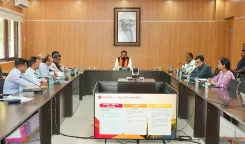
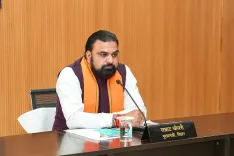
Anurag Thakur Champions Natural Farming at Nadaun Workshop
Synopsis
BJP MP Anurag Thakur attended a natural farming workshop in Nadaun, Himachal Pradesh on 22 June 2026, calling chemical-free cultivation a moral duty and highlighting its role in soil health, water conservation, and climate resilience. Himachal Pradesh is among India's leading states in natural farming adoption.
Key Takeaways
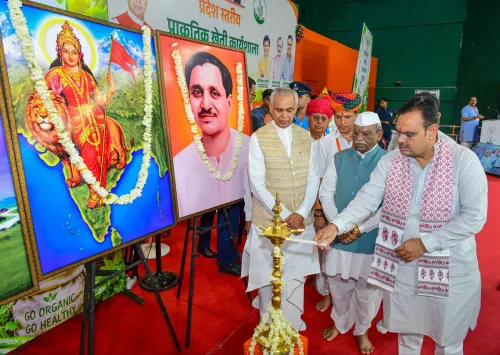
BJP MP Anurag Thakur addressed a natural farming and experience-sharing workshop in Nadaun Vidhan Sabha , Himachal Pradesh on 22 June 2026 .
Thakur called providing a clean environment to future generations a 'moral responsibility' and endorsed natural farming as a low-cost, high-benefit model for farmers.
He cited four key benefits: improved soil fertility, water conservation, reduced environmental pollution, and access to chemical-free nutritious food.
Natural farming was also highlighted as an effective tool for addressing climate change challenges facing Indian agriculture.
Himachal Pradesh was identified as one of India's leading states in natural farming adoption, consistent with its Himalayan ecological context.
The workshop aligns with the central government's Paramparagat Krishi Vikas Yojana (PKVY) , launched in 2015 to promote chemical-free farming nationwide.
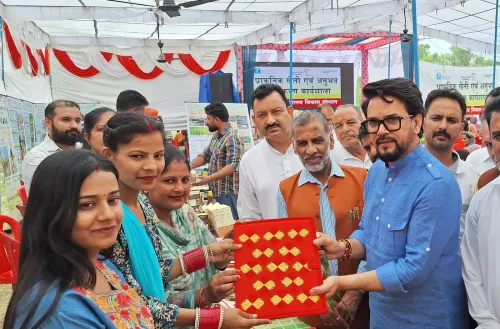
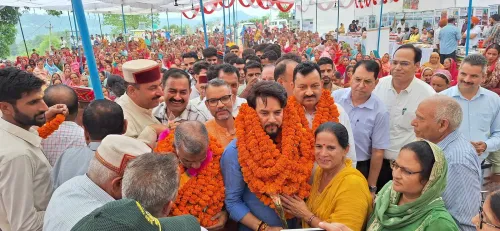
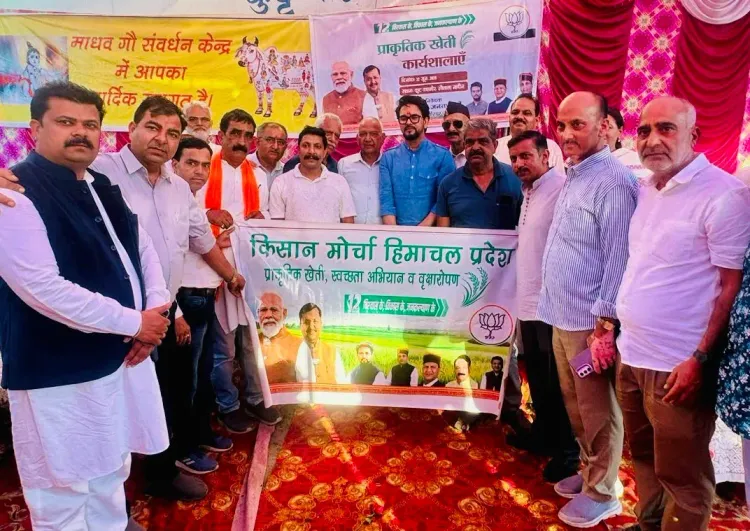
BJP MP Anurag Thakur addressed a natural farming and experience-sharing workshop in the Nadaun Vidhan Sabha constituency of his parliamentary segment on Monday, 22 June 2026, advocating chemical-free agriculture as both an economic and environmental imperative for farmers across Himachal Pradesh.
Context
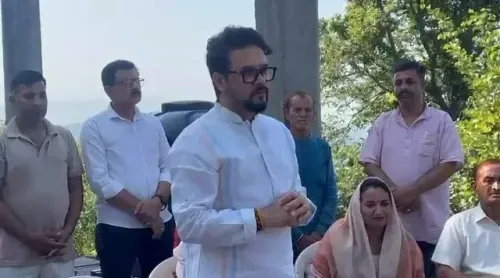
Sharing his thoughts at the workshop, Thakur stated that providing clean and green surroundings to future generations is a 'naitik dayitva' ('moral responsibility'). He argued that natural farming serves a dual purpose: lowering input costs and improving yields for farmers, while simultaneously advancing environmental conservation.
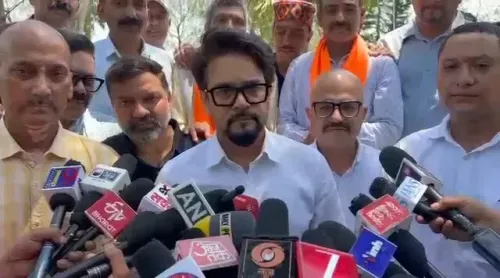
Thakur highlighted four specific benefits he attributed to natural farming — improved soil fertility, promotion of water conservation, reduction of environmental pollution, and availability of chemical-free, nutritious food to consumers. He also noted that the practice is proving effective in meeting the challenges of climate change.
Policy Backdrop
Natural and organic farming has been a strand of central agricultural policy since the launch of the Paramparagat Krishi Vikas Yojana (PKVY) in 2015, which incentivises cluster-based chemical-free cultivation across India. The initiative aims to reduce dependence on synthetic fertilisers and pesticides, concerns that have grown sharper as input costs have risen and soil degradation has widened in many farming belts.
Thakur noted that Himachal Pradesh has positioned itself among the country's leading states in adopting natural farming — a claim consistent with the state's broader push to align Himalayan agriculture with sustainable practices suited to its fragile ecology and hill-terrain soil conditions.
Stakeholders and Impact
Farmers and rural communities in Hamirpur district and the wider Nadaun area stand as the immediate audience for such outreach. Experience-sharing workshops of this kind are designed to give cultivators direct exposure to natural farming techniques through peer learning — a format that has gained traction across several Indian states as a low-cost extension model.
For small and marginal farmers in hilly terrain, where chemical inputs are expensive to transport and soil erosion is a persistent risk, the economic case for reduced-input farming can be particularly compelling. Consumer demand for residue-free produce, especially in urban and export markets, adds a further incentive for adoption.
What's Next
The Nadaun workshop is part of a broader pattern of constituency-level engagement on sustainable agriculture by elected representatives in Himachal Pradesh. Observers will watch whether similar sessions are rolled out across other assembly segments in the state and whether local outreach translates into formal linkages with central schemes such as PKVY or state-level natural farming missions. Integration with training infrastructure and market linkages for chemical-free produce will be key to whether workshop momentum converts into measurable farmer adoption.
Point of View
Where ecological sensitivity and farmer economics intersect acutely. By framing natural farming as a 'moral responsibility' to future generations, the MP connects local agrarian outreach to a wider climate narrative that the ruling party has sought to project nationally. The emphasis on Himachal Pradesh as a front-runner in adoption also serves a political purpose — differentiating the state's agricultural identity at a time when hill-state farming communities face mounting input costs and climate stress. Whether such workshops translate into measurable policy outcomes or remain largely symbolic will determine their long-term political and developmental value.
NationPress
22 Jun 2026
Frequently Asked Questions
What did Anurag Thakur say at the Nadaun natural farming workshop?
Thakur said providing a clean and green environment to future generations is a moral responsibility, and argued that natural farming reduces costs for farmers, improves soil fertility, conserves water, cuts pollution, and helps address climate change.
Where is Nadaun and why was the workshop held there?
Nadaun is a Vidhan Sabha constituency in Hamirpur district, Himachal Pradesh, and falls within Anurag Thakur's parliamentary constituency. The workshop was organised to share experiences and promote natural farming among local farmers.
What is natural farming and how is it different from organic farming?
Natural farming avoids all synthetic inputs, including fertilisers and pesticides, relying instead on locally available biological inputs and traditional practices. It is broadly aligned with organic farming but often emphasises zero external input costs, making it particularly relevant for small and marginal farmers.
What is the Paramparagat Krishi Vikas Yojana (PKVY)?
PKVY is a Government of India scheme launched in 2015 to promote cluster-based organic and chemical-free farming. It provides financial support to farmer groups transitioning away from synthetic inputs and is one of the main central policy instruments for natural farming promotion.
Is Himachal Pradesh a leader in natural farming in India?
Himachal Pradesh has positioned itself among the early-adopter states for natural farming in India, particularly suited to its Himalayan ecology where chemical input costs are high and soil conservation is critical. The state has aligned its agriculture initiatives with national sustainable farming goals.