CM Bhajan Lal reviews Yamuna pact and Ramjal Setu project
Synopsis
Rajasthan Chief Minister Bhajan Lal Sharma reviewed the Yamuna water-sharing agreement and the Ramjal Setu Link Project with officials in Jaipur, directing faster work, tighter coordination and on-time, quality completion to strengthen statewide water supply.
Key Takeaways
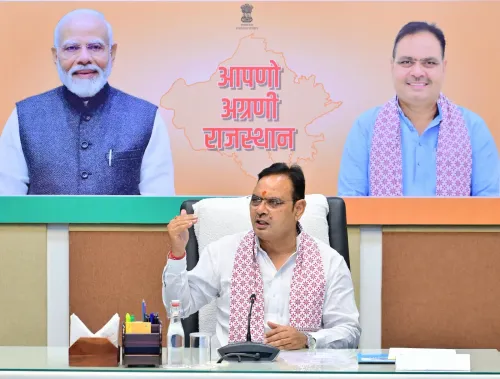
Rajasthan Chief Minister Bhajan Lal Sharma held a review on 27 November 2026 at the Chief Minister's office in Jaipur.
The meeting covered the Yamuna Jal Samjhauta and the Ramjal Setu Link Project .
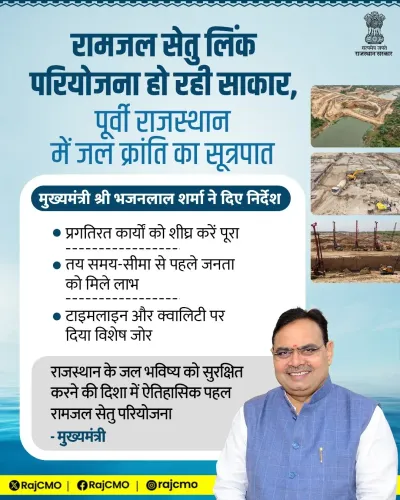
Officers were told to accelerate works, improve inter-department coordination and finish tasks on time with quality.
Sharma said the government is firmly committed to strengthening water availability and reaching every region.
The 1994 Yamuna basin MoU remains the allocation framework involving Rajasthan, Haryana, Delhi and Uttar Pradesh.
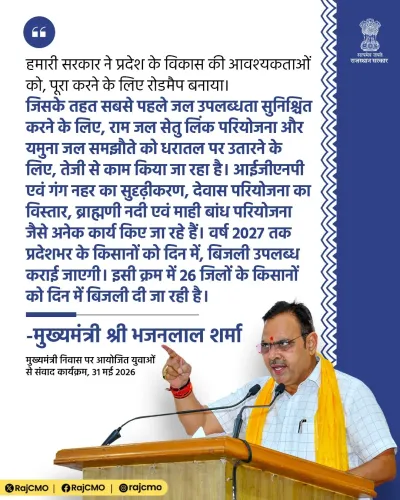
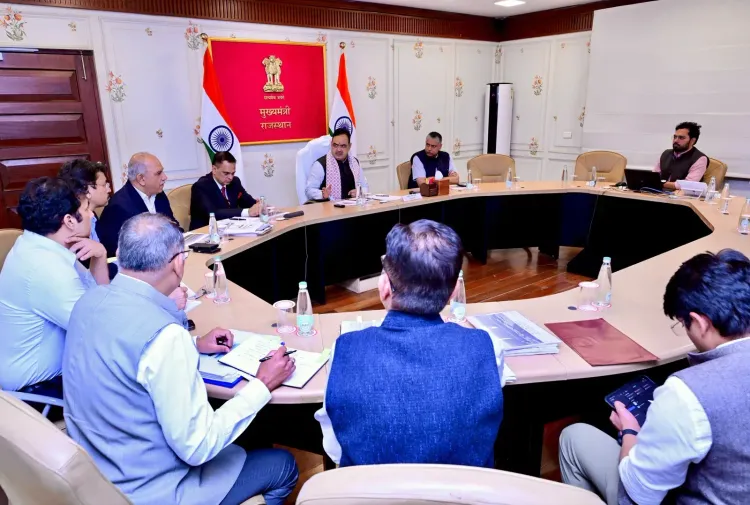
Rajasthan Chief Minister Bhajan Lal Sharma on Friday, 27 November 2026 called concerned officers into the Chief Minister's office in Jaipur to review the Yamuna Jal Samjhauta and the Ramjal Setu Link Project. He ordered faster execution, tighter coordination among departments, and quality completion within set deadlines, tying the drive to a statewide goal of putting adequate water into every region.
In his post, Sharma said the meeting examined progress on both tracks and that officials were directed to accelerate ongoing works, ensure better inter-department coordination, and complete all tasks within the stipulated timeline in a quality manner. He added that the government is dridh sankalpita (firmly resolved) to strengthen water availability in the state and to carry sufficient supply to each area.
Speed, coordination and deadlines from the CM office
The huddle sat at the junction of two water tracks: an interstate sharing arrangement on the Yamuna, and a Rajasthan-led link meant to move additional water toward deficit belts. Sharma's instructions were operational. Speed up physical work. Align departments. Finish on the prescribed clock without dropping quality.
That mix is the difference between a sanctioned scheme and water at the outlet. Canal works, pumping and transfers stall when irrigation, public health engineering and project units pull in different directions. A CM-level review is how Jaipur has long tried to break that stall.
The 1994 Yamuna MoU Rajasthan still works within
The 1994 Memorandum of Understanding among Yamuna basin states set the allocation framework that Rajasthan, together with Haryana, Delhi and Uttar Pradesh, continues to pursue through follow-up projects. Successive governments have treated that pact as a lever to supplement local sources in arid and semi-arid districts, and regular reviews have been the standard tool to keep sanctioned schemes moving.
Farmers in water-scarce districts are the first to feel delay. When Yamuna allocations and link infrastructure lag, the shortfall shows up as tanker rounds and stressed groundwater, the scarcity Sharma's government says it is determined to ease.
Ramjal Setu and the next checkpoints
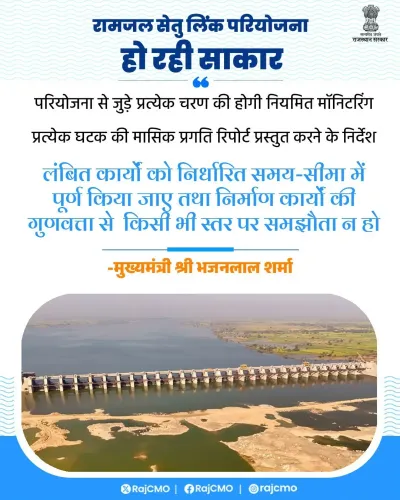
The Ramjal Setu Link Project is a state initiative to augment supply by linking additional sources to deficit areas. Sharma did not release new physical-progress figures. The public signal was administrative: a demand for pace and quality, not a fresh technical brief.
Next come the grind items, quarterly progress on Ramjal Setu works, and any formal request to the Centre or the Upper Yamuna board for enhanced allocations. For a desert state that has spent decades chasing water across its borders, Friday's meeting put the CM's name on the timeline once more.
Point of View
Chief Minister Bhajan Lal Sharma is using the oldest tool in Jaipur's kit: a CM-level diktat to force departments onto one timeline. The 1994 basin MoU still governs what Rajasthan can claim from the Yamuna; Ramjal Setu is how the state hopes to move that water into deficit districts. The test is not the meeting itself but whether the next progress reports and any approach to the Upper Yamuna machinery actually shorten the gap between allocation and delivery.
NationPress
27 Nov 2026
Frequently Asked Questions
What did Bhajan Lal Sharma review on 27 November 2026?
He reviewed progress on the Yamuna Jal Samjhauta and the Ramjal Setu Link Project with concerned officers at the Chief Minister's office. He directed them to speed up works, improve coordination among departments and complete tasks within the set timeline with quality.
What is the Yamuna Jal Samjhauta?
It is the interstate Yamuna water-sharing arrangement involving Rajasthan along with Haryana, Delhi and Uttar Pradesh. The basic allocation framework was set by a 1994 Memorandum of Understanding among Yamuna basin states, which Rajasthan still pursues through follow-up projects.
What is the Ramjal Setu Link Project in Rajasthan?
It is a Rajasthan state initiative to augment water supply by linking additional sources to deficit areas. The Chief Minister reviewed its progress and asked officials to accelerate quality completion on deadline.
Why is Yamuna water important for Rajasthan?
Rajasthan has long used interstate agreements and link projects to ease chronic scarcity in arid and semi-arid districts. Yamuna allocations are meant to supplement local sources so farmers and water-scarce regions receive more reliable supply.
What instructions did the Rajasthan CM give officers?
He told them to accelerate ongoing works under the projects, ensure better coordination among departments, and complete all works within the stipulated timeline in a quality manner. He also restated the government's resolve to strengthen water availability across the state.