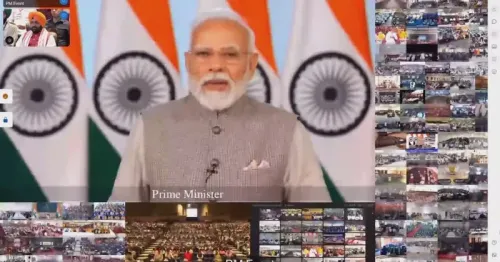
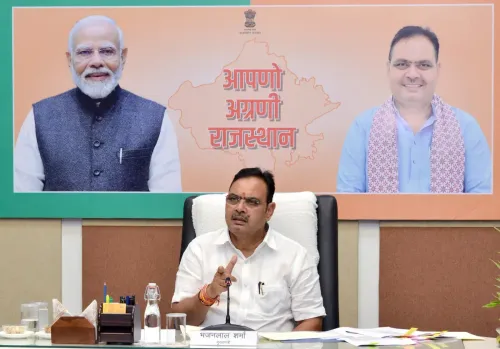
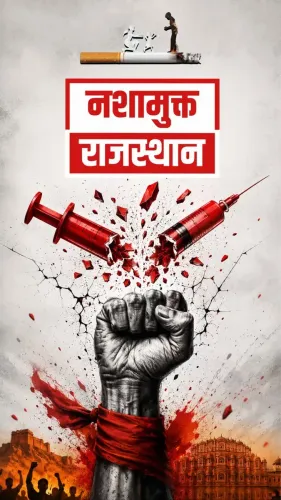
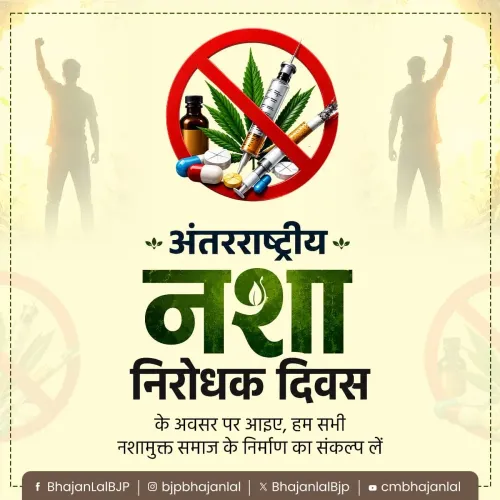
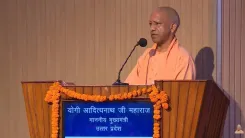
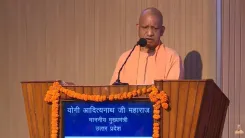
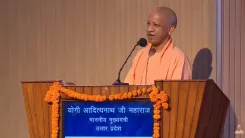
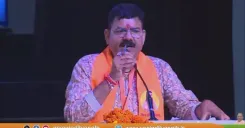
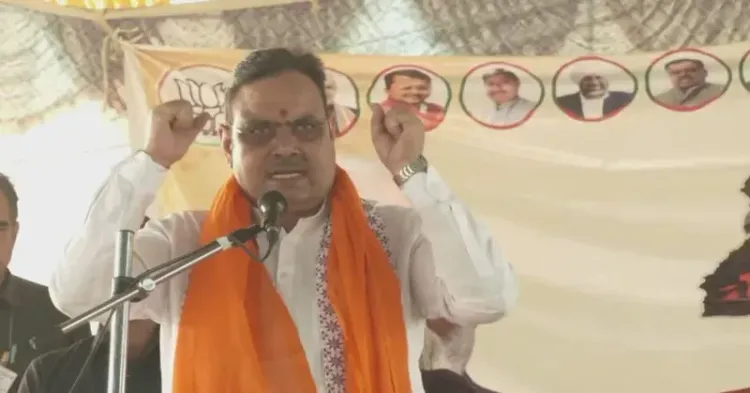
CM Bhajan Lal Sharma at Anti-Drug Yatra Jan Sabha in Firozpur
Synopsis
Rajasthan Chief Minister Bhajan Lal Sharma addressed the 'Nasha Virodhi Yatra: Nasha Mukti Punjab' jan sabha in Firozpur on September 27, 2026, underscoring cross-state BJP coordination on narcotics control in one of Punjab's most drug-affected border districts.
Key Takeaways
Rajasthan CM Bhajan Lal Sharma participated in the 'Nasha Virodhi Yatra: Nasha Mukti Punjab' jan sabha in Firozpur, Punjab on 27 September 2026 .
Firozpur , a border district, is among the areas most acutely affected by drug trafficking and abuse in Punjab.
The event is part of a broader anti-drug awareness campaign tradition in Punjab that stretches back to the early 2010s under the NDPS framework .
Cross-state participation by a BJP chief minister signals coordinated political will on narcotics control across northern India.
Public yatras and jan sabhas remain the primary outreach format for anti-drug mobilisation across Rajasthan, Punjab, and Uttar Pradesh .
Follow-up enforcement or rehabilitation announcements from the Firozpur gathering are the key policy watch-point.
A public rally against drug abuse drew Rajasthan Chief Minister Bhajan Lal Sharma to Firozpur, Punjab, on Sunday, September 27, 2026, as he participated in the 'Nasha Virodhi Yatra: Nasha Mukti Punjab' ('Anti-Drug Journey: Drug-Free Punjab') jan sabha — a cross-state show of political will on one of northern India's most persistent social crises.
Firozpur as a flashpoint in Punjab's drug battle
Firozpur district, located in the border belt of Punjab, has long been among the areas most severely affected by opioid and synthetic drug trafficking in the state. Its proximity to the international border makes it a strategic as well as symbolic venue for an anti-drug mobilisation campaign. Holding a mass jan sabha here sends a pointed message about where the effort is most urgently needed.
Punjab governments have run a series of anti-drug awareness drives and enforcement actions since the early 2010s, operating under the broader national framework of the Narcotic Drugs and Psychotropic Substances (NDPS) Act. The 'Nasha Mukti Punjab' campaign fits into that continuing arc, deploying the format of public yatras and open gatherings to reach families and youth directly — the two groups most acutely affected by substance abuse in the region.
Why a Rajasthan CM is standing on a Punjab stage
The presence of Bhajan Lal Sharma — chief minister of a neighbouring state — at a Punjab-focused campaign is itself a signal. Cross-state participation by BJP leaders in social campaigns illustrates an increasingly coordinated approach to narcotics control across northern Indian states, framing drug abuse not as a single state's failure but as a regional emergency demanding collective political attention.
Public yatras and jan sabhas have become a recurring and proven format for awareness-raising in Uttar Pradesh, Rajasthan, and Punjab alike — combining political reach with community outreach in a single event. The format allows leaders to speak directly to affected families while simultaneously projecting governance momentum.
What the gathering signals for follow-up action
The immediate watch-point from the Firozpur event is whether concrete policy commitments or enforcement announcements follow the jan sabha. Awareness rallies of this scale often serve as the launchpad for rehabilitation targets, inter-state intelligence-sharing protocols, or fresh NDPS enforcement drives. Whether this one translates from platform rhetoric to measurable action will define its legacy beyond the day.
For the families in Firozpur who packed that jan sabha, the stakes are not political — they are personal. A drug-free Punjab is not a campaign slogan for them; it is a demand for their children's futures.
Point of View
A posture that carries particular electoral resonance in Punjab. The 'Nasha Mukti' campaign format is well-worn but politically potent, allowing leaders to claim moral ownership of an issue that has devastated families for over a decade. The real test, as always, will be whether the yatra produces enforceable commitments or remains a well-attended symbol.
NationPress
27 Sept 2026
Frequently Asked Questions
What is the 'Nasha Virodhi Yatra: Nasha Mukti Punjab' campaign?
'Nasha Virodhi Yatra: Nasha Mukti Punjab' is an anti-drug awareness campaign conducted through public marches and jan sabhas across Punjab, aimed at combating opioid and synthetic drug abuse, particularly among youth.
Why was the Firozpur jan sabha significant?
Firozpur is a border district in Punjab that has been severely affected by drug trafficking for years, making it a symbolic and strategic location for an anti-drug campaign rally.
Why is Rajasthan CM Bhajan Lal Sharma campaigning in Punjab?
His participation reflects cross-state coordination among BJP leaders on narcotics control, framing drug abuse as a regional challenge rather than a single state's problem.
What is the legal framework behind India's anti-drug campaigns?
India's anti-drug drives operate primarily under the Narcotic Drugs and Psychotropic Substances (NDPS) Act, which governs enforcement, rehabilitation, and awareness efforts at both central and state levels.
What should we watch for after the Firozpur anti-drug rally?
Key follow-up developments to watch include any policy announcements, inter-state enforcement agreements, or rehabilitation targets that emerge from the Firozpur jan sabha.